
Choosing the Right Contractor for Your Luxury Design: A Practical Guide to Making the Right Decision
How Do You Choose the Right Contractor for a Luxury Villa or Palace?
The best way to choose a contractor for a luxury villa or palace is not to rely on price alone, but to compare several technical, financial, and execution-related factors before signing the contract.
The most important selection criteria include:
-
The contractor’s experience with luxury villas, palaces, and high-end residential projects.
-
The ability to understand and execute construction drawings and specifications.
-
The quality of the execution team.
-
Clarity of the Scope of Work.
-
The quality and reliability of suppliers and subcontractors.
-
The realism of the construction schedule.
-
Warranty and after-sales arrangements.
-
The process for handling variations, changes, and additional works.
In luxury projects, the right contractor is not necessarily the contractor offering the lowest price. The right contractor is the one capable of transforming the architectural design and technical documentation into a finished building that meets the required quality, specifications, budget framework, and agreed schedule while coordinating effectively with the supervising engineer and other disciplines.
Before making the final decision, it is advisable to compare at least three qualified contractors using the same evaluation criteria, request clear technical and financial proposals, verify previous projects, and define responsibilities, exclusions, warranties, material approvals, and variation procedures from the beginning.
Choosing a contractor is not simply a service-purchasing decision. It is a decision that can affect the design, budget, construction period, finishing quality, and long-term value of the property.
Therefore, the right question is not:
Who offers the lowest price?
The better question is:
Who can execute the required design according to the approved specifications, within the agreed quality, cost framework, and realistic construction schedule?
That is where the real engineering selection process begins.
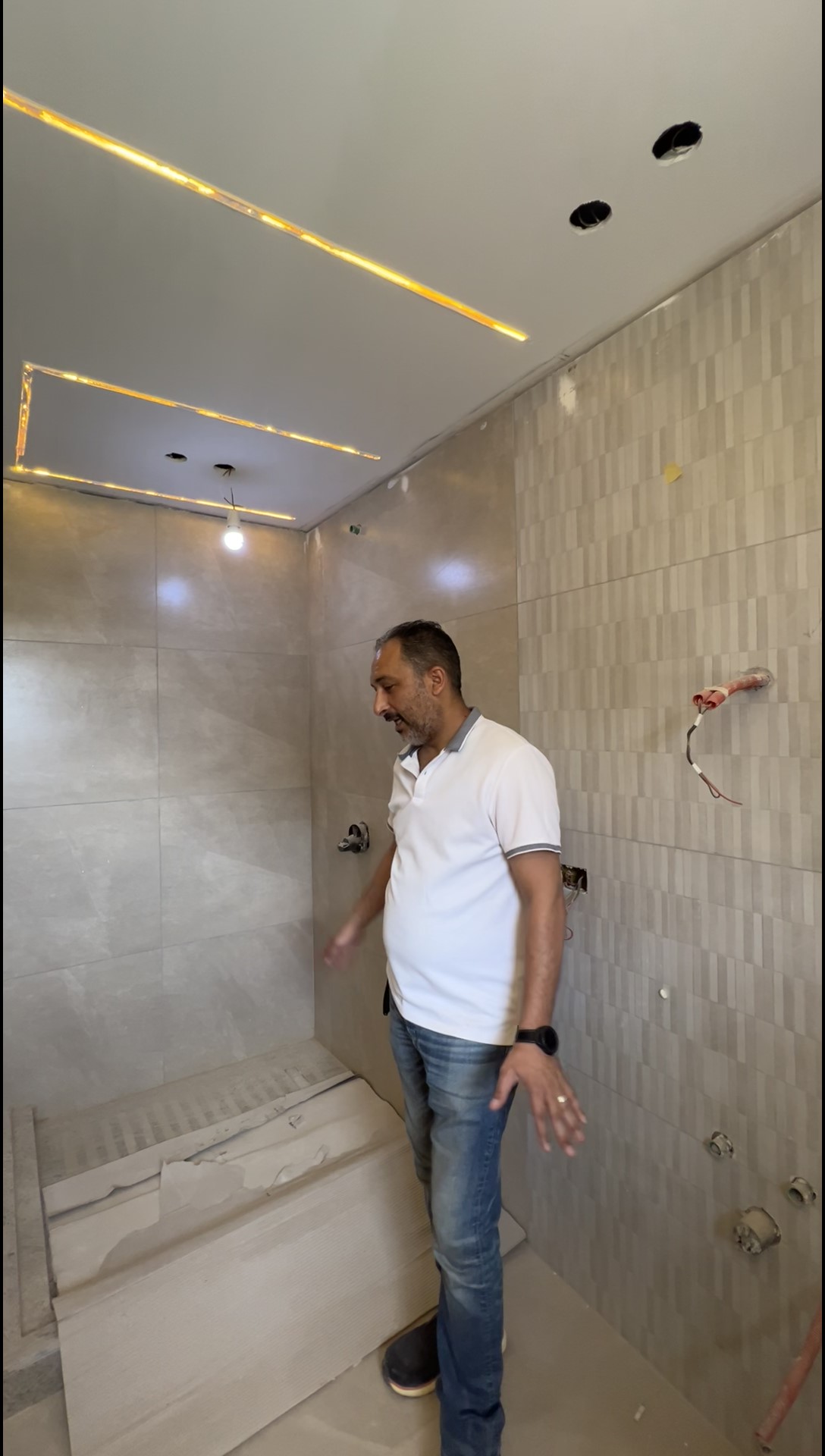
Choosing the right contractor for a luxury villa or palace
Villa and Palace Design
Why Is Choosing a Contractor More Than a Financial Decision?
Once the architectural design is completed, the engineering decision-making process does not end.
Instead, a completely different phase begins: transforming drawings, dimensions, specifications, details, and design intentions into a real building.
In an ordinary project, an error in a finishing detail may have a limited impact. In a luxury villa or palace, however, a relatively small mistake can trigger a chain of technical and financial problems.
For example, changing the size of an opening can affect:
-
The external facade.
-
Aluminum and glazing works.
-
Waterproofing and insulation.
-
HVAC systems.
-
Electrical works.
-
Architectural lighting.
-
Curtains.
-
Interior finishes.
-
Furniture.
-
The final project cost.
For this reason, the contractor should not be treated as a party completely separate from the design.
The contractor is one of the key parties in the overall project chain:
Design → Construction Drawings → Specifications → Quantity Takeoff → Procurement → Execution → Quality Control → Supervision → Handover
A good architectural design does not automatically become a good building. The transition from design to construction requires coordinated drawings, specifications, material approvals, execution planning, and continuous follow-up.
Why Is Choosing the Lowest-Priced Contractor Not Enough?
In luxury residential projects, the price shown in a contractor’s financial proposal represents only one part of the total project cost.
One contractor may appear significantly cheaper than another, but the difference may result from variations in:
-
Material quality.
-
Scope of Work.
-
Finishing level.
-
Number of exclusions.
-
Supplier quality.
-
Labor level.
-
Construction duration.
-
Subcontractor costs.
-
Transportation and installation.
-
Testing and commissioning.
-
Warranty and after-sales service.
Therefore, contractor proposals should be compared only when they are technically comparable, rather than simply comparing the final numbers.
A practical rule is:
Do not compare prices until you have confirmed that the contractors are pricing approximately the same Scope of Work and the same technical specifications.
A lower price can be attractive, but it does not prove that the proposal represents better value.
How Do You Compare Three Contractors Before Making the Final Decision?
Instead of relying only on personal impressions or recommendations, you can use a Contractor Evaluation Scorecard.
This approach turns contractor selection from an emotional decision into a structured, documented, and comparable engineering decision.
Contractor Evaluation Scorecard
| Evaluation Criterion | Contractor A | Contractor B | Contractor C |
|---|---|---|---|
| Experience with villas and palaces | /10 | /10 | /10 |
| Quality of previous projects | /10 | /10 | /10 |
| Quality of execution team | /10 | /10 | /10 |
| Understanding of construction drawings | /10 | /10 | /10 |
| Clarity of technical and financial proposal | /10 | /10 | /10 |
| Value for money | /10 | /10 | /10 |
| Realism of construction schedule | /10 | /10 | /10 |
| Warranty system | /10 | /10 | /10 |
| Supplier quality | /10 | /10 | /10 |
| Cooperation with supervising engineer | /10 | /10 | /10 |
| Total | /100 | /100 | /100 |
How Should You Use the Scorecard?
The contractor should not receive a score simply because of a general impression. Each score should be supported by evidence.
For example:
Experience with Luxury Villas and Palaces — /10
-
0–2: Limited or undocumented experience.
-
3–5: General residential construction experience.
-
6–8: Documented experience with similar projects.
-
9–10: Strong and repeated experience with projects similar in size, complexity, and finishing level.
The same principle should be applied to the other evaluation criteria.
A contractor who receives 10/10 for price but scores poorly in execution quality, drawing interpretation, warranty, and schedule should not automatically be considered the best option.
Do Not Give Price Too Much Weight
A project may be able to absorb a reasonable difference in the initial quotation.
It may not be able to absorb:
-
Re-executing an entire construction item.
-
Replacing materials after installation.
-
Waterproofing failures.
-
Marble or stone problems.
-
Electrical and lighting coordination conflicts.
-
Reworking gypsum or joinery.
-
Project delays.
-
Undocumented changes.
This is why the evaluation should focus on overall value, not only the initial price.
15 Questions to Ask a Contractor Before Signing the Contract
Before hiring a contractor for a luxury villa or palace, the owner should have a clear understanding of the contractor’s working method, responsibilities, team structure, and Scope of Work.
1. What Similar Projects Have You Completed?
Ask for real examples of projects that are similar to yours in terms of:
-
Size.
-
Finishing level.
-
Complexity.
-
Building type.
-
Technical requirements.
2. Can I Visit One of Your Previous Projects?
Visiting a completed project can provide information that photographs cannot.
It allows you to inspect actual workmanship, finishing details, material installation, coordination, and overall quality.
3. Who Will Be the Project Manager?
Do not ask only for the company name.
Find out who will actually manage the project on a daily basis.
4. Who Will Be the Engineer Responsible for Execution?
Identify the technical person responsible for execution, including:
-
His or her role.
-
Communication method.
-
Authority.
-
Responsibilities.
-
Relationship with the supervising engineer.
5. Which Items Are Excluded from Your Proposal?
This is one of the most important questions.
Request a clear list of exclusions so that unexpected costs do not appear later during construction.
Reviewing a luxury villa construction contract and drawings
6. How Are Additional Works Priced?
The contractor should explain how Variations or Change Orders will be evaluated and priced before they occur on site.
7. What Is the Expected Construction Duration?
A simple statement such as “the project will take one year” is not enough.
The proposal should ideally include a realistic construction program with major stages and milestones.
8. Do You Have a Detailed Construction Schedule?
A useful schedule should identify:
-
Major construction stages.
-
Parallel activities.
-
Approval points.
-
Long-lead materials.
-
Procurement milestones.
-
Expected completion dates.
9. Which Subcontractors Will Be Involved?
Luxury projects can depend heavily on specialized subcontractors, including:
-
Electrical contractors.
-
HVAC contractors.
-
Plumbing contractors.
-
Fire protection specialists.
-
Elevator suppliers.
-
Joinery contractors.
-
Aluminum and glazing contractors.
-
Smart home specialists.
-
Waterproofing specialists.
-
Swimming pool contractors.
-
Landscape contractors.
You should know who will execute these items and how coordination between them will be managed.
10. Who Is Responsible for Material Approvals?
Material approval procedures should be clearly defined, particularly for visible and high-value elements such as:
-
Stone.
-
Marble.
-
Wood.
-
Paints.
-
Sanitary fixtures.
-
Lighting.
-
Glass.
-
Aluminum.
11. How Will Delays Be Managed?
Ask how delays caused by:
-
The contractor.
-
Suppliers.
-
Client decisions.
-
Design changes.
-
Procurement.
-
Other external factors
will be documented and reflected in the construction schedule.
12. What Does the Warranty Cover?
Ask about:
-
Warranty duration.
-
Covered items.
-
Repair procedures.
-
Responsibility for defects.
-
Exclusions.
13. Do Your Prices Include Transportation and Installation?
Never assume that everything is included.
Clarify whether the quotation covers:
-
Transportation.
-
Lifting.
-
Installation.
-
Testing.
-
Commissioning.
-
Protection.
-
Final delivery.
14. How Are Changes During Construction Handled?
Any change after construction has started can affect:
-
Quantities.
-
Cost.
-
Schedule.
-
Coordination between disciplines.
-
Previously completed works.
Therefore, there should be a documented process for requesting, approving, pricing, and implementing changes.
15. What Documents Will Be Provided at Final Handover?
Ask about final handover documentation, such as:
-
As-Built drawings where applicable.
-
Operation and maintenance manuals.
-
Warranty certificates.
-
Supplier information.
-
Test results.
-
Keys and operating systems.
-
Final snagging list.
-
Handover records.
Contractor Red Flags You Should Not Ignore
Some warning signs do not automatically mean that a contractor is unsuitable, but they should trigger additional verification before signing.
🚩 1. The Contractor Refuses to Provide a Clear Scope
If it is unclear what is included and excluded from the price, cost comparison and budget management become much more difficult.
🚩 2. The Contractor Is Much Cheaper Than Everyone Else Without a Clear Explanation
A major price difference should have a technical explanation.
It may be caused by:
-
Different specifications.
-
Missing items.
-
Exclusions.
-
Different materials.
-
Different execution methods.
🚩 3. The Contractor Requests an Excessively Large Initial Payment
Payments should be connected to clearly defined stages or milestones according to the agreed contract.
🚩 4. The Contractor Does Not Want to Work According to Drawings
If execution is not based on approved drawings and specifications, maintaining design intent and quality becomes difficult.
🚩 5. The Contractor Rejects Engineering Supervision
For complex projects, a clear supervision role helps review execution, coordination, approvals, and quality.
🚩 6. The Contractor Does Not Clearly Identify Subcontractors
Unclear responsibilities between the main contractor and subcontractors can create coordination and quality problems.
🚩 7. The Contractor Refuses to Document Changes
Verbal changes can later create disputes over:
-
Cost.
-
Schedule.
-
Responsibility.
-
Scope.
🚩 8. The Contractor Does Not Provide a Construction Schedule
“We will finish on time” is not a substitute for a measurable construction program.
🚩 9. The Contractor Wants to Replace Materials Without Approval
Replacing one material with another can affect:
-
Appearance.
-
Performance.
-
Durability.
-
Compatibility.
-
Design intent.
🚩 10. The Contractor Says “Leave It to Us” Instead of Providing Technical Details
Trust is important, but a luxury project also requires:
Specifications + Drawings + Quantities + Approvals + Documentation + Clear Responsibilities
Initial Cost vs. Total Cost of Ownership
One of the most common mistakes when selecting a contractor is treating the contractor's quotation as the complete cost of the project.
In reality, additional costs can emerge because of:
-
Poor execution.
-
Rework.
-
Maintenance.
-
Operating requirements.
-
Replacement.
-
Delays.
-
Changes.
-
Quality-related problems.
The financial picture can therefore be viewed as:
Initial Construction Cost → Rework Cost → Maintenance Cost → Operating Cost → Replacement Cost → Delay Cost → Lifecycle Cost
1. Initial Construction Cost
Initial Construction Cost is the cost associated with constructing the project in its initial phase.
Depending on the contract Scope of Work, it may include:
-
Building works.
-
Structural works.
-
Finishes.
-
Facades.
-
MEP systems.
-
Materials.
-
Labor.
-
Equipment.
-
Procurement.
-
Installation.
This is usually the cost shown in the contractor's initial proposal, but it is not always the complete financial picture.
2. Rework Cost
Rework Cost occurs when an item is executed incorrectly or does not comply with the approved drawings, specifications, or required quality level.
Rework can involve:
-
Removing completed work.
-
Purchasing replacement materials.
-
Additional labor.
-
Reinstallation.
-
Defect correction.
-
Disruption to related activities.
Therefore, a contractor's low initial price can lose its financial advantage if it increases the probability of rework.
3. Maintenance Cost
Project costs do not end at handover.
Some building components require regular maintenance or future corrective work.
Maintenance requirements can depend on:
-
Material quality.
-
Installation quality.
-
Usage.
-
Environmental conditions.
-
Maintenance procedures.
-
The type of systems installed.
The question should therefore not only be:
How much does this component cost to install?
It should also be:
How much will it cost to keep this component in good condition throughout its operating life?
4. Operating Cost
Some design and construction decisions affect future building operating expenses.
These may involve systems such as:
-
HVAC.
-
Lighting.
-
Water systems.
-
Pumps.
-
Swimming pools.
-
Smart home systems.
-
Mechanical and electrical equipment.
Therefore, some decisions should be evaluated according to operational performance, rather than initial price alone.
5. Replacement Cost
Some components do not last forever and may eventually require replacement because of:
-
End of service life.
-
Damage.
-
Improper use.
-
Changing owner requirements.
-
Lack of spare parts.
-
System obsolescence.
A low-cost component may not be economical if it has a short service life or a high replacement cost.
6. Delay Cost
Delay is not simply a problem with the handover date.
It can lead to:
-
Additional labor costs.
-
Extended rental or temporary accommodation costs.
-
Delays to dependent activities.
-
Rescheduling of deliveries.
-
Material price changes.
-
Delayed occupancy.
-
Increased project management and supervision costs.
For this reason, contractor selection should consider the ability to follow a realistic construction schedule.
7. Lifecycle Cost
Lifecycle Cost provides a broader view of the cost of a component or project over its useful life rather than focusing only on its initial purchase or construction cost.
A simplified conceptual framework is:
Lifecycle Cost = Initial Cost + Rework + Maintenance + Operating + Replacement + Delay-Related Costs
This should not be treated as a universal accounting formula for every project. It is a practical framework for evaluating the wider financial consequences of construction decisions.
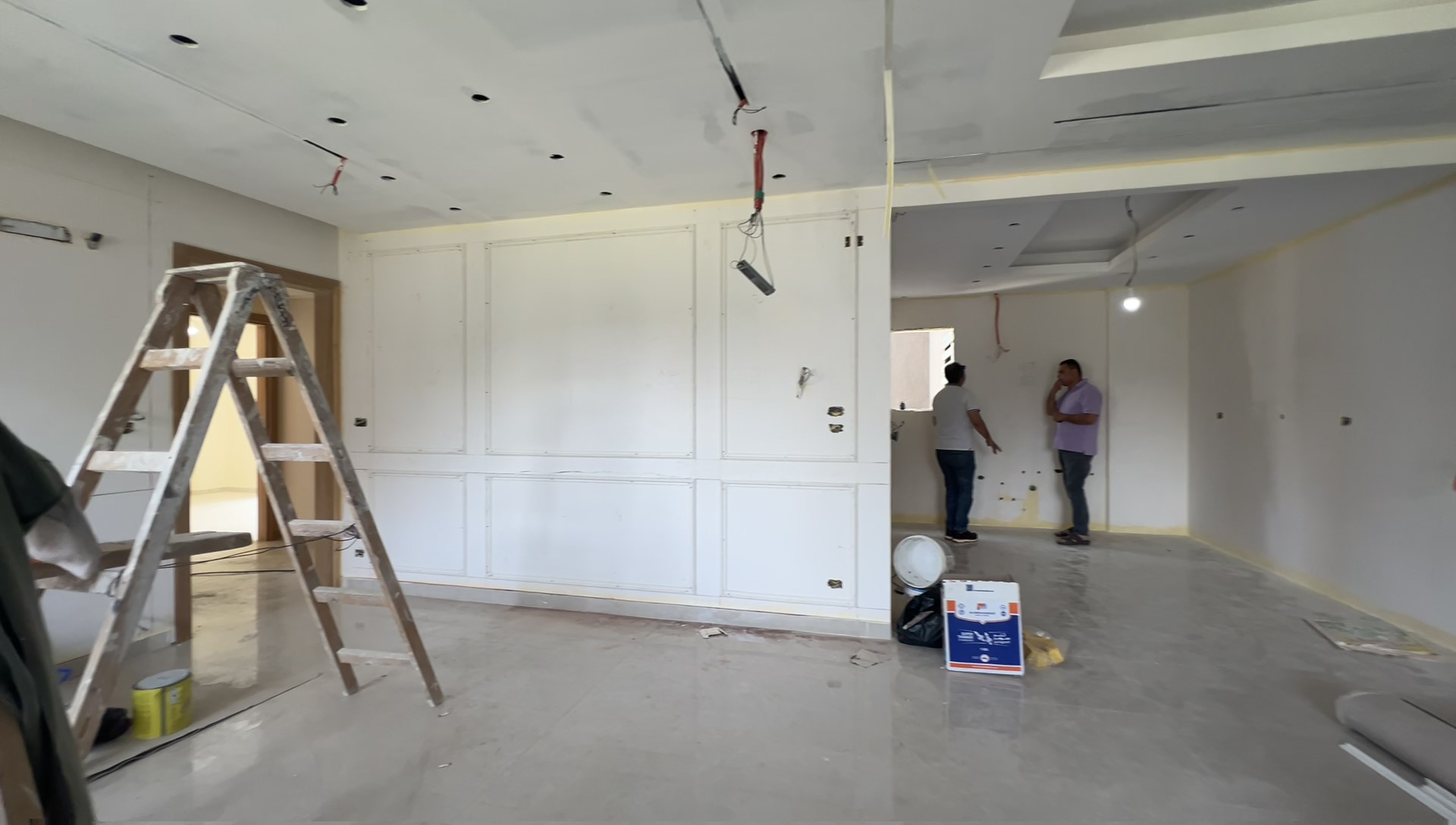
Construction quality inspection before hiring a contractor
How Should You Compare Contractors from a Total-Cost Perspective?
If three contractors submit different proposals, the question should not simply be:
Who offered the lowest number?
The better question is:
Who provides the best technical and economic value for the expected total cost?
A practical comparison matrix can include:
| Comparison Item | Contractor A | Contractor B | Contractor C |
|---|---|---|---|
| Initial Construction Cost | — | — | — |
| Scope clarity | — | — | — |
| Material quality | — | — | — |
| Execution team quality | — | — | — |
| Rework risk | — | — | — |
| Maintenance requirements | — | — | — |
| Operational performance | — | — | — |
| Construction duration | — | — | — |
| Delay risk | — | — | — |
| Warranty | — | — | — |
| Expected Overall Value | — | — | — |
The Key Point
In a luxury project, the lowest quotation is not necessarily the lowest actual cost.
The correct comparison should place the initial price alongside:
-
Execution quality.
-
Rework risk.
-
Maintenance.
-
Operation.
-
Replacement.
-
Delay.
-
Warranty.
The best decision is therefore the one that achieves the right balance between Initial Cost, Total Cost of Ownership, and the required quality level.
When Is the Contractor Not the Only Problem?
Not every construction problem is caused by the contractor.
In some projects, problems begin before the contractor even reaches the site.
A project can encounter difficulties because of:
Incomplete Design → Incomplete Construction Drawings → Coordination Conflicts → Unclear Specifications → Delayed Decisions → Repeated Changes → Procurement Delays → Rework
This is why project success depends on an integrated chain:
Design → Documentation → Specifications → Procurement → Execution → Supervision → Quality Control → Handover
Every link affects the next one.
If the drawings, specifications, and Scope of Work are unclear, it becomes difficult to evaluate the contractor fairly from the beginning.
How Do You Know When You Are Ready to Request Contractor Proposals?
Before sending the project to contractors, use the following checklist:
| Question | Yes / No |
|---|---|
| Is the basic design complete? | ☐ |
| Are the required construction drawings available? | ☐ |
| Are the engineering disciplines coordinated? | ☐ |
| Are the specifications clear? | ☐ |
| Is the Scope of Work defined? | ☐ |
| Are quantities available where required? | ☐ |
| Are the main materials identified? | ☐ |
| Are exclusions known? | ☐ |
| Is the supervision method defined? | ☐ |
| Is the change-approval process clear? | ☐ |
The clearer these answers are, the fairer and more accurate the contractor comparison becomes.
Elhelw's Advice: Do Not Choose a Contractor Before You Know What You Are Pricing
In luxury projects, it is impossible to evaluate contractors properly if each contractor is pricing a different project.
The preferred sequence is:
Clear Design → Construction Drawings → Specifications → Scope of Work → Quantities Where Required → Request for Proposals → Technical & Financial Comparison → Negotiation → Contract → Execution → Supervision → Handover
This approach makes the contractor part of a clear execution system rather than treating the contractor as the only party responsible for project success.
What Is the Difference Between a Good Contractor and a Contractor Suitable for a Luxury Project?
Not every excellent contractor is suitable for every project.
A contractor may be highly capable of constructing standard residential buildings but may not have the experience required for a palace containing:
-
Natural stone facades.
-
Detailed marble work.
-
Custom joinery.
-
Complex lighting systems.
-
High ceilings.
-
Special metalwork.
-
Large-format glazing.
-
Advanced HVAC systems.
-
Smart home systems.
-
Extensive landscaping.
-
Highly sensitive interior details.
For this reason, there is an important difference between a good contractor and a contractor who is appropriate for the specific project.
| Evaluation Criterion | Conventional Contractor | Contractor Suitable for a Luxury Project |
|---|---|---|
| Basic construction | Good | Excellent |
| Understanding execution details | Variable | Strong |
| Luxury material handling | Limited or moderate | Demonstrated experience |
| Multidisciplinary coordination | Experience-dependent | Systematic |
| Supplier management | Basic | Advanced |
| Finishing quality control | Variable | Detailed |
| Change management | May be informal | Documented and controlled |
| Work under engineering supervision | Depends on agreement | Clear and organized |
| Custom work management | Limited | Stronger experience |
| As-Built documentation | May be inconsistent | Part of the process |
This table should not be interpreted as an absolute classification of contractors. It is a practical method for determining how suitable a contractor is for the project in front of you.
What Is a Luxury Construction Contractor?
A luxury construction contractor is an execution entity responsible for transforming approved architectural designs, construction drawings, and specifications into structural, architectural, MEP, and finishing works according to the agreed quality level, Scope of Work, and construction schedule.
The contractor's responsibilities may extend far beyond basic construction.
A luxury project can involve:
-
Structural works.
-
Blockwork and plastering.
-
Facades.
-
Waterproofing and thermal insulation.
-
Marble and stone.
-
Joinery.
-
Aluminum and glazing.
-
Electrical systems.
-
Architectural lighting.
-
Plumbing.
-
HVAC.
-
Fire protection.
-
Smart home systems.
-
Kitchens and bathrooms.
-
Swimming pools.
-
Landscape works.
-
Testing and commissioning.
-
Final handover.
Therefore, contractor evaluation for a luxury project should focus on the ability to manage and execute a multidisciplinary system, not simply on basic construction capability.
Elhelw Architects Designs and the Project Journey from Design to Execution
Elhelw Architects Designs approaches luxury residential projects through a connected range of architectural and execution-related services, beginning with architectural design and extending, according to the project scope and contract, into interior design, execution, finishing, and engineering supervision.
The overall relationship can be understood as:
Architectural Design → Villa Design → Palace Design → Interior Design → Exterior Design → Construction → Finishing → Engineering Supervision → Handover
This relationship matters because the success of a luxury project does not depend on a single stage.
The design should be buildable.
The drawings should be coordinated.
The specifications should be clear.
Materials should be approved properly.
Execution should be monitored.
Quality should be controlled.
Responsibilities should be defined.
The contractor should therefore be selected as part of the entire project system, with clear responsibilities between:
Designer → Contractor → Suppliers → Subcontractors → Supervising Engineer → Owner
What Is the First Thing You Should Review Before Choosing a Contractor?
We do not start with the price.
We start with the project Scope.
Before comparing two financial proposals, you need to know exactly what each contractor is expected to execute.
Does the contract include:
-
Excavation?
-
Foundations?
-
Reinforced concrete structure?
-
Blockwork?
-
Waterproofing?
-
Facades?
-
Aluminum?
-
Glass?
-
Electrical works?
-
Plumbing?
-
HVAC?
-
Fire protection?
-
Gypsum works?
-
Flooring?
-
Painting?
-
Joinery?
-
Kitchens?
-
Bathrooms?
-
Lighting?
-
Landscaping?
-
Gates?
-
Smart home systems?
-
Furniture?
-
Testing?
-
Final handover?
If the answer is unclear, the price comparison can be misleading.
One contractor may appear cheaper because important items are excluded from the proposal, while another contractor may appear more expensive because those items are already included.
Therefore:
Do not compare numbers before standardizing the Scope of Work.
Why Is Evidence More Important Than Claims When Evaluating a Contractor?
A statement such as:
“We have extensive experience in luxury projects.”
is not enough by itself to support a contractual decision.
Stronger evidence can include:
-
Documented projects.
-
Real site photographs.
-
Construction-stage photographs.
-
Drawings or execution details that can legally be published.
-
Mockups and material approvals.
-
Examples of real execution challenges.
-
Explanations of how those challenges were addressed.
-
The actual Scope of Work.
-
Project stage.
-
The role of the office or contractor.
-
Verifiable results without exaggeration.
How Should a Case Study Be Presented?
A useful Case Study can follow this structure:
Project: Project name, where publication is permitted.
Project Type: Villa / Palace / Luxury Residential Project.
Scope: Design / Execution / Finishing / Supervision / Other documented scope.
Challenge: The actual engineering or execution challenge.
Solution: How the problem was addressed.
Execution: How the solution was implemented on site.
Result: A result that can be documented.
This type of content is more valuable than generic marketing statements because it demonstrates experience through evidence and practical context.
From Professional Experience: Where Does the Value of a Good Contractor Appear?
In luxury projects, the value of a good contractor often appears in details that are not visible in the final photographs.
The architectural result does not depend only on the appearance of the design.
It also depends on the execution team's ability to:
-
Read drawings.
-
Understand technical details.
-
Coordinate multiple trades.
-
Follow specifications.
-
Manage procurement.
-
Handle changes.
-
Identify problems early.
-
Reduce unnecessary rework.
-
Protect completed finishes.
Therefore, professional experience should not be communicated only through a statement such as:
“We have experience in luxury projects.”
It is stronger when presented through Evidence of Experience.
How Should a Real Execution Case Be Documented?
A documented case can follow this sequence:
Situation → Problem → Cause → Engineering Decision → Execution → Result → Lesson Learned
1. Execution Situation
What type of project or construction stage was involved?
Only information permitted by the project's documentation should be disclosed.
2. The Problem
What actually happened?
The problem could relate to:
-
Coordination.
-
Execution.
-
Procurement.
-
Materials.
-
A discrepancy between design and construction.
Only the actual documented problem should be presented.
3. The Cause
Describing the problem is not enough.
Where the cause is known and documented, explaining the cause makes the case study more technically valuable.
4. Engineering Decision
What action was taken to address the problem?
The decision should be explained clearly and technically, without exaggeration or unsupported claims.
5. Execution
How was the decision transformed into a real site action?
Evidence may include:
-
Site photographs.
-
Drawings.
-
Execution details.
-
Before-and-after photographs.
-
Material samples.
-
Mockups.
-
Approval documents, where publication is permitted.
6. Result
The result should be verifiable.
Instead of saying:
“We achieved the best possible result.”
the case can explain what actually happened, such as:
-
Correcting a specific item.
-
Completing a construction stage.
-
Reducing rework.
-
Resolving a coordination conflict.
-
Achieving an approved detail.
Only documented outcomes should be presented.
7. Lesson Learned
This is one of the most important parts of a Case Study.
A useful lesson could be:
Execution quality begins before the project reaches the site. It begins with clear design, coordinated drawings, clear specifications, and defined responsibilities.
Facts You Should Know Before Choosing a Contractor
There are several practical facts that villa and palace owners should understand before signing a construction contract:
-
The lowest price does not necessarily represent the best value.
-
Two financial proposals cannot be fairly compared when their Scopes of Work are different.
-
Changes during construction can affect cost, duration, quantities, and coordination.
-
Construction drawings and specifications reduce ambiguity before execution begins.
-
Subcontractor quality can directly affect the final result.
-
Selecting materials from photographs alone is insufficient for some sensitive and high-value items.
-
The construction schedule should be measurable rather than simply a promise about the completion date.
-
Warranty terms should be clearly defined in the contract.
-
Important changes should be documented and approved before execution.
-
Engineering supervision does not replace a good contractor, and a good contractor does not eliminate the need for clear design and responsibilities.
10 Things to Check Before Signing the Contractor Contract
Before signing the agreement, review these ten points:
-
Scope of Work — Is the Scope clear?
-
Drawings — Are the required drawings available and coordinated?
-
Specifications — Are the specifications clear?
-
Exclusions — Which items are excluded?
-
Materials — Who approves materials and how?
-
Schedule — Is there a construction program?
-
Payment Terms — Are payments linked to clear milestones?
-
Variations — How are changes priced and approved?
-
Warranty — What is the warranty period and what does it cover?
-
Handover — What documents and requirements define final handover?
If any of these points is unclear, it is better to resolve it before signing rather than allow the issue to appear during construction.
Contractor Selection: Quick Comparison
| Factor | Why It Matters | What to Verify |
|---|---|---|
| Experience | Reduces the risk of misunderstanding the project type | Documented similar projects |
| Execution quality | Directly affects the final result | Site visits and real photographs |
| Drawings | Define how the design is executed | Team's ability to read and apply drawings |
| Scope | Reduces disputes | Written and clear Scope |
| Materials | Affect appearance, performance, and durability | Specifications and approvals |
| Execution team | Affects daily quality | Project manager, engineers, technicians |
| Suppliers | Affect quality and schedule | Supplier list and specialties |
| Schedule | Establishes the project path | Measurable construction program |
| Price | One part of the investment decision | Comparable proposals |
| Warranty | Protects the owner after handover | Clear duration and conditions |
| Supervision | Helps control execution | Defined responsibilities and authority |
Why Do Some Claims in an Architectural Article Need Sources?
A strong architectural article should not depend entirely on the writer's experience, but it also does not need a source attached to every obvious statement.
Sources are most useful when information is:
-
Technical.
-
Regulatory.
-
Related to a standard or code.
-
Based on an official definition.
-
Based on data or numerical information.
-
Based on a recommendation from a specialized organization.
-
Related to Google or OpenAI technical guidance.
Professional project experience can instead be presented as documented experience or a Case Study, clearly identifying the role and Scope of Work.
A practical content rule is:
Fact → Source
Project Experience → Evidence
Professional Recommendation → Explain the Reasoning
Marketing Claim → Avoid Unsupported Wording
This makes the content easier for readers, search engines, and AI systems to understand and evaluate.
How Should the Article Be Structured for Better Understanding and Information Extraction?
To make an article easier for both readers and search or AI systems to understand, information can be organized in this sequence:
1. The Primary Question
How do I choose the right contractor for a luxury villa or palace?
2. Direct Answer
Provide a short and clear answer near the beginning.
3. Definitions
Define important terms such as:
-
Luxury Construction Contractor.
-
Scope of Work.
-
Design & Build.
-
Turnkey.
-
Engineering Supervision.
-
Variation / Change Order.
-
Total Cost of Ownership.
4. Selection Criteria
Provide a clear list of the main contractor-selection factors.
5. Decision Tool
Use a Contractor Evaluation Scorecard.
6. Questions
Provide 15 questions to ask before signing.
7. Red Flags
Identify warning signs.
8. Evidence
Use documented projects, photographs, and real execution cases.
9. Comparisons
Use easy-to-read tables.
10. FAQ
Build the FAQ around real search intent.
11. Conclusion
End with a concise answer that reinforces the main decision criteria.
This structure makes important information easier to access rather than burying it inside long paragraphs.
How Should Contractor Proposals Be Compared Correctly?
A contractor comparison should preferably be based on a weighted evaluation matrix, rather than the final price alone.
One possible evaluation structure is:
| Evaluation Element | Suggested Weight |
|---|---|
| Experience with the project type | 20% |
| Quality of previous projects | 15% |
| Clarity of technical proposal | 15% |
| Price and value for money | 15% |
| Execution team quality | 10% |
| Project management and schedule | 10% |
| Suppliers and procurement | 5% |
| Warranty and after-sales service | 5% |
| Cooperation with engineering team | 5% |
These percentages are not universal rules.
They should be adjusted according to the project.
For a highly complex palace, for example, technical experience, coordination, and execution quality may deserve greater weight than price.
For a simple and clearly defined project, financial comparison may be more straightforward.
The Lowest Price Is Not Always the Cheapest Offer
This is one of the most important principles in contractor selection.
Imagine three proposals:
| Contractor | Price Level | Scope | Risk Level |
|---|---|---|---|
| A | Very Low | Not fully clear | High |
| B | Medium | Clear and detailed | Medium/Low |
| C | High | Comprehensive and detailed | Depends on justification |
If Contractor A is selected simply because it is the cheapest, the owner may later discover that important items were not included.
This can lead to:
-
Additional requests.
-
Price differences.
-
Change Orders.
-
Rework.
-
Delays.
-
Responsibility disputes.
The cheapest proposal can therefore become the highest actual cost.
The objective should be:
Best Value
rather than:
Lowest Price
What Should a Contractor Proposal Include?
A good contractor proposal should not be a single number on one page.
It should provide a clear technical and financial framework.
1. Scope of Work
What work is the contractor responsible for executing?
2. Specifications
What are the material and system specifications?
3. Quantities
What quantities are included, and how will they be measured?
4. Brands
Are specific brands required, or are approved alternatives permitted?
5. Installation Method
How will sensitive construction items be installed or executed?
6. Timeline
What is the expected duration of each stage?
7. Payment Schedule
When is each payment due?
8. Variation Procedure
How will changes be handled?
9. Warranty
What does the warranty cover and how long does it last?
10. Handover
What constitutes final project handover?
Why Are Construction Drawings More Important Than 3D Images When Selecting a Contractor?
3D visualization is extremely useful for understanding appearance and design intent.
But the contractor does not construct a building from an image.
The contractor executes based on:
-
Plans.
-
Sections.
-
Details.
-
Dimensions.
-
Specifications.
-
Schedules.
-
Structural drawings.
-
Electrical drawings.
-
Mechanical drawings.
-
Finishing details.
This is why:
A 3D image presents the idea, while construction drawings define how that idea will be built.
When reviewing a contractor for a luxury project, it is therefore important to evaluate the team's ability to understand and work with technical documentation rather than only its ability to perform traditional construction work.
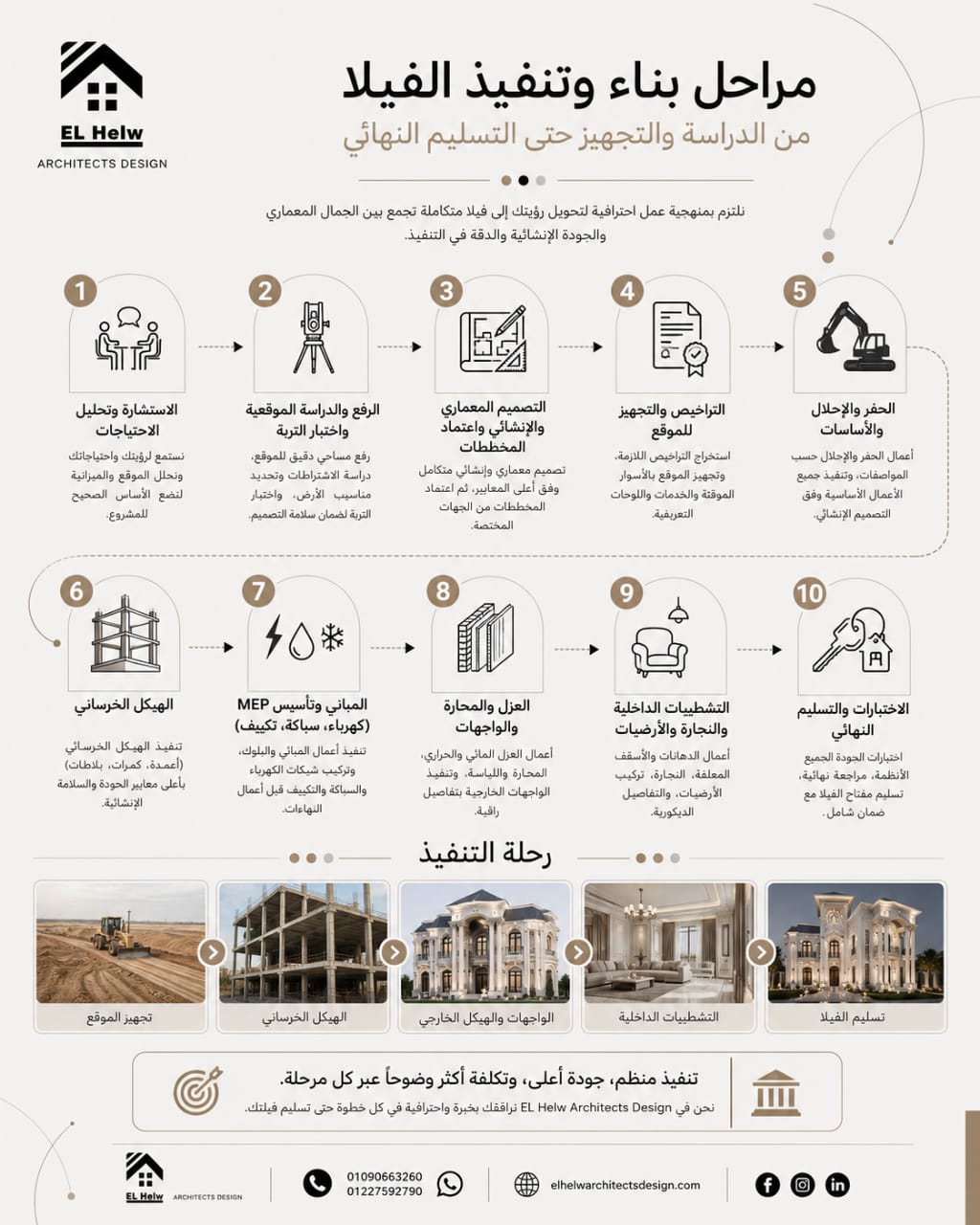
How Can You Test a Contractor's Experience in Practice?
Do not stop at:
“We have 20 years of experience.”
The more important question is:
Where is that experience?
Ask for:
-
Photographs of previous projects.
-
Project type.
-
Scope of work performed.
-
Whether the contractor executed the entire project or only part of it.
-
Who provided engineering supervision.
-
Types of materials used.
-
Similarity to your project.
-
Possibility of visiting a previous project.
-
A previous client who can provide a reference, where appropriate.
This is where evidence becomes valuable.
Real experience can be supported by a project, photographs, Scope of Work, construction stage, and reviewable details.
That is the difference between simply claiming experience and demonstrating it.
Does the Contractor Need to Specialize Specifically in Villas and Palaces?
The company does not necessarily need to have “Villa Construction” in its name.
What matters is whether the team has practical experience appropriate to the project's requirements.
However, contractors who have previously handled highly detailed projects may be better prepared for challenges such as:
-
Multiple materials.
-
Custom works.
-
Precision modifications.
-
Coordination between several subcontractors.
-
Installation quality.
-
Protection of finished surfaces.
-
Material samples and Mockups.
-
Supplier management.
-
Long-lead items.
In palaces, experience in concrete and blockwork alone is not enough.
The critical challenges may appear in the finishing and final coordination stages.
General Contractor or Specialized Contractors?
The answer depends on the project.
General Contractor
A general contractor manages a broad range of works through its own team and subcontractors.
Advantages
-
One main point of contact.
-
Relatively easier coordination.
-
Clearer administrative responsibility.
-
Potentially integrated scheduling.
Challenges
-
The quality of subcontractors must be verified.
-
Execution quality may vary between trades.
-
Strong supervision is still necessary.
Specialized Contractors
A project may use separate contractors for specific disciplines, such as:
-
HVAC.
-
Aluminum and glazing.
-
Marble.
-
Joinery.
-
Smart home systems.
-
Landscaping.
Advantages
-
High specialist expertise.
-
Ability to select the strongest specialist for each scope.
Challenges
-
More parties.
-
More difficult coordination.
-
Greater possibility of disputes between contractors.
-
Strong project management becomes essential.
| Model | Coordination | Flexibility | Administrative Responsibility | Suitable Projects |
|---|---|---|---|---|
| General Contractor | Easier | Moderate | Clear | Medium and large projects |
| Specialized Contractors | More difficult | High | Distributed | Highly specialized projects |
| Design & Build | Highly integrated | Good | Relatively unified | Projects requiring continuity |
| Turnkey | Highly integrated | Contract-dependent | Single point of contact | Integrated projects |
For complex projects, integration between design, execution, and supervision can reduce the gap between design decisions and what actually happens on site.
Design Only vs. Design & Build vs. Turnkey
Before choosing a contractor, you should first understand which contractual model you actually want.
| Element | Design Only | Design & Build | Turnkey |
|---|---|---|---|
| Architectural design | Yes | Yes | Yes |
| Interior design | As agreed | Usually | Usually |
| Construction drawings | Scope-dependent | Yes | Yes |
| Quantity takeoff | As agreed | Usually | Yes |
| Material selection | Consultant / as agreed | Integrated | Integrated |
| Construction | No | Yes | Yes |
| Supervision | As agreed | Yes | Yes |
| Supplier management | Usually owner-side | Within team | Within team |
| Coordination responsibility | Distributed | More integrated | More integrated |
| Single point of contact | No | Possible | Usually |
There is no single contractual model that is right for every client.
If you already have a trusted contractor, Design + Supervision may be appropriate.
If you want to reduce the number of separate parties, Design & Build or Turnkey may be more suitable, provided that the contract, specifications, responsibilities, and Scope of Work are clearly defined.
What Is the Role of Engineering Supervision When Choosing a Contractor?
Engineering supervision acts as a link between approved design and actual execution.
The presence of a contractor alone does not guarantee that everything will be executed exactly as designed.
Problems can occur because of:
-
Material substitutions.
-
Dimension changes.
-
Different execution methods.
-
Coordination errors.
-
Materials that do not meet specifications.
-
Hidden works being completed before inspection.
Engineering supervision helps identify such problems before they become expensive rework.
In complex projects, supervision can include engineers, site supervisors, and inspectors who follow the agreed Scope of Work, monitor construction stages, and report important developments to the client.
Hidden works such as:
-
Waterproofing.
-
Electrical systems.
-
Plumbing.
-
HVAC.
-
Certain structural details
are particularly important because correcting a problem after a wall or ceiling has been closed can become significantly more difficult and expensive.
What Should You Review in the Contractor Contract?
The contract is not simply a tool for defining price.
It is a document that protects the project Scope.
It should clearly identify:
-
Description of works.
-
Reference drawings.
-
Specifications.
-
Materials.
-
Approved alternatives.
-
Prices.
-
Applicable taxes, where relevant.
-
Construction duration.
-
Construction schedule.
-
Payment terms.
-
Payment certificate or valuation mechanism.
-
Variations.
-
Additional works.
-
Omitted works.
-
Delays.
-
Suspension.
-
Warranty.
-
Testing.
-
Practical or initial handover.
-
Final handover.
-
Responsibilities of each party.
-
Dispute-resolution mechanism.
The greater the project value and complexity, the more important clear responsibilities become.
Change Orders: Where Does the Problem Begin?
Changes can happen in luxury projects.
The problem is not necessarily the change itself.
The problem is the undocumented change.
For example, if an owner decides to change the flooring material, the decision may affect:
-
Price.
-
Quantity.
-
Procurement date.
-
Material weight.
-
Installation method.
-
Finished floor level.
-
Doors.
-
Walls.
-
Adjacent details.
Therefore, changes should be documented to answer:
What changed? Why did it change? How much does it cost? How much additional time is required? What is the impact on other items?
An unplanned change can become an engineering problem rather than simply a design preference.
The same principle applies to electrical, plumbing, HVAC, and finishing works.
How Should You Evaluate Labor Quality?
The contractor's name alone is not enough.
You need to know who will actually execute the work.
Ask about:
-
Responsible engineer.
-
Project manager.
-
Site supervisor.
-
Technicians.
-
Specialized workers.
-
Subcontractors.
-
Number of work teams.
-
Ability to increase manpower when required.
Luxury projects may require specialized technicians rather than general labor for items such as:
-
Marble.
-
Joinery.
-
Metalwork.
-
Glass.
-
Gypsum.
-
Concealed lighting.
-
Special painting.
-
Mechanical installations.
-
Smart home systems.
High-quality material cannot compensate for poor installation.
Why Are Mockups and Material Samples Important?
In luxury projects, the final decision should not be based on a catalog photograph alone.
A physical sample can reveal:
-
Actual color.
-
Light reflection.
-
Surface texture.
-
Variation between pieces.
-
How materials meet each other.
-
Joint quality.
-
How lighting interacts with the material.
For important items, it may be appropriate to create a Mockup before applying the final solution throughout the project.
Mockups can be particularly valuable for:
-
Facades.
-
Marble.
-
Special paints.
-
Joinery.
-
Bathrooms.
-
Architectural lighting.
-
Metal details.
Suppliers Are Almost as Important as the Contractor
A contractor may be excellent, but an unsuitable supplier can still damage the project.
Supplier evaluation should consider:
-
Quality.
-
Specifications.
-
Price.
-
Warranty.
-
Availability.
-
Lead time.
-
Alternatives.
-
After-sales service.
-
Installation experience.
This is particularly important for materials and systems that are difficult or expensive to replace after installation, such as:
-
Stone.
-
Marble.
-
Aluminum.
-
Glass.
-
Wood.
-
Waterproofing systems.
-
HVAC systems.
-
Swimming pool equipment.
-
Mechanical equipment and components.
How Do You Identify a Contractor That Relies Heavily on Subcontractors?
Using subcontractors is not necessarily a problem.
It is normal in large and complex construction projects.
The problem is lack of management and control.
Ask:
-
Who is responsible for each discipline?
-
Who reviews the execution?
-
Who is responsible for coordination conflicts?
-
Who coordinates electrical, mechanical, and architectural works?
-
Who reviews materials?
-
Who handles defects?
-
Who coordinates the overall schedule?
If the answer is:
“Every contractor is responsible for himself.”
then there may be an important management gap.
Luxury villa execution from design to final finishing
Common Mistakes When Choosing a Contractor
Mistake 1: Choosing the Lowest Price
A low price may be attractive, but it does not prove that the proposal is better.
Mistake 2: Relying Only on Photographs
Photographs cannot tell you everything about:
-
Waterproofing quality.
-
Electrical quality.
-
Plumbing quality.
-
Execution accuracy.
-
Problems that appeared after handover.
Mistake 3: Failing to Standardize the Scope
Comparing proposals with different financial content leads to an unfair comparison.
Mistake 4: Starting Construction Before the Design Is Complete
This can be one of the main causes of changes and rework.
Mistake 5: Having No Engineering Supervision
The contractor is responsible for execution, but the project may still need an independent party to review design, specifications, and execution quality.
Mistake 6: Leaving Material Selection Until Construction
This can result in:
-
Unsuitable alternatives.
-
Delays.
-
Price increases.
-
Material unavailability.
Mistake 7: Failing to Document Changes
A verbal change can later become a dispute.
Mistake 8: Ignoring Hidden Works
Electrical, plumbing, waterproofing, and HVAC systems are no less important than marble and paint.
Mistake 9: Ignoring the Construction Schedule
Saying “we will finish in one year” is not a construction program.
Mistake 10: Choosing a Contractor Before Choosing a Project Management Method
The project should clearly identify:
-
Who designs?
-
Who executes?
-
Who reviews?
-
Who approves?
-
Who purchases?
-
Who manages?
-
Who accepts the completed work?
A Real Project Lesson: What Did We Learn from Qasr El Saba?
One of the cases documented in the office records is Qasr El Saba, where part of the construction had been carried out independently before the office became involved. Technical and architectural problems subsequently appeared and required review and correction.
The existing works were reviewed, some architectural and structural elements were redesigned, and specialized reinforced-concrete solutions were developed.
The value of the case is not simply the story itself.
The more important lesson is:
Correcting construction after an error has occurred is more complicated than preventing the error before construction.
Rework can involve:
-
Demolition.
-
Removal of materials.
-
Re-measurement.
-
Redesign.
-
Repurchasing.
-
Delaying other activities.
-
Additional labor costs.
-
Disruption to the construction schedule.
This is why planning, coordination, and supervision should be treated as risk-reduction tools rather than merely administrative procedures.
How Should Contractor Selection Be Connected to Villa Design?
A luxury project does not begin with the contractor.
It begins with:
Site → Client Requirements → Architectural Concept → Planning → Facades → Interior Design → Landscape → Engineering Systems → Construction Drawings → Specifications → Quantities → Contractor → Execution → Supervision → Handover
The site, sun orientation, wind, views, and privacy should be studied before the architectural solution is finalized because site conditions influence decisions that later affect execution.
For example, window placement is not simply a facade decision.
It is connected to:
-
Daylight.
-
Heat.
-
Privacy.
-
Ventilation.
-
Views.
-
Glazing.
-
HVAC.
-
Curtains.
-
Furniture.
This is why contractor selection should take place within the overall design system rather than as an isolated decision at the end of the process.
Pre-Contract Contractor Checklist
Before signing the contract, review the following.
Technical
-
Has the contractor reviewed the drawings?
-
Does the contractor understand the details?
-
Has the contractor asked reasonable clarification questions?
-
Has the contractor identified coordination conflicts?
-
Does the contractor have relevant project experience?
Financial
-
Is the proposal detailed?
-
Are quantities clear?
-
Are exclusions clear?
-
Are prices genuinely comparable?
-
Is there a defined mechanism for additional works?
Schedule
-
Is there a construction program?
-
Are construction stages identified?
-
Are long-lead materials identified?
-
Is there a procurement plan?
Operational
-
Who is the project manager?
-
Who is the engineer?
-
Who is the site supervisor?
-
Who are the subcontractors?
-
How will project meetings be conducted?
Contractual
-
What is the warranty?
-
What are the handover conditions?
-
How are changes handled?
-
How are materials approved?
-
How are delays managed?
Elhelw's Advice Before Choosing a Contractor
Based on our experience in design, execution, and project follow-up, we believe that the best decision before contracting is to reduce ambiguity.
Therefore, we focus on:
-
Defining the project Scope before comparing prices.
-
Reviewing drawings and specifications before execution.
-
Not relying on 3D visualization alone.
-
Comparing contractors technically and financially.
-
Requesting proposals with clear inclusions and exclusions.
-
Reviewing the contractor's experience with similar projects.
-
Approving samples and materials before execution.
-
Using Mockups for sensitive items when necessary.
-
Establishing a clear Change Order procedure.
-
Coordinating electrical, mechanical, and lighting systems before ceilings and walls are closed.
-
Giving waterproofing and hidden works the same level of attention as visible facades.
-
Documenting every important change during construction.
-
Using As-Built drawings when significant changes occur.
-
Avoiding unnecessary quality compromises simply to reduce the initial price.
-
Treating the contractor as part of an integrated engineering system.
Should You Choose the Contractor Before the Design Is Complete?
There is no single answer for every project.
However, for luxury projects, at minimum, the design vision, basic drawings, and Scope of Work should be sufficiently clear before making a serious contractor comparison.
In some projects, involving the contractor at an early stage can be useful because of the contractor's knowledge of:
-
Construction feasibility.
-
Cost.
-
Materials.
-
Procurement.
-
Execution methods.
However, this does not mean that the contractor should impose the design solution simply because it is easier to construct.
The correct equation is:
Design Intent + Engineering Feasibility + Cost Control + Construction Experience
The design should therefore be:
-
Architecturally strong.
-
Buildable.
-
Appropriate for the budget.
-
Technically considered from an execution perspective.
How Can a Good Contractor Help Reduce Cost?
A good contractor does not necessarily reduce the quoted price.
Instead, the contractor may help reduce waste and risk through:
-
Reducing rework.
-
Organizing procurement.
-
Identifying execution problems early.
-
Reducing material waste.
-
Selecting more efficient construction methods.
-
Managing labor.
-
Sequencing construction activities.
-
Reducing site downtime.
This supports the principle that good design does not mean increasing cost without reason.
The goal should be to achieve the best value for the cost while considering:
-
Service life.
-
Maintenance.
-
Operational performance.
-
Construction quality.
What Should the Client Receive at the End of the Project?
Final handover does not mean simply receiving the keys.
Depending on the project Scope, the final documentation may include:
-
Drawings.
-
Construction drawings.
-
Specifications.
-
Quantity takeoffs.
-
Material approvals.
-
Test reports where applicable.
-
Warranty documentation.
-
Operation and maintenance manuals.
-
As-Built drawings for important modifications.
The larger and more complex the project, the more important this documentation becomes.
How Do You Choose a Contractor If You Already Have an Architectural Design?
Having a completed design does not automatically make contractor selection easier.
In this situation, the first step should be reviewing:
-
Drawings.
-
Specifications.
-
Quantities.
-
Materials.
-
Details.
-
Coordination between disciplines.
-
Buildability.
A project with an existing design can still require technical review before execution.
Some designs may look excellent visually but require further development before they are ready for construction.
Where the agreed Scope permits, projects with existing designs can be reviewed, developed, and prepared for execution after assessing the drawings and proposed materials.
Design and Execution Under One Engineering Management System
For some projects, the owner may prefer one engineering party to connect:
Design + Drawings + Materials + Execution + Supervision + Handover
This approach can reduce the gap between designer and contractor, particularly in projects with a high number of detailed architectural and interior elements.
A project journey can begin with:
-
Site inspection.
-
Site analysis.
-
Mood Board.
-
Design development.
-
Construction drawings.
-
Quantity takeoff.
-
Execution.
-
Final handover.
A Turnkey delivery model can also be used when it is included within the agreed contractual Scope.
However, the responsibilities of every party must always be clearly written in the technical proposal and contract.
FAQ: Choosing the Right Contractor for Luxury Villas and Palaces
1. How do I choose the right contractor for a luxury villa?
Choose a contractor by comparing experience with similar projects, execution quality, understanding of drawings and specifications, team quality, Scope of Work, suppliers, schedule, warranty, and change-management procedures rather than price alone.
2. What should I check before hiring a contractor?
Review the Scope of Work, drawings, specifications, exclusions, prices, materials, construction schedule, payment terms, subcontractors, warranty, and the process for approving additional works and changes.
3. Should I choose the cheapest contractor?
Not necessarily.
First confirm that the proposals have comparable Scopes of Work and specifications. Then compare price against experience, execution quality, warranty, schedule, exclusions, and rework risk.
4. What should a contractor quotation include?
Depending on the project and contract, the quotation should clearly identify the Scope of Work, inclusions and exclusions, specifications, materials, quantities where necessary, prices, construction duration, payment terms, procurement, subcontractors, warranty, and the process for pricing changes.
5. How many contractors should I compare before choosing one?
There is no mandatory number for every project.
However, comparing at least three qualified contractors can provide a useful basis for understanding differences in price, Scope, quality, and schedule, provided the proposals are technically comparable.
6. Should the architect or consulting engineer supervise the contractor?
For complex projects, engineering supervision can provide independent monitoring of execution against drawings and specifications, as well as review of certain approvals, coordination issues, and site observations according to the agreed supervision Scope.
7. What is the difference between Design & Build and Turnkey?
Design & Build generally combines design and construction within one contractual system.
Turnkey generally refers to delivering a project ready for use within an agreed contractual Scope.
The exact responsibilities, deliverables, exclusions, and risk allocation depend on the specific contract.
8. How do I compare contractor quotations?
First standardize the Scope of Work and specifications as much as possible.
Then compare:
-
Price.
-
Exclusions.
-
Materials.
-
Quantities.
-
Execution team.
-
Construction duration.
-
Procurement.
-
Warranty.
-
Change procedures.
9. What are contractor red flags I should watch for?
Warning signs include unclear Scope, an unusually low price without explanation, unclear exclusions, no measurable construction schedule, refusal to document changes, reluctance to work according to approved drawings, resistance to engineering supervision, and unclear subcontractor responsibilities.
10. What should be included in a luxury villa construction contract?
The contract should define, according to the project's nature:
-
Scope of Work.
-
Reference drawings.
-
Specifications.
-
Prices.
-
Payments.
-
Construction schedule.
-
Responsibilities.
-
Materials and approvals.
-
Variations.
-
Delays.
-
Warranty.
-
Handover.
-
Final documentation.
11. How do Variation Orders affect construction cost?
Variation Orders can affect:
-
Quantities.
-
Cost.
-
Schedule.
-
Coordination.
-
Previously executed work.
This is why the procedure for requesting, approving, pricing, and documenting a variation should be defined before implementation.
12. Can another contractor execute an existing architectural design?
Yes, in principle.
Another contractor can execute an existing design if the drawings, specifications, and Scope of Work are sufficiently complete for construction.
The design should also be reviewed for buildability, coordination, and responsibility allocation before construction begins.
13. Can I choose the contractor before the design is complete?
A contractor can sometimes be involved at an early stage depending on the contractual model.
However, requesting full execution proposals before the design, drawings, and Scope are sufficiently clear can make the proposals less accurate and more difficult to compare.
14. What is the difference between the contractor's price and the total project cost?
The contractor's price generally represents part of the initial construction cost.
The broader project cost may also include:
-
Rework.
-
Maintenance.
-
Operation.
-
Replacement.
-
Delays.
-
Changes.
-
Other lifecycle costs.
15. What is the most important advice when choosing a contractor for a luxury villa or palace?
The most important advice is not to make price the only decision factor.
Start with a clear Scope, suitable drawings, and clear specifications.
Compare contractors using consistent criteria.
Verify their experience with similar projects.
Define responsibilities, warranty, variations, supervision, procurement, and handover requirements before signing the contract.
Why Is This Approach Stronger Than Generic Marketing?
Professional experience is not demonstrated only by the number of years of experience or by describing a project as “luxury.”
Experience becomes more meaningful when it demonstrates the ability to:
Identify the Problem → Understand the Cause → Make an Appropriate Decision → Execute the Solution → Document the Result → Extract a Practical Lesson
For this reason, every Case Study should contain genuine evidence to the extent allowed by project privacy and publication rights.
Elhelw's Rule for Presenting Experience
We do not invent Case Studies to prove experience.
If the details of a project cannot be properly documented, it is better to present the subject as a general engineering recommendation rather than attribute it to a specific project.
A Final Practical Framework for Choosing Between Three Contractors
If you are comparing three contractors for a luxury villa or palace, do not ask only:
“Who is cheaper?”
Ask instead:
-
Who has real experience with similar projects?
-
Who understands the drawings and specifications?
-
Who has the right execution team?
-
Who provides a clear Scope of Work?
-
Who has reliable suppliers and subcontractors?
-
Who provides a realistic construction schedule?
-
Who cooperates effectively with the supervising engineer?
-
Who has a clear system for changes and warranties?
-
Who provides the best overall value?
-
Who reduces the risk of rework and future problems?
The right contractor is not necessarily the cheapest.
It is the contractor who is most capable of executing the required design at the specified quality level, within a clear Scope, realistic schedule, and documented management and follow-up system.
Conclusion: The Right Contractor Is the One Who Protects the Design During Execution
Choosing the right contractor for your luxury design is not a price competition.
It is an engineering and investment decision.
The success of contractor selection should be measured by the contractor's ability to:
-
Execute the developed design.
-
Understand architectural and technical details.
-
Manage labor and suppliers.
-
Follow specifications.
-
Coordinate with the engineering team.
-
Document changes.
-
Maintain quality throughout the project.
-
Reduce unnecessary rework.
-
Support a controlled handover.
A villa or palace does not become luxurious simply because it contains marble, stone, expensive materials, or a high construction budget.
True luxury appears when architectural intent and execution quality come together.
The best contractor is therefore not necessarily the cheapest, nor necessarily the most expensive.
The right contractor is the one who provides the best value for the total cost, can demonstrate relevant experience, understands the design, respects specifications, and operates within a clear engineering and project-management system.
The right contractor does not simply execute the design; the right contractor protects the architectural idea until it becomes a real building.
About Elhelw Architects Designs
Elhelw Architects Designs works across architectural design, interior and exterior design, finishing, execution, and engineering supervision, with more than 18 years of experience across diverse projects including luxury villas, palaces, residential, administrative, commercial, medical, and landscape projects.
We approach every project as an integrated system that begins with understanding the client and the site, followed by design, coordination, drawings, specifications, execution, supervision, and handover.
The objective is not simply to create a building that looks impressive in photographs.
The objective is to create a building that performs effectively, maintains its quality, and protects its long-term value.
Elhelw Architects Designs
Final Takeaway
Choosing the right contractor for a luxury villa or palace should be based on Best Value, not Lowest Price.
A successful selection process begins with a clear design, coordinated construction drawings, specifications, Scope of Work, comparable proposals, documented experience, a realistic schedule, defined responsibilities, controlled material approvals, clear Change Order procedures, appropriate supervision, and proper final handover.
The contractor is one part of a larger engineering system.
And the stronger that system is, the greater the opportunity to protect the design, control cost, reduce execution risks, and achieve the level of quality expected from a luxury project.