Villa Design and Construction in Maxim, Fifth Settlement, New Cairo
Table of Contents
- Why Does a Maxim Villa Require a Well-Planned Design?
- How Should a Luxury Villa Be Planned Before Construction?
- Architectural Facade Design for Luxury Villas
- Interior Design for Luxury Villas
- Choosing Luxury Finishing Materials
- From Design to Construction
- Design Only vs. Design & Build vs. Turnkey
- Standard vs. Premium vs. Luxury Finishing
- Natural vs. Engineered Materials
- Why Engineering Supervision Matters
- Villa Design in Maxim: Why Local Site Analysis Matters
- Common Villa Design and Construction Mistakes
- Where Should You Invest More in a Luxury Villa?
- Can a Villa Be Built in Phases?
- What Should the Client Receive During the Design Stage?
- How to Select Contractors and Suppliers
- El Helw's Advice Before Starting Your Villa
- El Helw's Experience and Working Methodology
- How to Start Your Villa Project
- Frequently Asked Questions
- Final Thoughts
Villa Design and Construction in Maxim: From Concept to Completion
Choosing the right architectural and construction partner is one of the most important decisions when planning a villa in Maxim, Fifth Settlement, New Cairo.
A luxury villa is not created by selecting an expensive marble or an impressive facade alone. A successful project starts much earlier—with site analysis, understanding the client's lifestyle, studying sunlight and prevailing conditions, planning privacy and views, and developing an architectural concept that can ultimately be translated into accurate construction drawings and high-quality execution.
In high-end residential projects, architecture, interior design, facade design, landscape, materials, engineering systems, construction, and supervision cannot be treated as completely separate stages.
Each decision affects the next one.
This is why villa design in Maxim should be approached as an integrated process rather than simply choosing a floor plan and an exterior style.
If you are planning a villa or palace in Maxim, you can begin by sharing the basic project information:
Plot or villa area + project location + current construction status + required service.
This provides a practical starting point for discussing the appropriate design and construction approach.
Why Does a Maxim Villa Require a Well-Planned Design?
When designing a villa in Maxim Country Club, Fifth Settlement, the plot should not be treated simply as an empty piece of land.
Its relationship with the surrounding environment, access roads, neighboring buildings, available views, privacy requirements, and environmental conditions can all influence architectural decisions.
This means that the same architectural solution should not automatically be repeated from one villa to another.
A villa with an open garden view may require a completely different arrangement from a property where privacy is the primary concern.
Likewise, the position and size of windows should respond to natural lighting, views, ventilation, and privacy rather than being determined by facade aesthetics alone.
A successful architectural solution should therefore balance:
Aesthetics + Function + Privacy + Comfort + Constructability
This principle becomes even more important in large villas and private palaces.
More space does not automatically mean better architecture.
In many large residential projects, the real challenge is not the lack of space but the inefficient distribution of that space.
How Should a Luxury Villa Be Planned Before Construction?
Architectural planning is one of the most important stages for reducing expensive changes during construction.
The process should begin with understanding the site, the client's requirements, the family's lifestyle, and the desired architectural identity.
The design team can then establish a visual direction through a Mood Board, defining the intended relationship between materials, colors, lighting, furniture, architectural elements, and the overall atmosphere.
The initial concept is then developed into a coordinated architectural design before progressing toward interior design, exterior design, landscape, detailed construction drawings, material specifications, quantities, and execution.
From Concept to Construction
| Stage | Main Work | Purpose |
|---|---|---|
| Site Analysis | Plot, orientation, views, privacy | Identify opportunities and constraints |
| Functional Program | Family needs and required spaces | Avoid inefficient or missing spaces |
| Architectural Design | Plans, volumes, elevations | Establish the architectural identity |
| Interior Design | Space planning, materials, furniture | Connect function with aesthetics |
| Exterior Design | Facades and architectural elements | Create a coherent visual identity |
| Landscape Design | Gardens, paths, outdoor areas | Integrate the building with its surroundings |
| Construction Drawings | Detailed technical documentation | Reduce execution errors |
| Quantity Takeoff | Materials and quantities | Improve cost control |
| Construction | Site execution and coordination | Turn the design into reality |
| Supervision | Quality and compliance monitoring | Maintain design and construction standards |
| Handover | Final review and completion | Deliver the finished project |
For clients looking for a complete architectural approach, [Villa and Palace Design Services] can be linked here as part of the site's internal linking structure.
Architectural Facade Design: Luxury Without Excess
Luxury architecture does not necessarily mean adding more columns, decorative elements, stone, or visual details.
A successful facade depends on:
- Proportion.
- Massing.
- Openings.
- Rhythm.
- Shadows.
- Material selection.
- Lighting.
- Relationship with the interior spaces.
A luxury villa facade should have an architectural logic.
Window positions should respond to the spaces behind them. Large openings should support natural light and views, while solid elements can provide privacy and solar protection.
Materials should also be considered as part of the architectural system rather than as decorative layers added at the end of the project.
Comparing Popular Villa Facade Styles
| Style | Main Strength | Main Challenge | Suitable For |
| Modern | Clean lines and visual simplicity | Requires high execution accuracy | Contemporary villas |
| Contemporary | Flexible combination of materials | Can become visually crowded | Custom luxury projects |
| Neo-Classical | Formal presence and strong character | Can look dated if overused | Villas and private palaces |
| Mediterranean | Warm and connected to outdoor spaces | Requires careful color and material control | Villas with large gardens |
| Minimal Luxury | Quiet and sophisticated appearance | Depends heavily on detailing | Clients who prefer understated luxury |
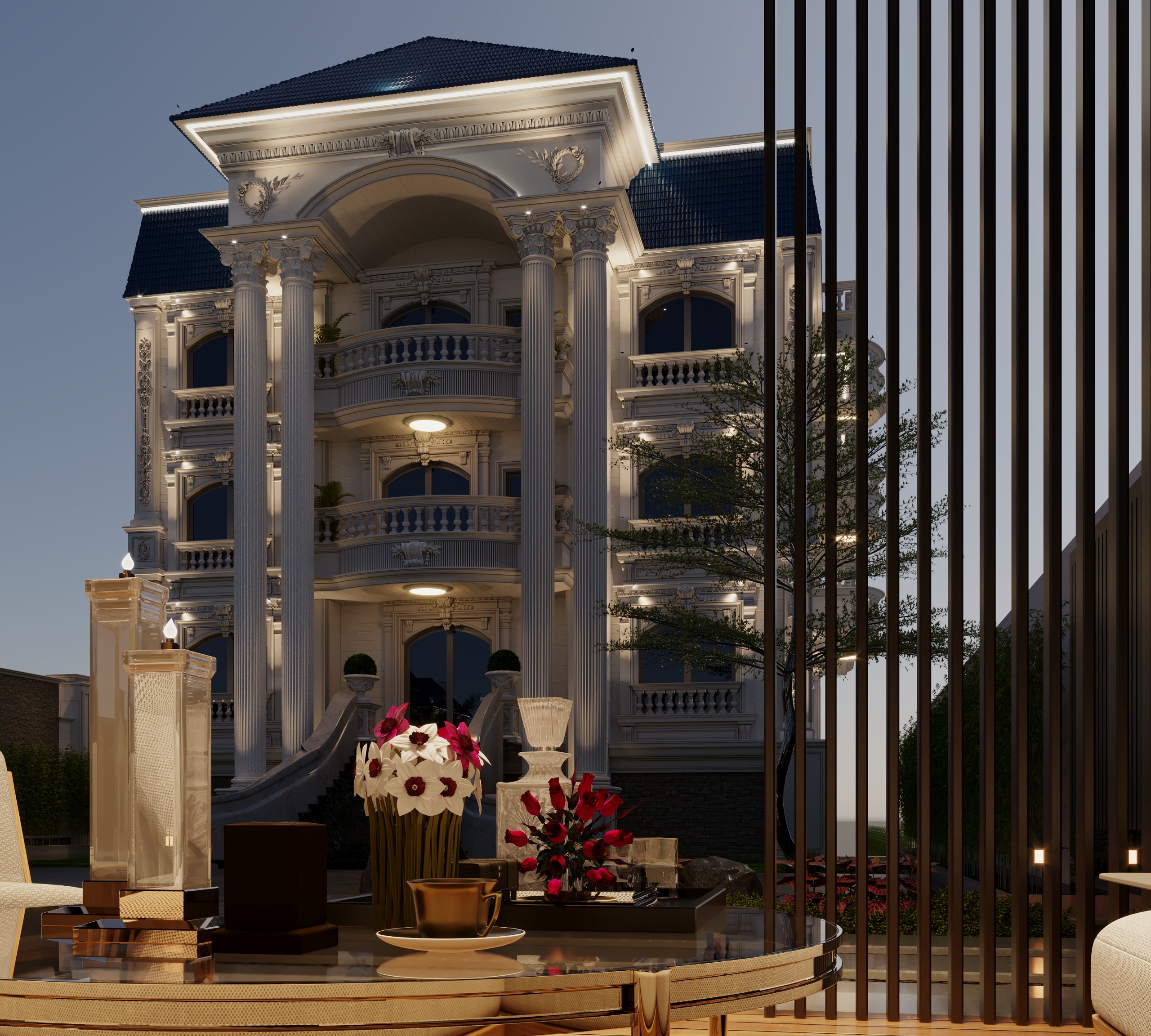
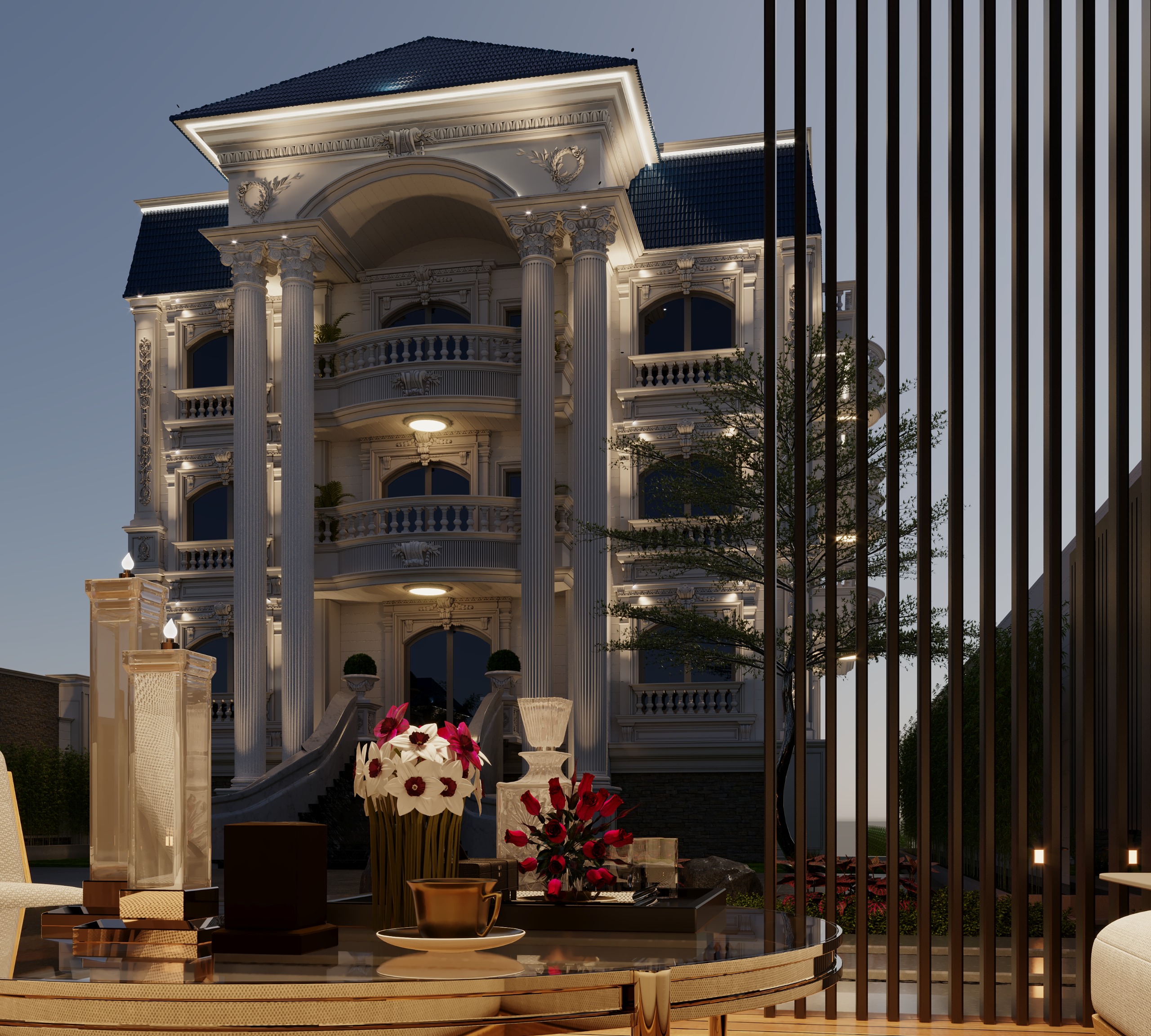 Luxury villa facade from an El Helw project]
Luxury villa facade featuring contemporary architectural proportions and refined materials.
Interior Design for Luxury Villas
Interior design should not be treated as a stage that begins after the architectural design has already been completed.
The relationship between the architectural layout and the interior environment should be considered from the beginning.
Reception areas, dining rooms, living spaces, kitchens, bedrooms, dressing rooms, bathrooms, staircases, and service areas should work as one coordinated system.
In large villas, the challenge is often not the size of the property but the efficiency of movement and space allocation.
A large villa can still feel uncomfortable if it contains excessive corridors, poorly positioned transitional spaces, disconnected service areas, or weak relationships between major living spaces.
This is where [Luxury Villa Interior Design] becomes an essential part of the architectural process.
Natural light, ventilation, privacy, furniture layouts, lighting systems, and material transitions should be considered before construction begins.
The objective is not simply to create interiors that look attractive in photographs.
The objective is to create spaces that remain comfortable and functional during everyday use.
Choosing Luxury Finishing Materials
The most expensive material is not necessarily the best material for every application.
When selecting finishing materials, several factors should be considered:
- Expected lifespan.
- Usage intensity.
- Maintenance requirements.
- Moisture and heat resistance.
- Cleaning requirements.
- Availability.
- Replacement options.
- Installation method.
- Compatibility with the architectural design.
- Budget.
For this reason, [Luxury Villa Finishing Services] should be integrated with the design process rather than treated as a final decorative decision.
A material that performs beautifully in a reception area may not be the best choice for a heavily used surface.
Likewise, a material suitable for interior applications may not be appropriate for an exterior facade.
The real objective is not to use expensive materials everywhere.
It is to use the right material in the right location.
True luxury is not about using the most expensive materials everywhere. It is about selecting the right materials and executing them precisely.
From Design to Construction: Where Does Experience Matter?
A beautiful 3D visualization does not automatically guarantee a successful construction project.
The real challenge begins when the design has to be translated into physical construction.
For this reason, the following elements should be coordinated:
- Architectural design.
- Interior design.
- Facade design.
- Landscape design.
- Construction drawings.
- Electrical systems.
- Mechanical systems.
- Material specifications.
- Quantity takeoffs.
- Construction.
- Engineering supervision.
- Finishing and handover.
This coordination helps identify conflicts between disciplines before they become expensive site problems.
Design Only vs. Design & Build vs. Turnkey
| Element | Design Only | Design & Build | Turnkey |
| Site Analysis | ✓ | ✓ | ✓ |
| Architectural Design | ✓ | ✓ | ✓ |
| Interior Design | As agreed | ✓ | ✓ |
| Facade Design | As agreed | ✓ | ✓ |
| 3D Visualization | According to scope | ✓ | ✓ |
| Construction Drawings | According to scope | ✓ | ✓ |
| Quantity Takeoff | According to scope | ✓ | ✓ |
| Material Selection | Advisory / as agreed | ✓ | ✓ |
| Contractor Management | Client's responsibility | Included within scope | ✓ |
| Site Construction | — | ✓ | ✓ |
| Site Supervision | According to scope | ✓ | ✓ |
| Discipline Coordination | Limited | ✓ | ✓ |
| Single-Point Project Coordination | Client | Design & Build team | ✓ |
Which model is right for your project?
Design Only can be suitable for clients who already have a contractor or construction team and need professional architectural documentation.
Design & Build creates stronger continuity between the design decisions and the construction process.
Turnkey construction can provide a more integrated project structure, where one party coordinates multiple stages from design through construction, finishing, and handover according to the agreed contract and specifications.
Standard vs. Premium vs. Luxury Finishing
For a high-end villa, the objective should not be to select the highest specification for every single item.
The better question is:
Where does the investment create the most long-term value?
| Element | Standard | Premium | Luxury |
| Main Goal | Cost efficiency | Quality-cost balance | Highest quality and detailing |
| Materials | Practical options | Higher-grade selections | Carefully selected premium materials |
| Flooring | Good ceramic / porcelain | Premium porcelain / selected stone | Luxury natural stone / premium materials |
| Kitchens | Standard systems | Higher-quality materials and hardware | Custom kitchens and premium hardware |
| Doors | Standard solutions | Higher-quality finishes | Custom joinery and detailing |
| Bathrooms | Practical products | High-quality products | Premium sanitaryware and custom details |
| Lighting | Basic | Integrated lighting design | Architectural and advanced lighting |
| Facades | Cost-effective materials | Higher-grade materials | Natural stone and premium facade solutions |
| Detailing | Limited | High | Very high |
| Cost | Lowest | Medium to high | Highest |
Does Luxury Always Mean Better?
Not necessarily.
A premium material may be more appropriate than an ultra-luxury alternative if it provides better performance, easier maintenance, or greater suitability for the intended application.
Spending more money on an unsuitable material does not automatically increase the value of the project.
The question should therefore be:
Where should the budget be invested?
Not:
What is the most expensive material available?
Natural vs. Engineered Materials
There is no single answer that applies to every part of a villa.
Natural materials can provide unique variations and a distinctive character, while engineered materials may offer greater consistency and controlled performance depending on the product.
| Factor | Natural Materials | Engineered Materials |
| Source | Naturally occurring | Manufactured or engineered |
| Appearance | Each piece may vary | More consistent |
| Uniqueness | Very high | More controlled |
| Stone | Natural veining and variation | Consistent engineered alternatives |
| Wood | Natural grain variation | More predictable characteristics |
| Maintenance | Depends on material and treatment | Depends on product |
| Matching Pieces | Can be limited | Usually easier |
| Aesthetic Value | Unique natural character | Consistency and precision |
| Cost | Can be high for rare materials | Varies by product |
| Key Consideration | Material type and treatment | Product specification and quality |
The right decision depends on:
- Where the material will be used.
- Exposure to water, heat, and sunlight.
- Daily usage.
- Maintenance requirements.
- Expected lifespan.
- Architectural compatibility.
- Installation method.
- Budget.
[Luxury Finishing Materials: What Is Worth the Investment?]
Why Does Engineering Supervision Matter?
A good design alone does not guarantee good execution.
Even highly detailed drawings can be compromised by incorrect installation, unsuitable materials, unapproved changes, or poor coordination between trades.
Engineering supervision creates an important link between the approved design and the actual construction.
Depending on the agreed scope, supervision can involve reviewing executed work against drawings and specifications, monitoring material quality, coordinating site decisions, and identifying construction issues before they become costly.
Why Is Supervision Especially Important in Luxury Projects?
Because a small mistake in a large project can affect multiple subsequent trades.
Changing the position of an opening, ceiling detail, electrical point, plumbing route, or material transition can influence the interior design, mechanical systems, lighting, and finishing work.
This is why coordination between disciplines is critical.
Villa Design in Maxim: Why Local Site Analysis Matters
A villa in Maxim should not simply be treated as a copy of a villa designed elsewhere in New Cairo.
Each site has its own conditions that can influence architectural decisions.
These may include:
- Plot dimensions and geometry.
- Orientation.
- Sun exposure.
- Natural ventilation.
- Available views.
- Privacy requirements.
- Surrounding buildings.
- Access and circulation.
- Vehicle movement.
- Outdoor spaces.
- Family lifestyle.
- Applicable development regulations and requirements.
Privacy and Views
Privacy is one of the most important design considerations in a high-end villa.
Window positions, opening sizes, living room orientation, outdoor seating areas, landscape elements, and boundary treatments can all affect the privacy of the property.
However, privacy should not result in completely closing the villa from natural light and desirable views.
The architectural challenge is to balance:
Privacy + Natural Light + Ventilation + Views + Architectural Identity
Design Should Respond to the Site
A design that works perfectly on one plot may not be the best solution for another plot, even if the two properties have similar areas.
A change in orientation, views, privacy requirements, or access can affect:
- Bedroom layouts.
- Living spaces.
- Facade orientation.
- Window sizes.
- Main entrance design.
- Landscape distribution.
- Swimming pool location.
- Outdoor seating.
- Shading systems.
- Facade materials.
This is why villa design in Maxim should not be based on a fixed template.
It should be developed around the actual characteristics of each property.
Common Villa Design and Construction Mistakes
The mistakes that cost homeowners money are not always major mistakes from the beginning.
Sometimes a small decision is left unresolved, and its consequences appear later during construction.
1. Starting Finishing Before the Design Is Complete
This can lead to repeated changes in electrical systems, plumbing, ceilings, flooring, and wall treatments.
2. Selecting Materials Based Only on Appearance
A material may look attractive but perform poorly in its intended application.
3. Buying Materials Based on Photos
Images cannot always communicate the actual color, thickness, grade, source, treatment, or installation requirements.
4. Failing to Coordinate Electrical Systems With Interior Design
Sockets, lighting points, switches, screens, doors, furniture, and ceiling details should be reviewed together.
5. Ignoring Material Junctions
The transitions between marble, wood, stone, metal, walls, and flooring often reveal the actual quality of execution.
6. Leaving Landscape Design Until the End
Landscape should be coordinated early so that water, drainage, electrical, lighting, and irrigation requirements are properly integrated.
7. Prioritizing Appearance Over Maintenance
A luxury villa is not a showroom.
It is a home that needs to remain functional and maintainable for years.
8. Failing to Document Changes
Construction changes should be reflected in the final documentation and As-Built drawings where applicable.
Where Should You Invest More in a Luxury Villa?
Reducing cost does not always mean choosing the cheapest material.
A more effective approach is Value Engineering—achieving the best overall value for the available budget.
In a luxury villa, it is often worth prioritizing components that are difficult or expensive to replace later, such as:
- Waterproofing.
- Electrical infrastructure.
- Plumbing.
- HVAC systems.
- Exterior doors.
- Windows and glazing.
- Smart-home infrastructure.
- Major structural and concealed works.
Meanwhile, certain decorative elements can potentially be completed later if the initial infrastructure has been properly planned.
Investment Priorities
| Element | Investment Priority | Why? |
| Waterproofing | Very High | Difficult and expensive to correct later |
| Electrical Infrastructure | Very High | Long-term building infrastructure |
| Plumbing | Very High | Leaks can cause major damage |
| Windows & Glazing | High | Affects comfort and energy performance |
| HVAC | High | Directly affects daily comfort |
| Flooring | High | High daily use and long lifespan |
| Kitchens | High | Intensive daily use |
| Lighting | Medium / High | Strong impact on the user experience |
| Replaceable Decorative Elements | Medium | Easier to update later |
| Accessories | Budget-dependent | Mainly aesthetic impact |
Can a Villa Be Built in Phases?
Yes.
A luxury villa can often be developed in phases if the project is planned around phased construction from the beginning.
Phased construction should not mean dividing the project randomly.
The team should determine:
- Which works must be completed first.
- Which infrastructure should be installed from the beginning.
- Which elements can be postponed.
- How the architectural identity will remain consistent.
- How future phases can be completed without damaging finished work.
- Which systems require early provisions.
Proper planning can help control cash flow without turning the project into a collection of disconnected phases.
What Should the Client Receive During the Design Stage?
Depending on the agreed scope, project deliverables may include:
- Architectural drawings.
- Facade design.
- Interior design.
- Landscape design.
- 3D visualizations.
- Construction drawings.
- Structural drawings where included.
- Quantity takeoffs.
- Material specifications.
- Preliminary cost studies.
Clear documentation is an important part of protecting the client's investment.
Detailed drawings and specifications reduce ambiguity and limit uncontrolled interpretation during construction.
How to Select Contractors and Suppliers
In luxury construction, price should not be the only factor when comparing contractors and suppliers.
The evaluation should include:
- Technical specifications.
- Scope of supply.
- Product quality.
- Warranty.
- Installation method.
- Delivery time.
- Availability of alternatives.
- Installation experience.
- Total project cost.
Two products may look almost identical but differ significantly in thickness, treatment, warranty, installation requirements, or long-term availability.
The supplier is therefore part of the project's quality chain, not simply a purchasing source.
El Helw's Advice Before Starting Your Villa
Before starting construction, we recommend reviewing the following:
- Do not begin construction before the core design is properly coordinated.
- Do not select materials based only on photographs.
- Do not choose a contractor based solely on the lowest price.
- Request clear technical specifications for every major material.
- Coordinate electrical and lighting points before closing walls and ceilings.
- Develop the landscape design alongside the building design.
- Include waterproofing and insulation in the planning stage.
- Do not postpone HVAC coordination until the finishing stage.
- Provide adequate maintenance access for building systems.
- Document construction changes.
- If construction will be phased, plan the phases before the first phase begins.
- Treat the villa as a long-term asset, not simply a finishing expense.
El Helw's Experience: From Architectural Design to Real Construction
When selecting a firm for luxury villa design in Egypt, viewing attractive images is not enough.
The more important questions are:
How does the firm work? What types of projects has it handled? How does it coordinate design with construction? And how does it turn architectural concepts into buildable solutions?
El Helw Architects Design & Finishing approaches projects as integrated architectural systems.
The process can begin with understanding the client's vision and requirements, followed by site analysis, concept development, architectural design, detailed documentation, material selection, construction, supervision, and handover according to the agreed scope.
The firm's portfolio includes different types of projects, including villas, palaces, residential developments, administrative and commercial projects, medical facilities, and landscape works.
This variety reinforces an important principle:
Every project should be treated as an individual architectural problem rather than a copy of an existing design.
We Do Not Use One Design for Every Project
A private palace is different from a family villa.
A villa is different from a chalet.
A residential project is different from an administrative building.
Therefore, the architectural response should change according to the site's characteristics, the building's function, and the client's requirements.
From Concept to Handover
Experience becomes particularly valuable when the different project stages are connected:
Client Requirements → Site Analysis → Architectural Design → Construction Drawings → Quantity Takeoff → Material Selection → Construction → Supervision → Finishing → Handover
This is the difference between having an attractive design on paper and developing a project that can actually be constructed to a controlled standard.
How to Start Your Villa Project in Maxim
Starting the project does not need to be complicated.
Begin by gathering the basic information:
- Property location.
- Plot or villa area.
- Approximate desired built-up area.
- Current project status.
- Number of residents.
- Preferred architectural style.
- Desired finishing level.
- Design only or design and construction?
- Full construction or phased construction?
The next step is to understand the site and the client's requirements, establish the design direction, develop the Mood Board, and then progress toward a coordinated architectural concept.
After the design is approved, the project can move toward construction documentation, specifications, quantities, material selection, construction, and supervision according to the agreed scope.
At every stage, the client should clearly understand:
What has been approved, what will be executed, and what remains.
Frequently Asked Questions About Villa Design and Construction in Maxim
Can El Helw design and construct a villa in Maxim?
The firm can provide architectural design, interior and exterior design, landscape, construction, finishing, and engineering supervision services according to the project's scope and contractual requirements.
Can you construct a villa if the design is already completed?
A project can be reviewed before construction, including its drawings, specifications, materials, and execution requirements. The exact scope depends on the existing documentation and project condition.
Can a villa be constructed in phases?
Yes. Phased construction can be appropriate when the sequence is planned from the beginning and the infrastructure is prepared for future stages.
How is the cost of villa construction determined?
There is no single fixed price for every villa. Cost depends on factors such as area, scope, architectural complexity, finishing level, materials, construction system, and project requirements.
Does the firm help with material selection?
Material selection can be included within the agreed scope, considering quality, performance, maintenance, design compatibility, availability, and budget.
Can you work on an existing villa?
Existing properties can be assessed for redesign, finishing, construction, renovation, or supervision depending on the actual condition of the building and the required scope.
Ready to Start Your Villa Project in Maxim?
A luxury villa project in Maxim should not begin with the most expensive facade or finishing material.
It should begin with understanding the site, defining the client's requirements, establishing the architectural direction, and creating a clear plan for design, construction, finishing, and supervision.
If you own a plot or villa in Maxim, Fifth Settlement, New Cairo, you can start by sharing:
Property area + location + current project status + required service.
This allows the project requirements to be understood before determining the appropriate design and construction approach.
Start Your Project With the Right First Step
[Request an Initial Project Assessment]
Final Thoughts
Successful villa design and construction in Maxim, Fifth Settlement is not simply about creating an impressive exterior.
It is an integrated process that begins with site analysis and client requirements, then connects architectural design, interior design, facade design, landscape, material selection, construction documentation, execution, engineering supervision, and handover.
Luxury does not necessarily mean using the most expensive material everywhere.
It means making the right decision for the right space, selecting materials according to performance and design requirements, and executing every detail with precision.
The success of a villa should also not be judged by the beauty of its 3D renders alone.
The real test is whether the design can become a functional, comfortable, maintainable, and well-executed building that retains its architectural quality over time.
If you are planning villa design in Maxim, villa construction in New Cairo, or a luxury villa or palace project in Egypt, the right starting point is a detailed understanding of your specific site, requirements, budget, and long-term objectives.
True luxury is not about how much you add to a villa. It is about how precisely every element works together.