Blending Egyptian Heritage into Contemporary Design: A Comprehensive Engineering Guide for Villas and Palaces
Discover how we merge the authenticity of rich Egyptian heritage with the luxury of contemporary design to create exceptional villas and palaces that combine sustainable identity and absolute comfort with the highest architectural standards.
Engineering Introduction: The Spirit of Authenticity in a Contemporary Guise
At "Alhelw Architectural Designs and Finishes", we believe that Egyptian architecture is not merely a historical style preserved in museums; rather, it is a living, vibrant school shaped by over 18 years of practical experience in designing and executing luxury villas and palaces across the Egyptian and Gulf markets. When we begin drafting the initial lines for any new project—whether in the heart of New Cairo, Sheikh Zayed, the North Coast, or the city of El Arish in North Sinai—we never separate historical authenticity from the requirements of contemporary life.
 Blending Egyptian character into contemporary design represents both an engineering and philosophical challenge. It requires a deep understanding of sun paths, prevailing wind directions, the unique properties of local materials, and how to repurpose traditional elements such as mashrabiyas, vaults, and internal courtyards (hosh)—with a modern, minimalist spirit that serves architectural functionality with maximum efficiency.
First: The Philosophy of Foundation and Architectural Planning for Contemporary Egyptian Style
From our extensive experience in studying and designing villas and palaces, sound urban planning is the cornerstone of any successful project. We do not settle for placing solid concrete masses; instead, we begin by studying the geographical site, the path of the sun from sunrise to sunset, and the northwesterly wind directions to ensure consistent cross ventilation.
Contemporary Egyptian style begins with the floor plan. We carefully design spaces to guarantee privacy and maximize natural light, drawing inspiration from the open interior courtyard (courtyard)—an essential element in Egyptian architecture across the eras used to cool natural air and create a private indoor oasis for the household.
Detailed engineering diagram illustrating the floor plan for space distribution and cross-ventilation airflows around the villa's internal courtyard (hosh) to ensure natural cooling.
In our designs, we carefully regulate wet spaces, placing bathrooms and kitchens in specific corners of the floor plan to ensure odor isolation and direct ventilation away from living and reception rooms. We also make maximum use of sunshades and architectural elements that protect facades from direct solar radiation, particularly in hot environments such as Upper Egypt and coastal regions.
Second: A Comprehensive Comparison Between Traditional Egyptian Style and Blended Contemporary Design
To ensure our engineering vision is clear to every property owner or investor seeking distinction, the following table outlines the fundamental differences and how a balanced integration between the two styles is achieved:
| Design Element | Traditional Egyptian Style | Pure Contemporary Design | Our Blended Vision (Contemporary Egyptian Style) |
| Massing & Facades | Thick masses, narrow openings to escape heat | Straight lines, very wide glass surfaces | Clean architectural masses using smart facades and shades inspired by mashrabiyas |
| Materials & Finishes | Natural stone, mudbrick, heavy woods | Exposed concrete, aluminum, glass, oxide | Integrating natural Hashemi or Pharaonic stone with contemporary glass and precision-crafted wrought iron |
| Lighting & Ventilation | Full reliance on internal courtyards and natural ventilation | Integrated artificial lighting and extensive central air conditioning | Utilizing cross ventilation and internal courtyards alongside modern, concealed LED lighting systems |
| Interior Spaces | Spaces distributed precisely around a central axis or courtyard | Wide open floor plans | Flexible layouts blending contemporary openness with traditional family privacy |
Second (Continued): Common Mistakes When Blending Egyptian Heritage with Modern Architecture and How to Avoid Them
From our numerous site inspections of previous projects executed by others—or those where we were asked to correct their execution paths (such as in our engineering projects like Saba Palace and Rouq Palace)—we have identified a recurring set of mistakes made by non-specialists:
-
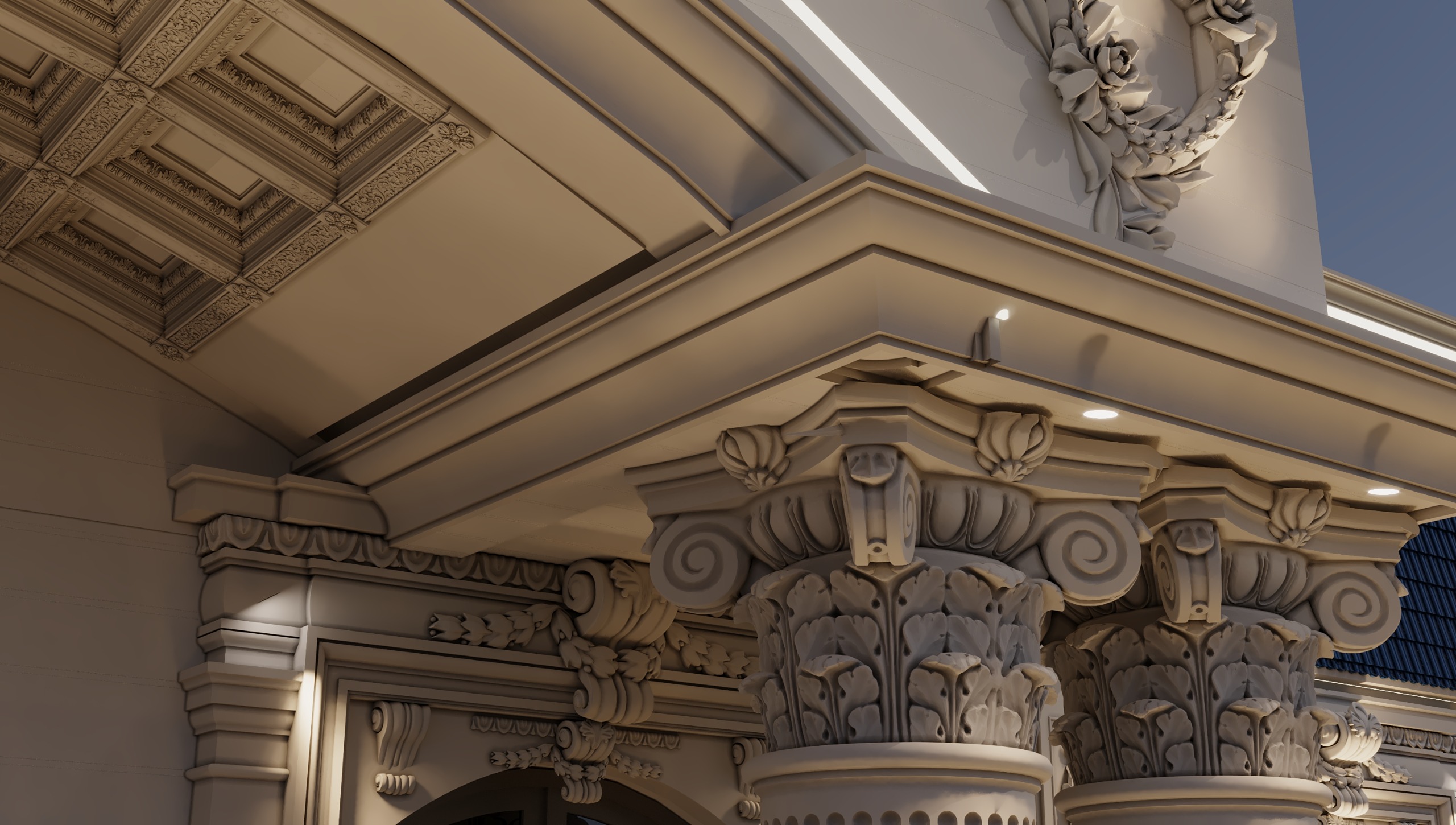
Exaggerated Decorative Overload: Attempting to literally copy traditional Pharaonic or Islamic details and slap them onto modern facades in a way that strips the building of its contemporary soul, making it look like a movie studio set rather than a comfortable home. We prefer abstraction and drawing inspiration from the spirit rather than literal replication.
-
Neglecting Climate Treatments: Using full glass facades facing directly west without sunshades under the guise of a "contemporary look," leading to massive energy consumption. We ensure facades are engineered according to solar orientation.
-
Poor Selection of Local Materials: Using stones or woods that cannot withstand atmospheric humidity or extreme heat, requiring constant maintenance. We carefully select our materials based on comprehensive studies of lifespan and weather resistance.
-
Separating the Structural Frame from the Aesthetic Character: Executing the concrete skeleton in isolation from the final architectural touches, resulting in costly subsequent modifications and intersections. We plan the project completely from day one.
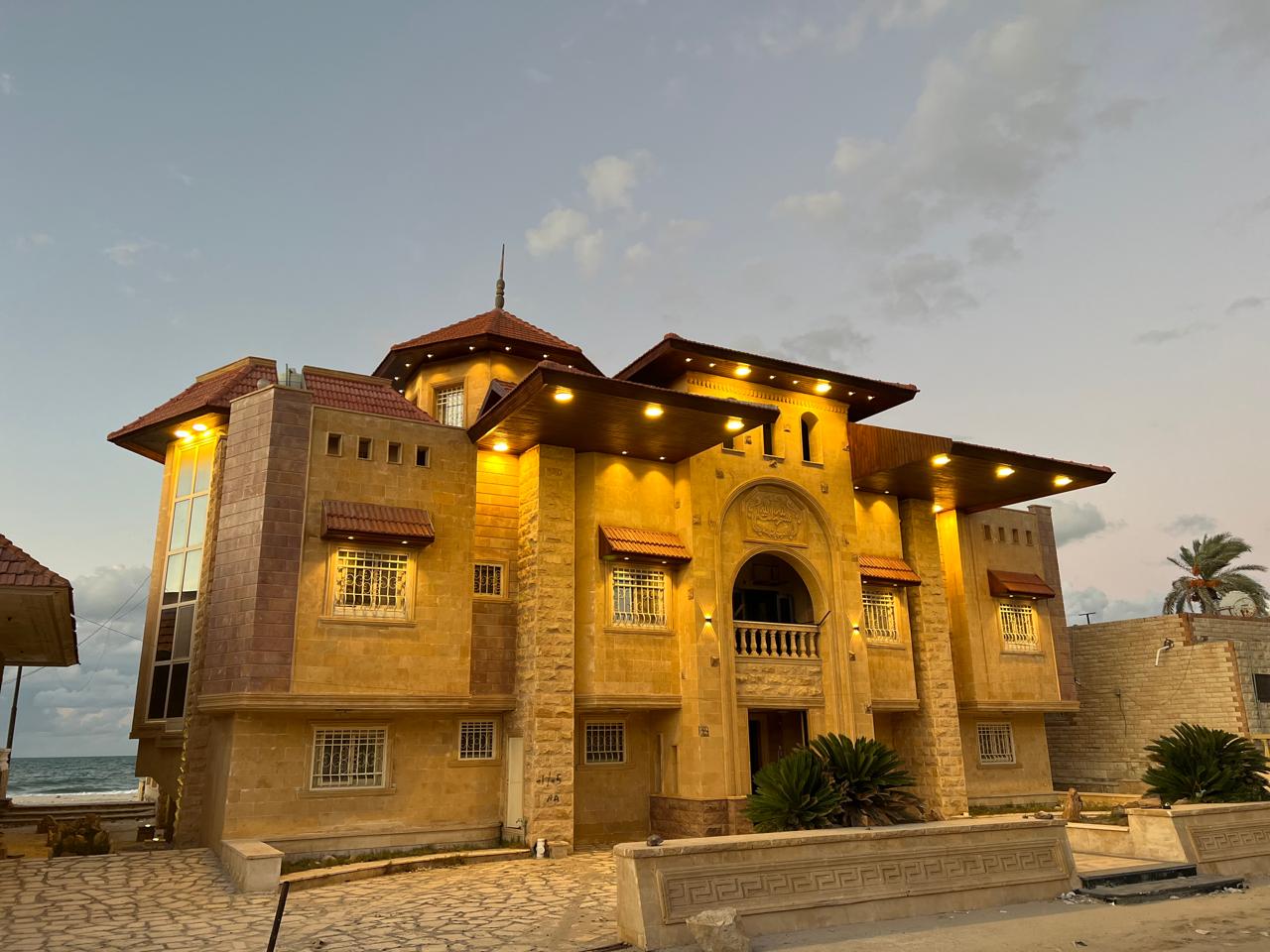
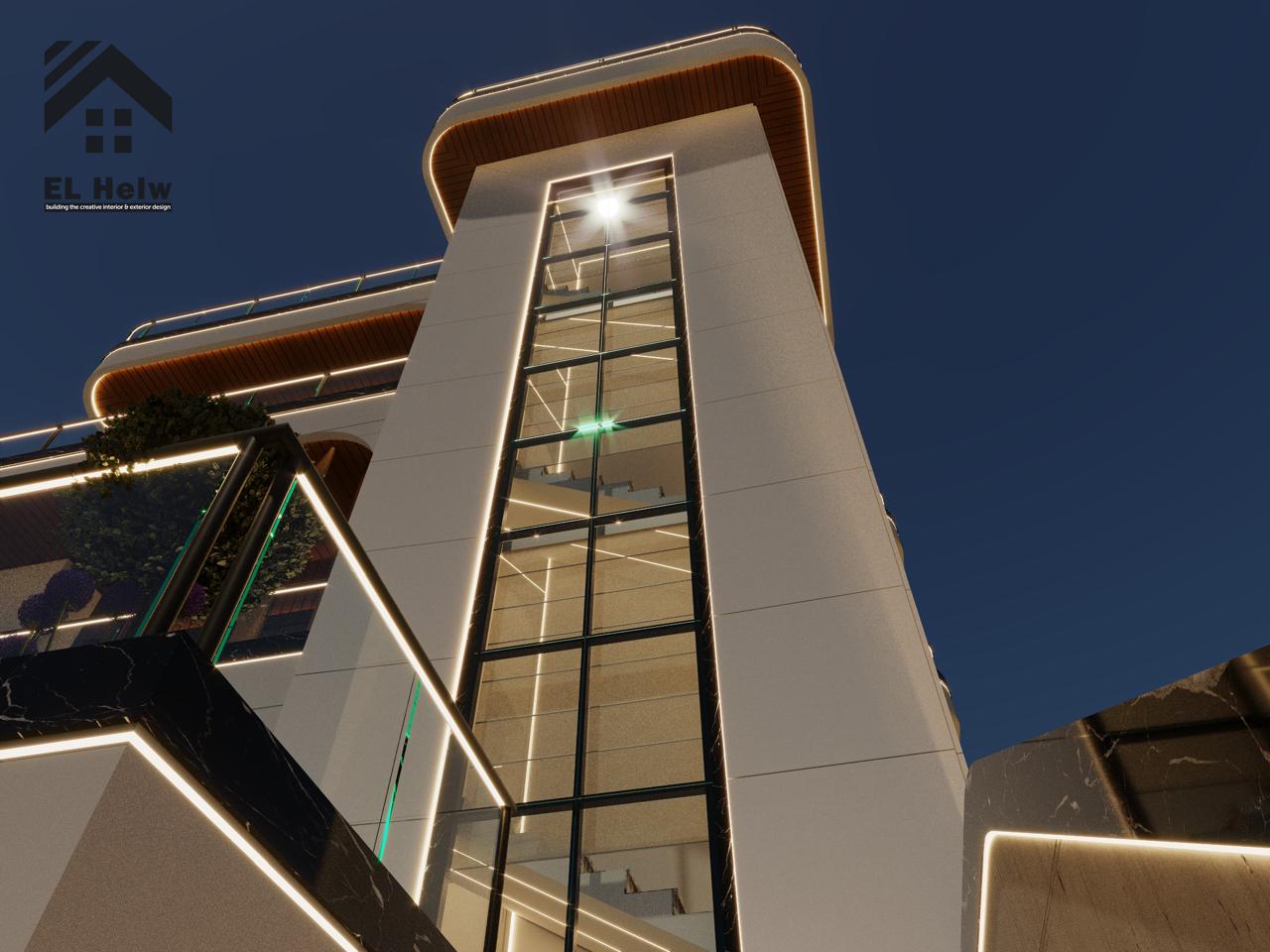
Luxury villa facade in a contemporary design blending natural Hashemi stone with simplified wooden elements inspired by mashrabiyas and an energy-efficient warm night lighting system.
Third: Alhelw Office Tips for the Success of Your Project
Building upon our accumulated experience of over 18 years in contracting and luxury design, we offer these core engineering guidelines:
-
Start by Studying the Site and Environment First: Do not begin drafting facades before studying the path of the sun, wind, and view orientations; this decision determines the comfort of the household for years to come.
-
Make Sustainability Part of the Design from Day One: We believe successful architecture saves energy and relies on sustainable local materials such as natural Egyptian stone.
-
Enlist Specialized Engineering Supervision: Incredible design on paper can turn into execution disasters without daily follow-up and precise engineering supervision ensuring adherence to technical specifications.
-
Balance Cultural Identity with Contemporary Function: There is no harm in using heritage symbols and details, provided they serve architectural functions (such as lighting, ventilation, and privacy) rather than purely decorative purposes.
Fourth: Frequently Asked Questions
Q: How can we integrate ancient Egyptian or Islamic styles with modern design without visual clutter?
A: We rely on architectural abstraction; we draw inspiration from the spirit of proportions, masses, and details like mashrabiyas or natural stone, reshaping them with clean, simplified lines suited to contemporary lifestyles, achieving luxury without pretense.
Q: Does integrating heritage elements increase construction and finishing costs?
A: Quite the opposite; when we rely on time-honored local materials such as natural Egyptian stone and utilize natural ventilation and internal courtyards, we ultimately save on long-term air conditioning, operational, and maintenance costs.
Q: What is the timeframe required to design a complete villa with a contemporary Egyptian character?
A: The integrated design phase, preparation of executive drawings, and bill of quantities typically take between 6 to 12 weeks, depending on project size and the complexity of the requested details. We are always keen to involve the client at every step.
Featured Quote: We do not design buildings with a heritage look; rather, we create contemporary living environments pulsating with the soul of authenticity and Egypt's rich history.
Interior Design Patterns: The Contemporary Style
Introduction
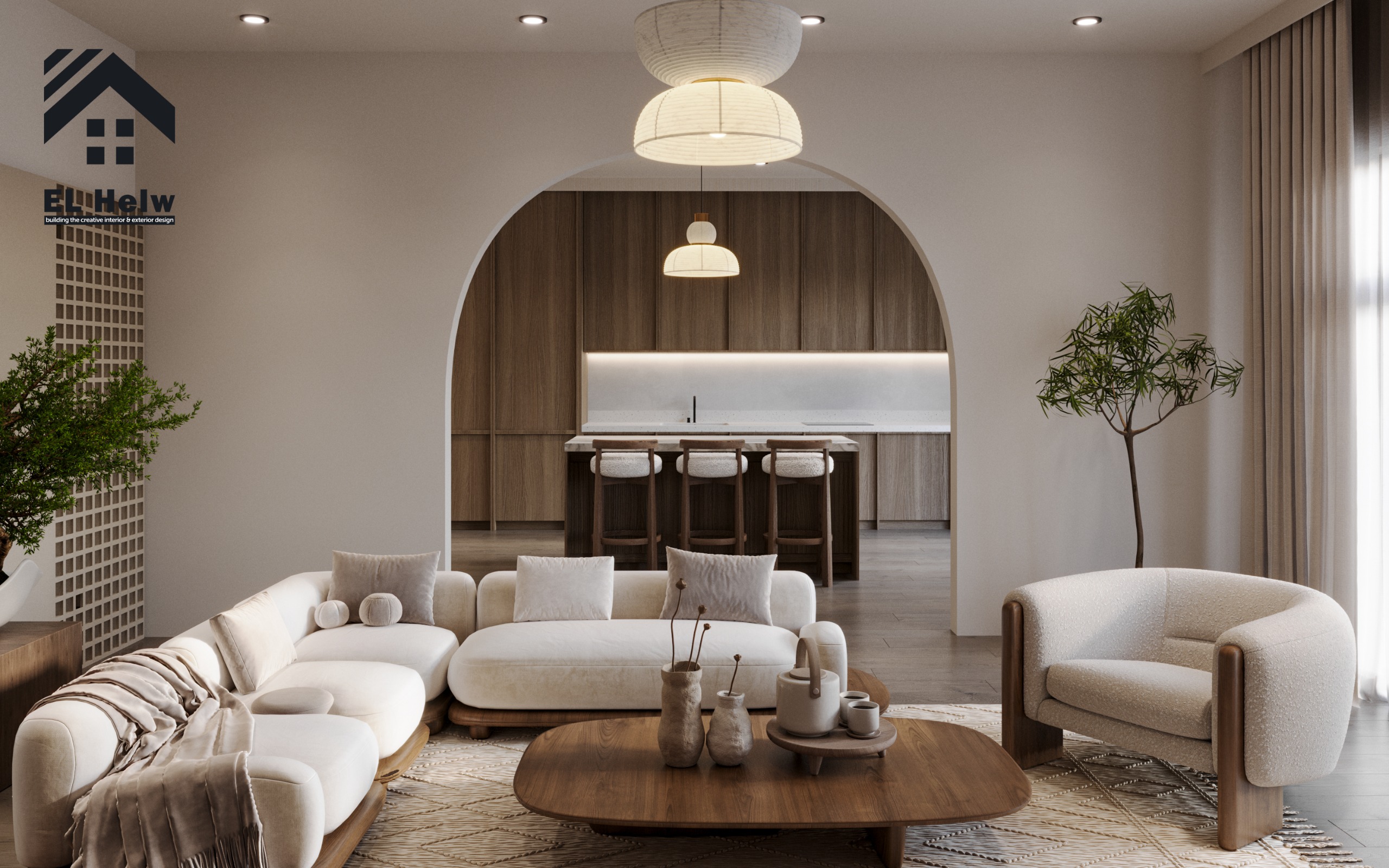
Choosing the contemporary interior design style is an embodiment of blending currently prevailing design elements, resulting in a distinct and undeniable look. This style is characterized by a sense of modernity, sophistication, simplicity, and a strong focus on cleanliness, warmth, elegance, ventilation, and diversity.
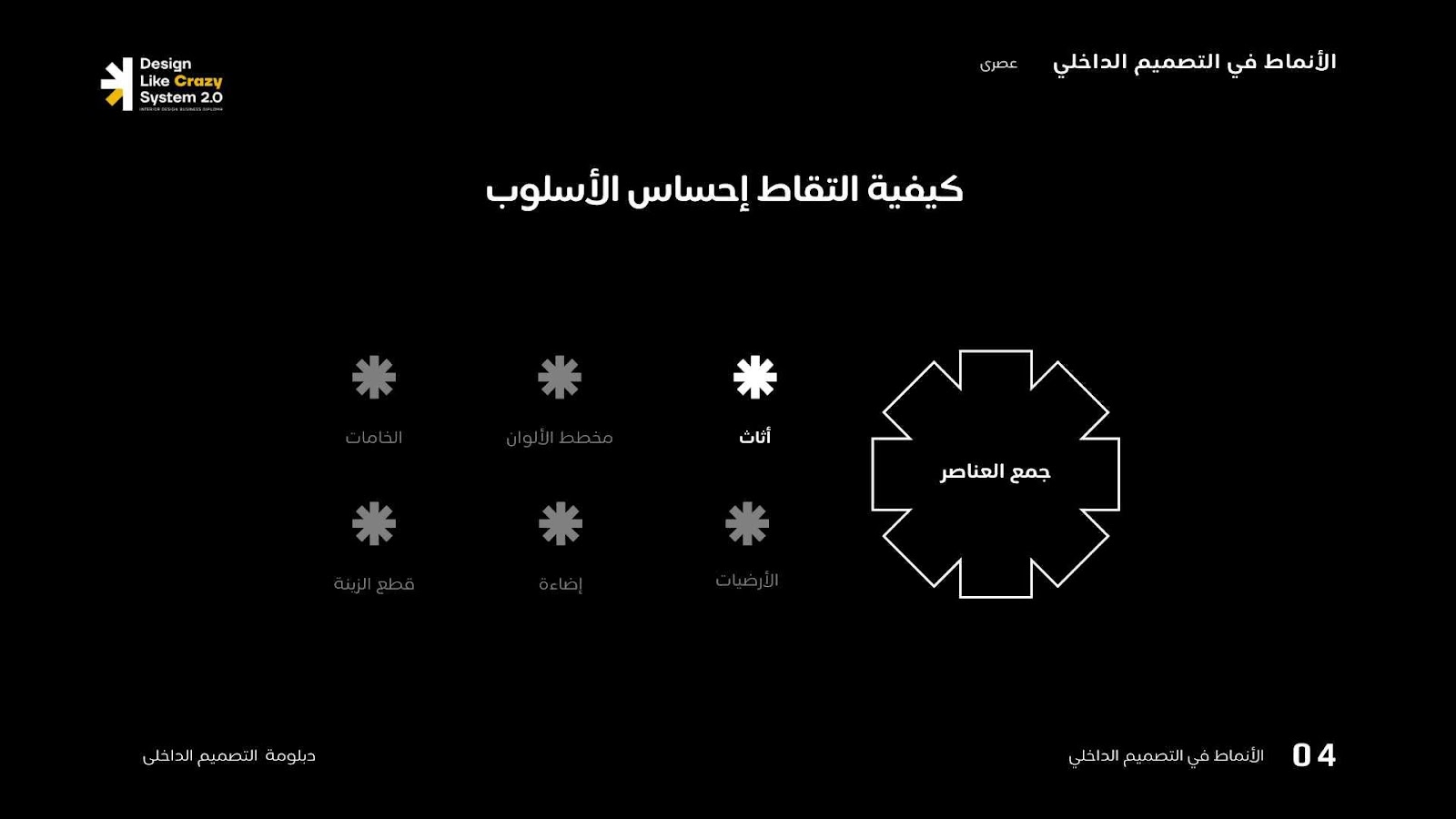
How to Capture the Contemporary Essence?
Capturing the spirit of the contemporary style relies on key pillars inspired by historical and artistic milestones (such as rejecting traditional ornamentation and moving toward functionality and clear lines):
-
Authentic Personality (Look back to look forward): Contemporary design evolved under the influence of the Modernist movement in the late 19th and early 20th centuries, passing through phases of blending diverse aesthetics until it established its own distinct identity.
-
Establishing Keywords: Defining prominent features such as modernity, softness, high contrast, and material variety.
-
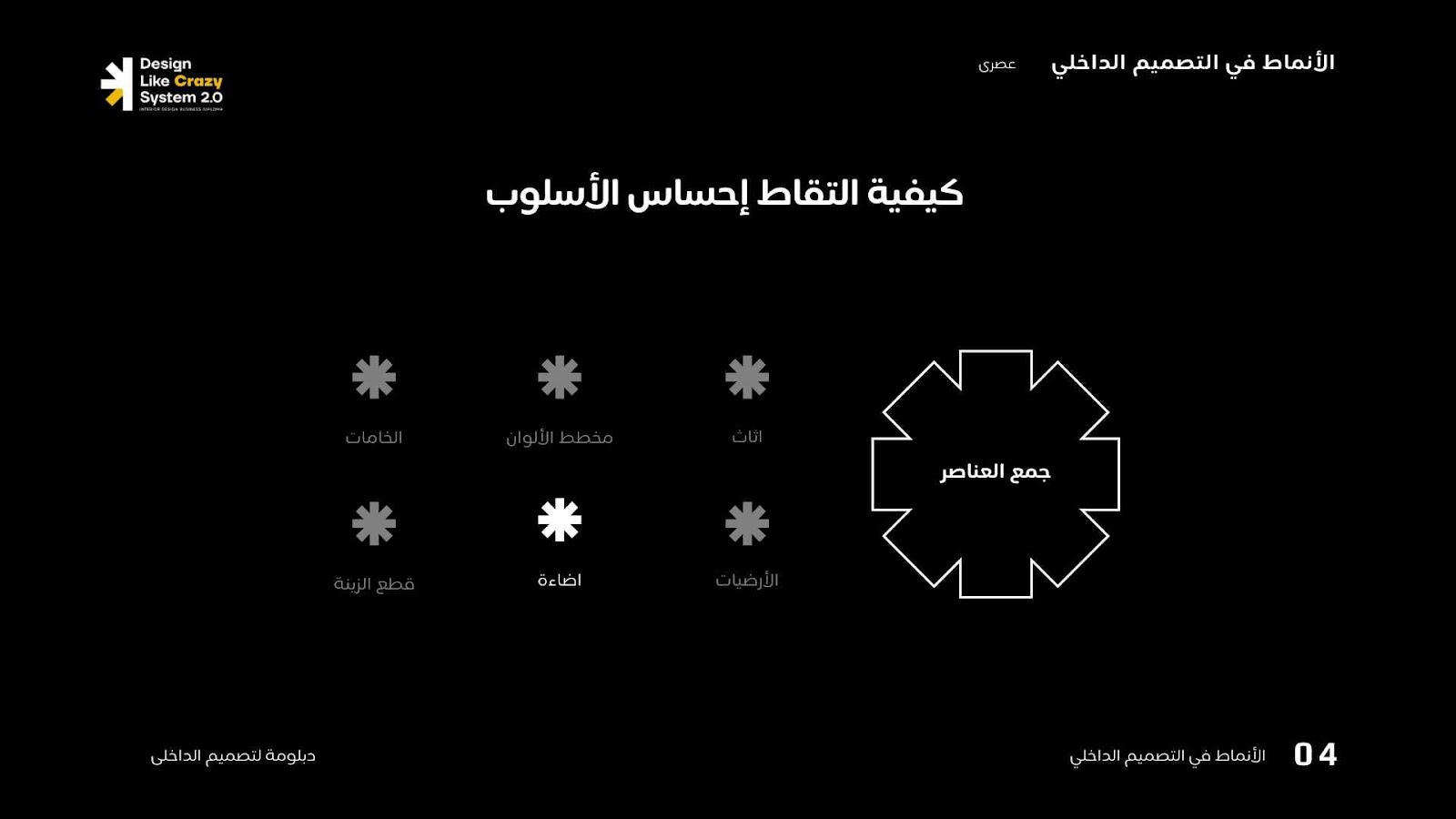
Combining Elements: Mixing furniture pieces, color schemes, materials, lighting, flooring, and decorative objects.
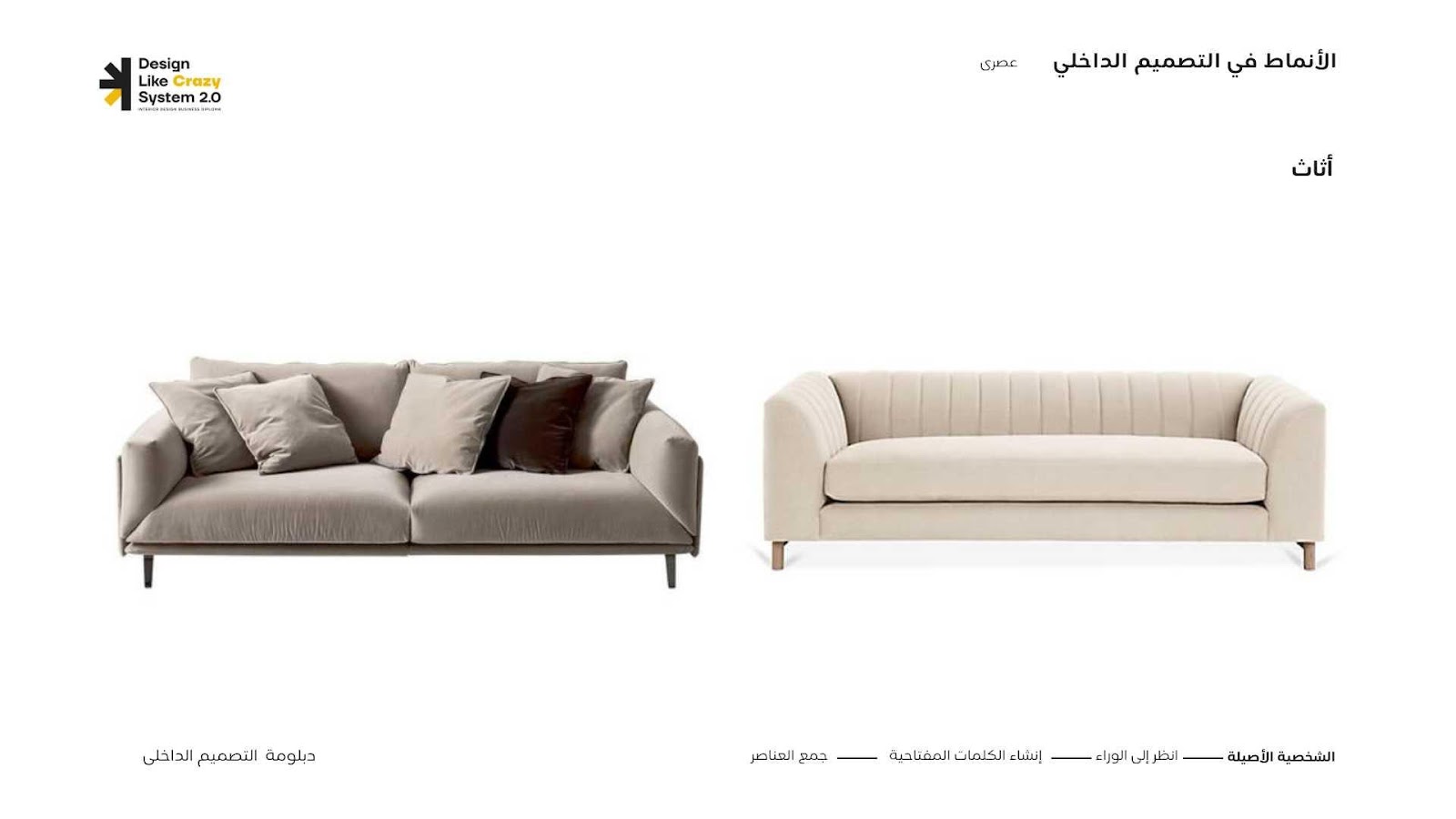
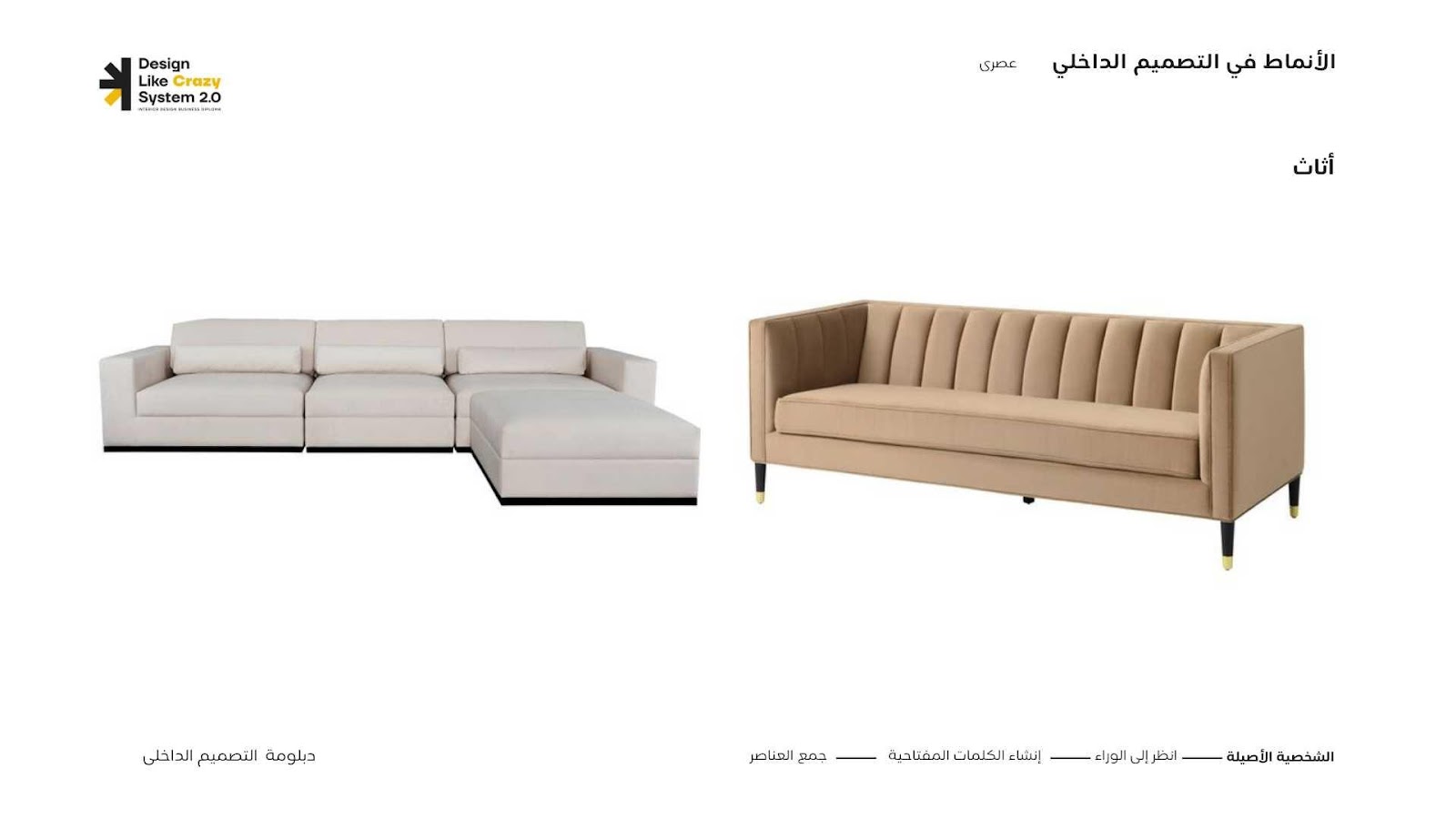
1. Furniture in Contemporary Style
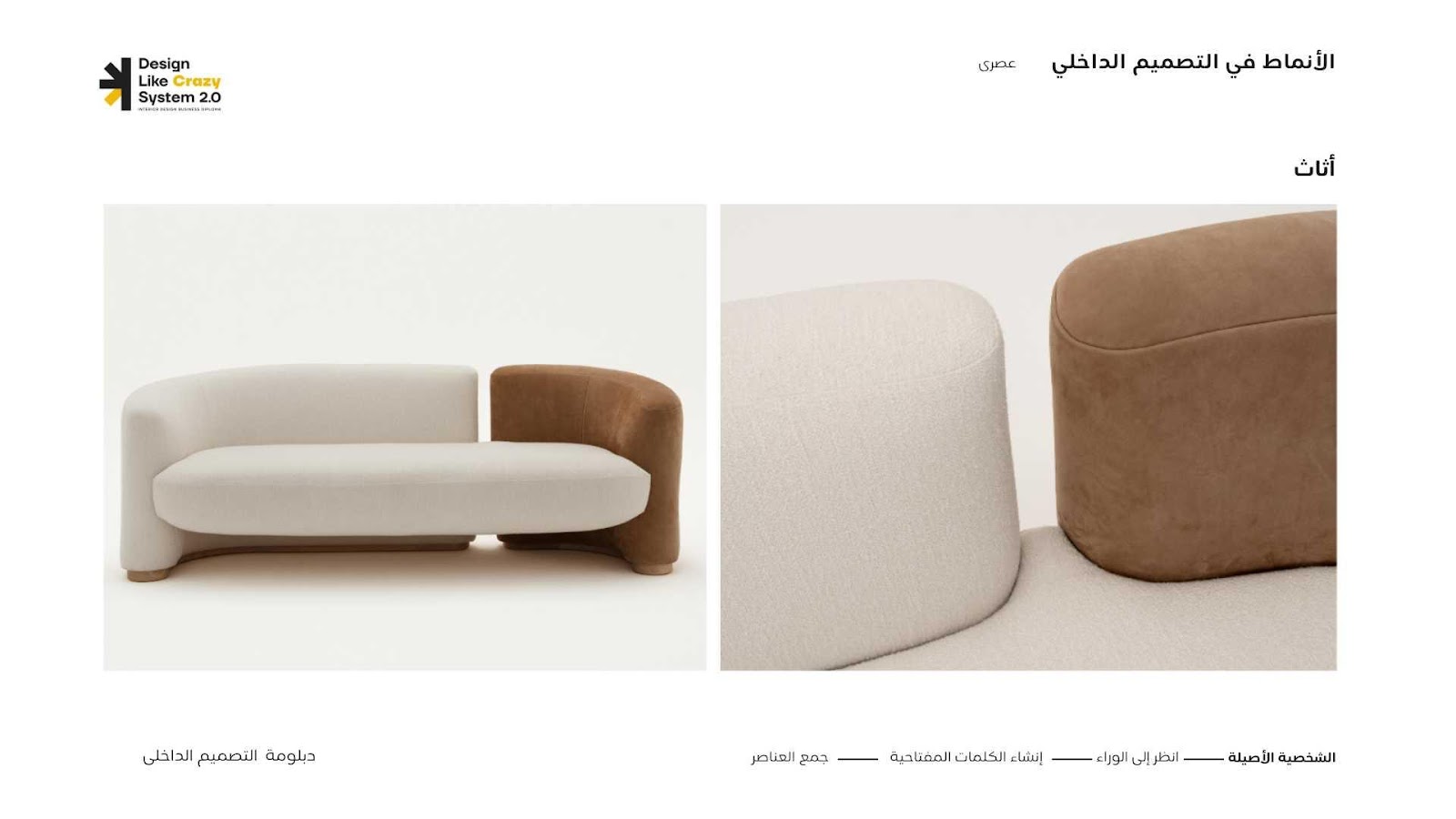
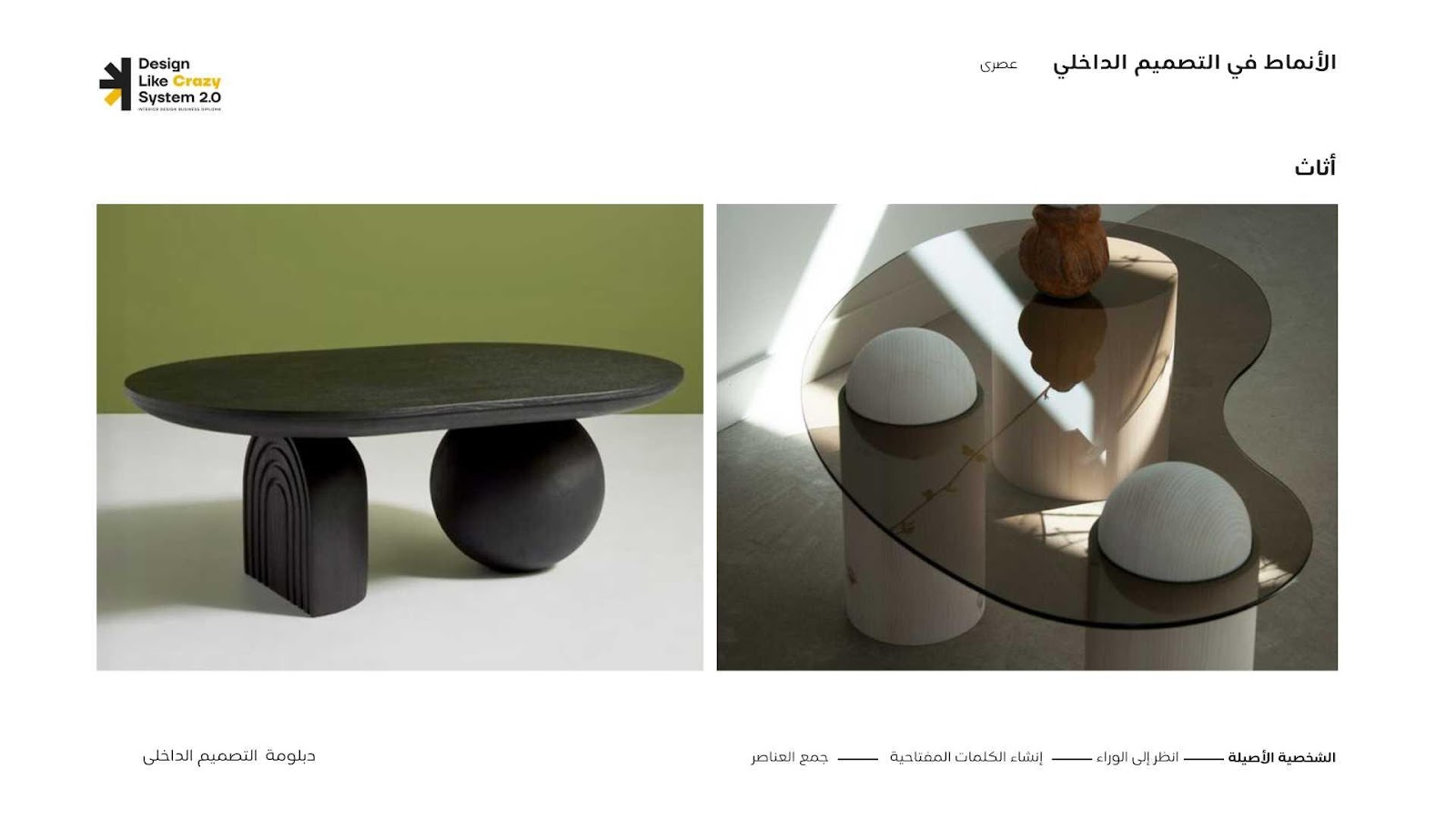
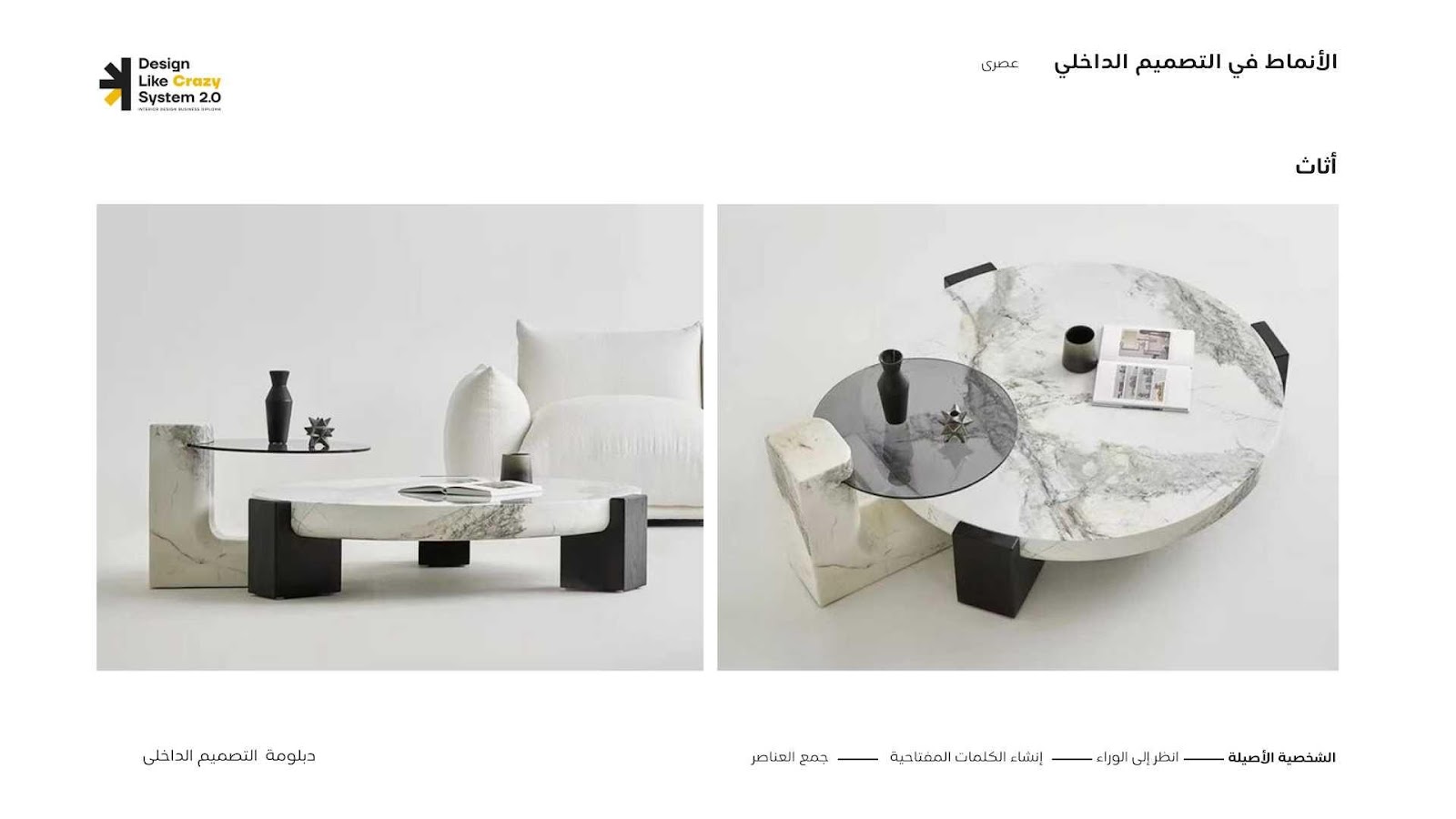
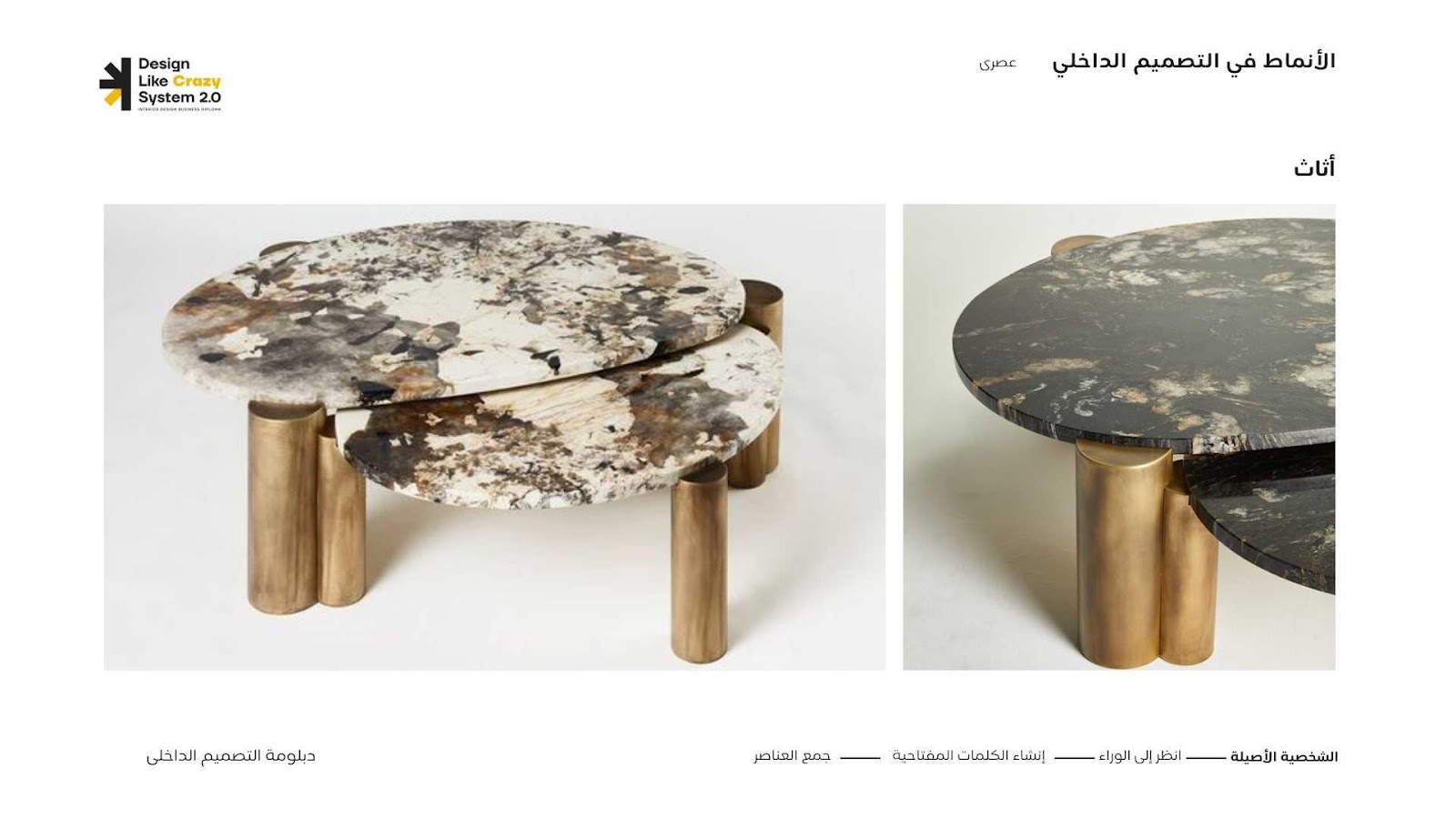
Contemporary furniture features generally reflect interior design characteristics as a whole, focusing on simplicity, function, and beloved aesthetics: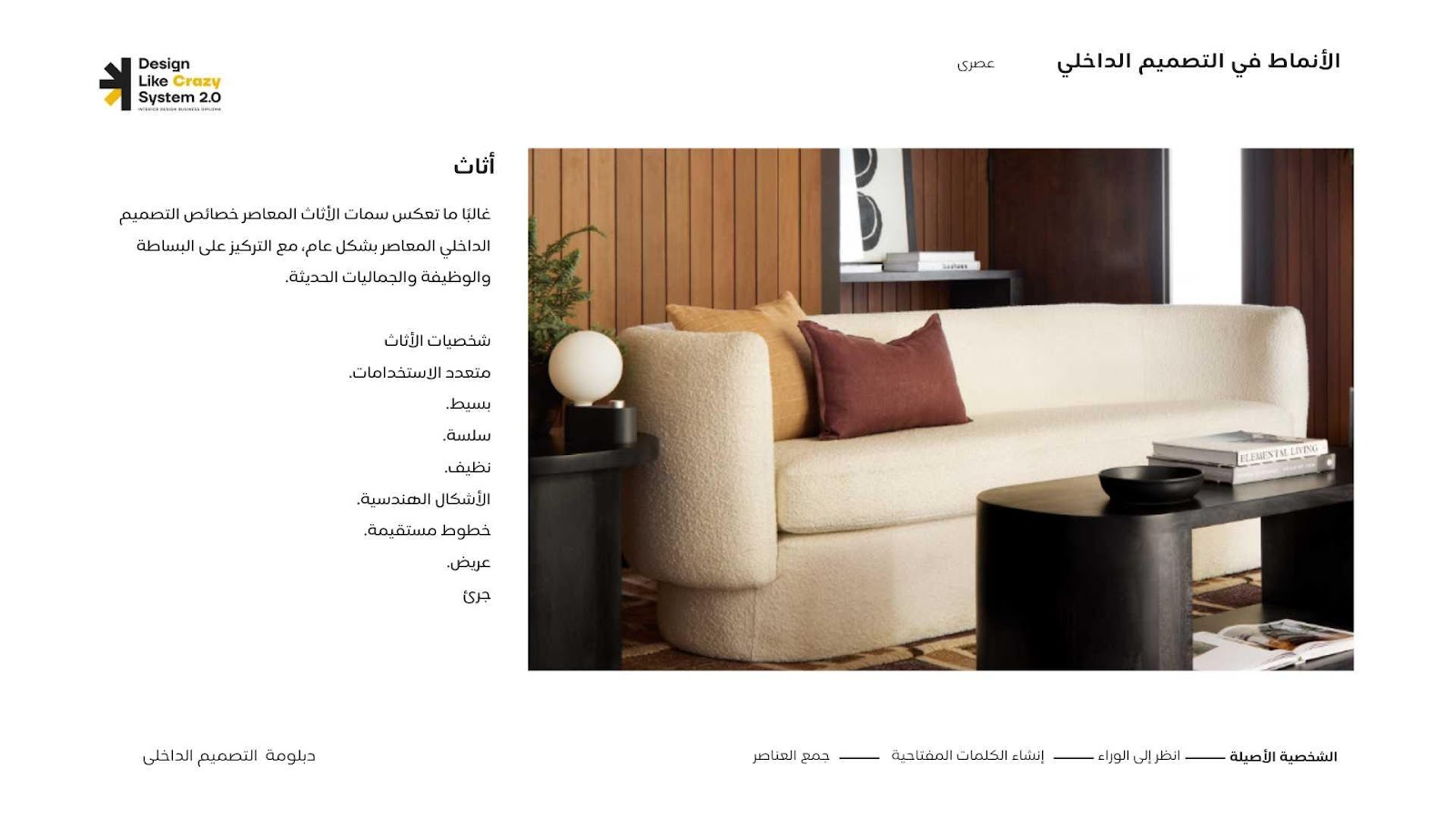
-
Furniture Personalities: Versatile, simple, sleek, and clean.
-
Geometric Shapes: Straight, broad, and clear lines.
-
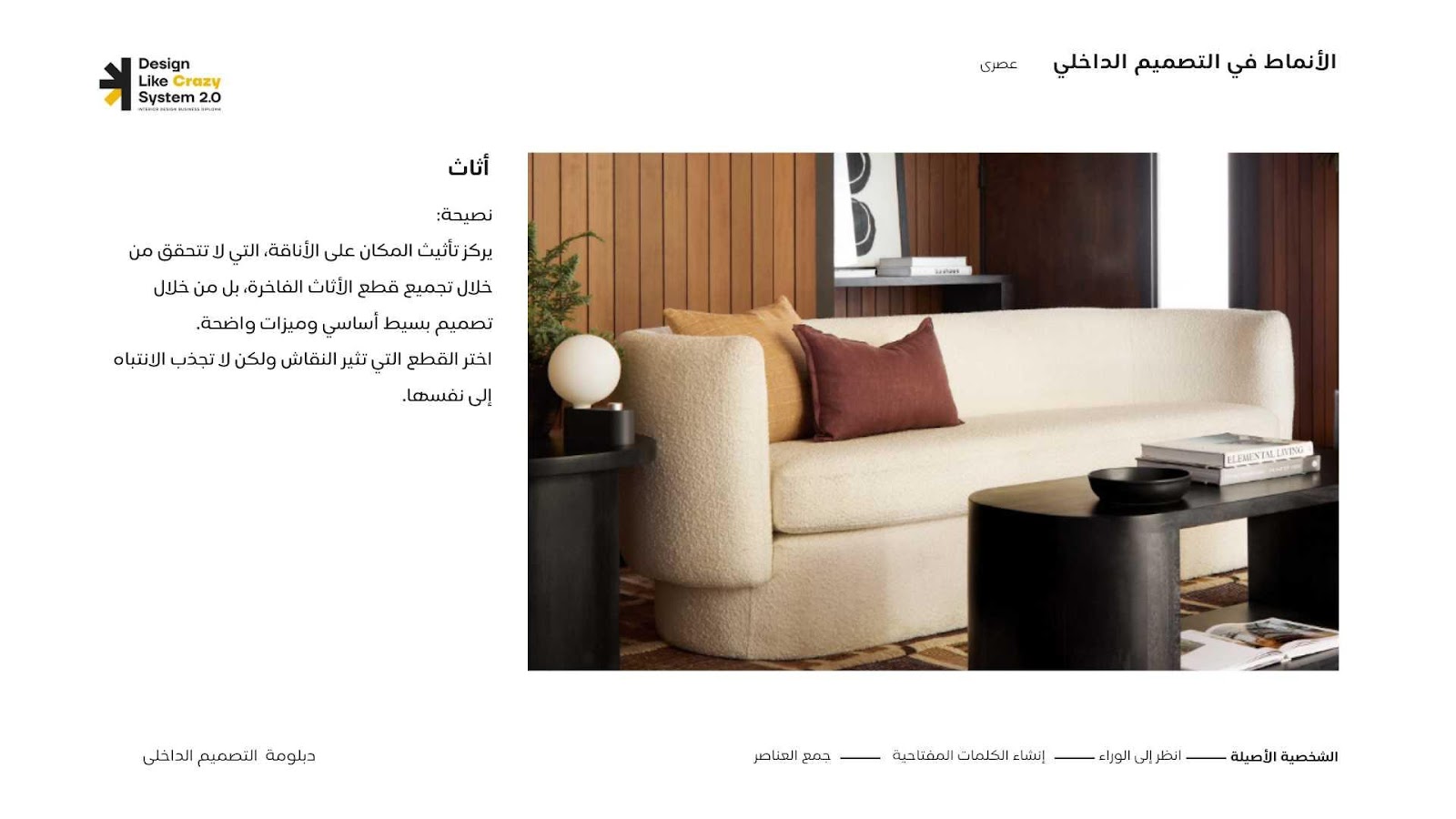
General Philosophy: Furnishing the space focuses on elegance achieved not through assembling luxury furniture pieces, but through a basic, simple design with clear features, selecting items that provoke conversation without drawing attention to themselves in an exaggerated manner.
2. Components and Composition (Materials and Textures)
Contemporary interior design incorporates a wide and varied range of materials to create a modern and visually appealing environment:
-
Wood: Provides warmth and natural beauty (often in light tones), using carved wood to enhance texture.
-
Concrete and Stone: Concrete lends a raw, minimalist look to floors and surfaces, while stone adds luxury and sophistication to feature walls and worktops.
-
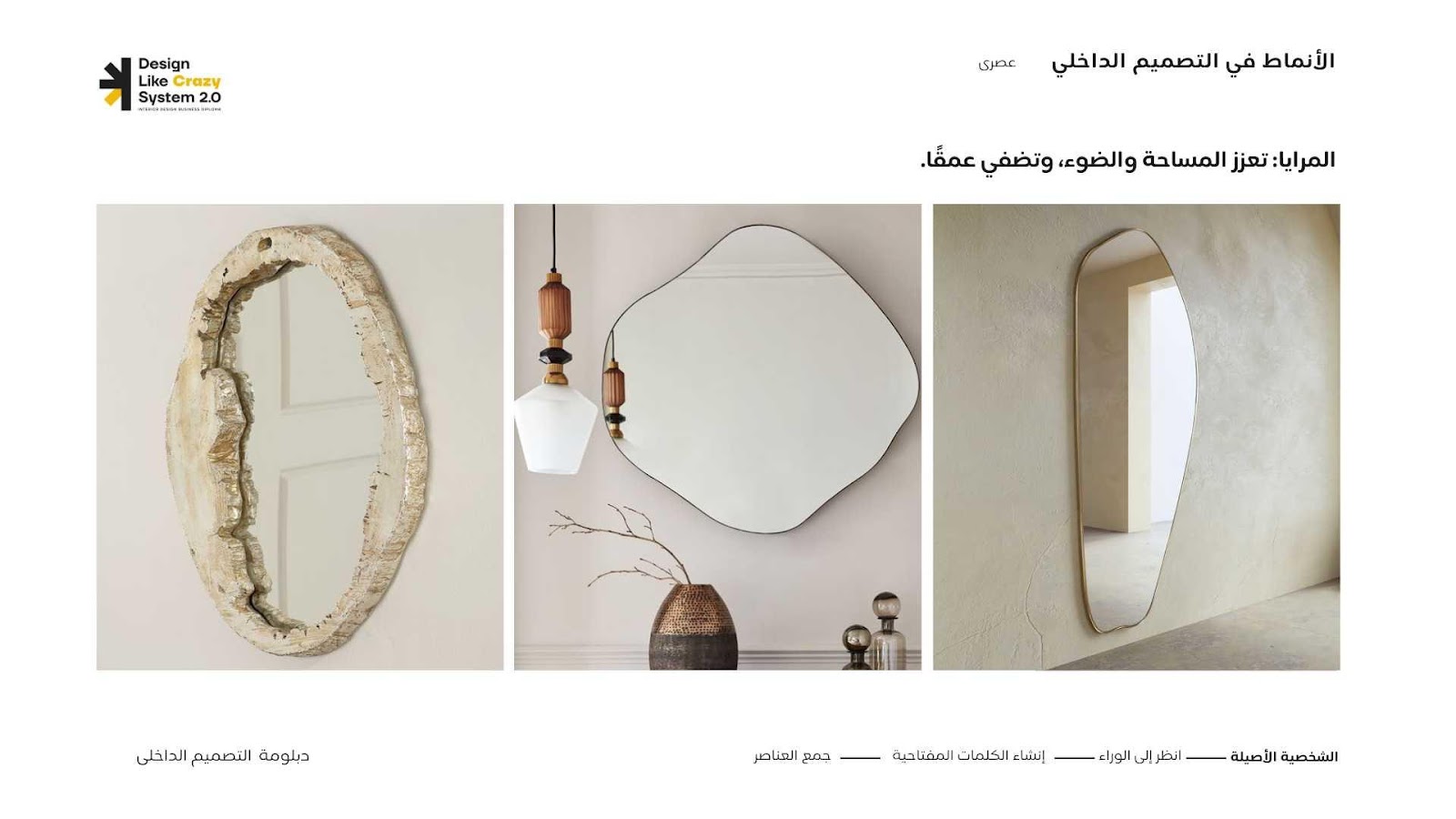
Glass and Metal: Glass enhances the use of natural light and transparency, while metallic touches (such as stainless steel or brass) introduce a luxurious and sleek feel.
-
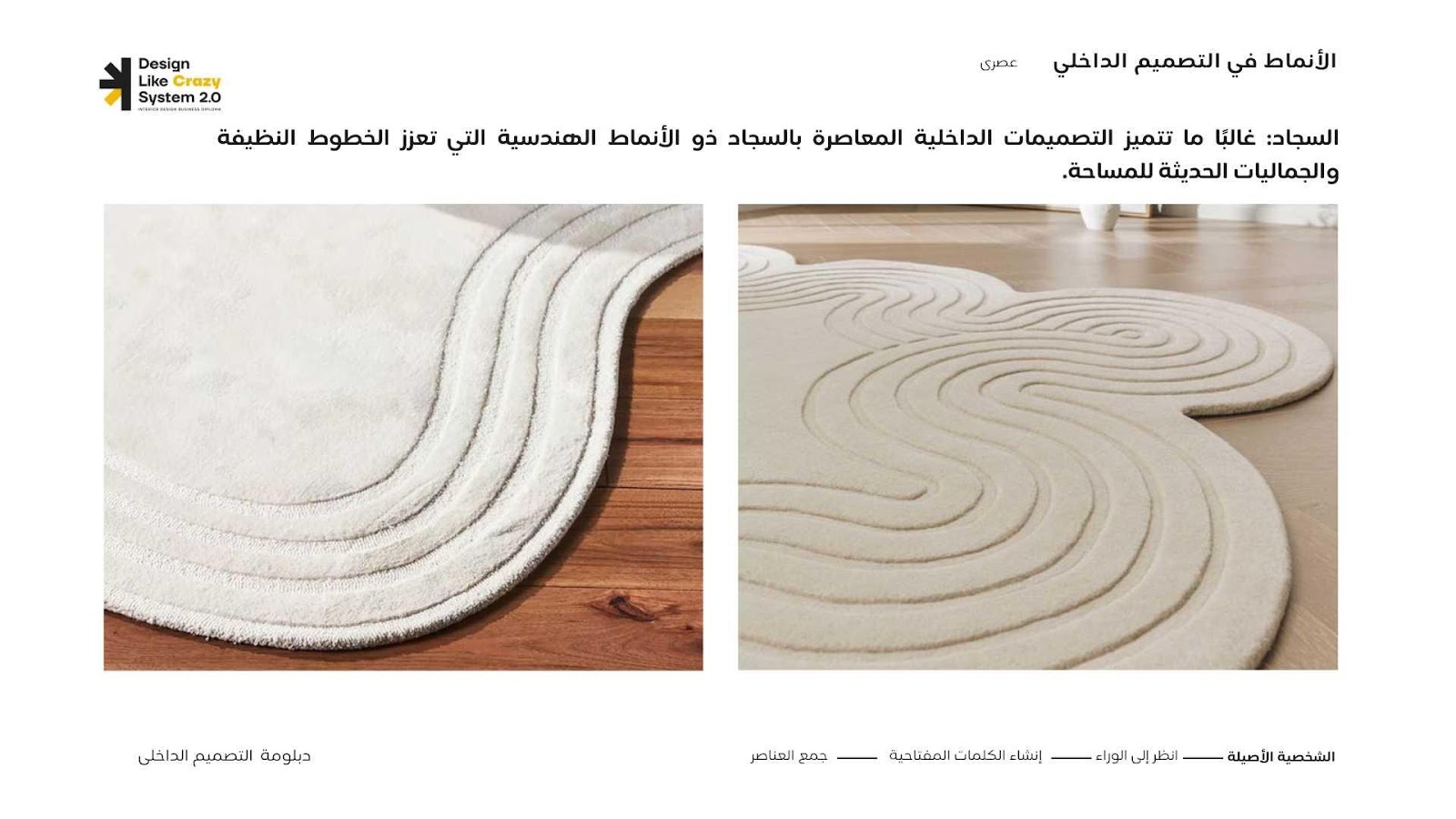
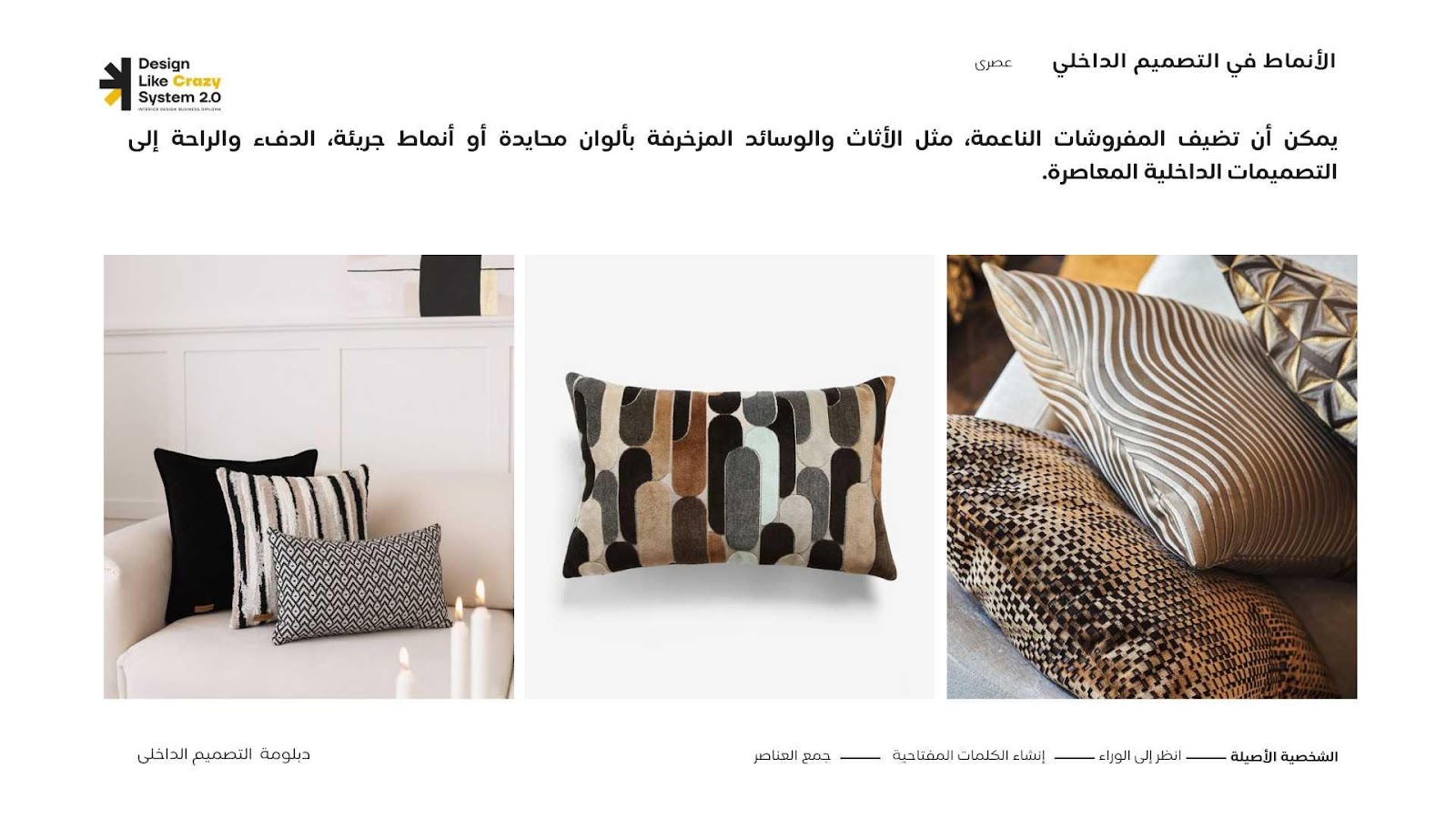
Textiles and Composite Materials: Textiles add softness and warmth (like patterned cushions and geometric-patterned rugs), while composite materials and plastic/acrylic offer durability and variety with a cheerful futuristic flair.
3. Lighting and Visual Elements
In contemporary design, lighting plays a decisive role in enhancing the overall aesthetics and functionality of a space:
-
Focusing on bright lights and directing illumination onto artworks, posters, or prints.
-
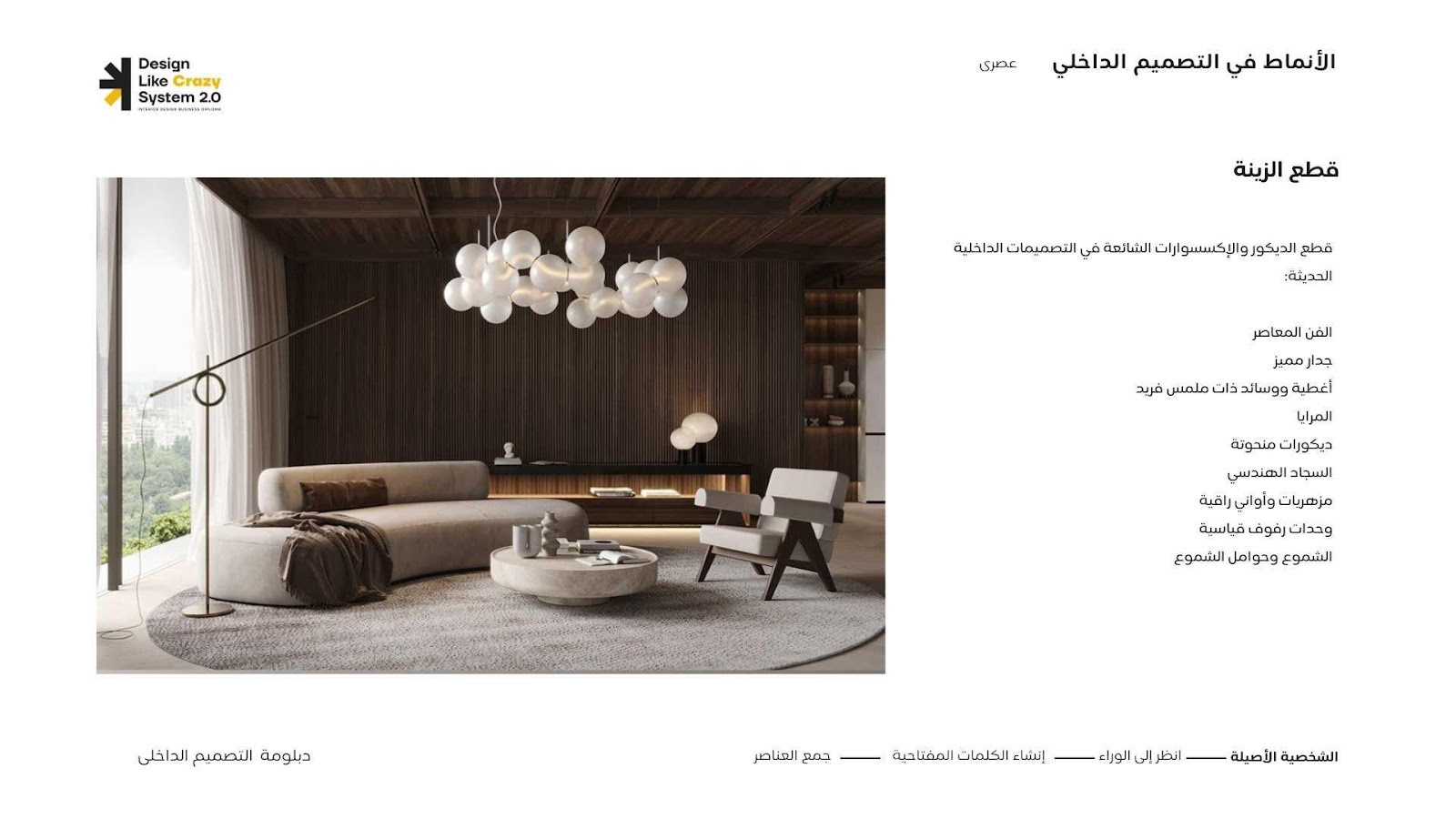
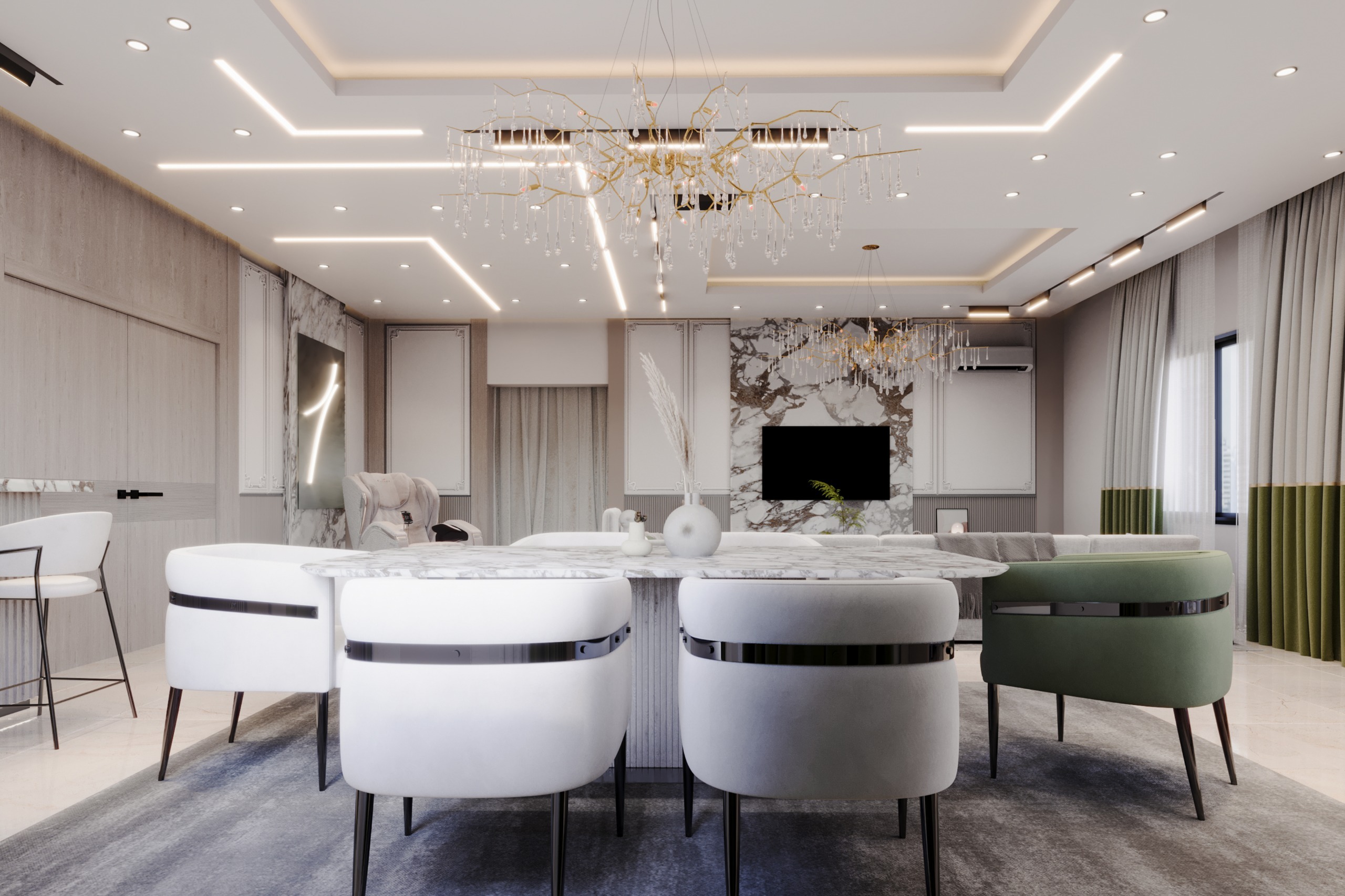
Relying on the simplicity of streamlined lighting as an architectural element, and using unique chandeliers or pendants as a focal point to attract attention.
Focuses on bright lights and directing illumination onto artworks, posters, or prints.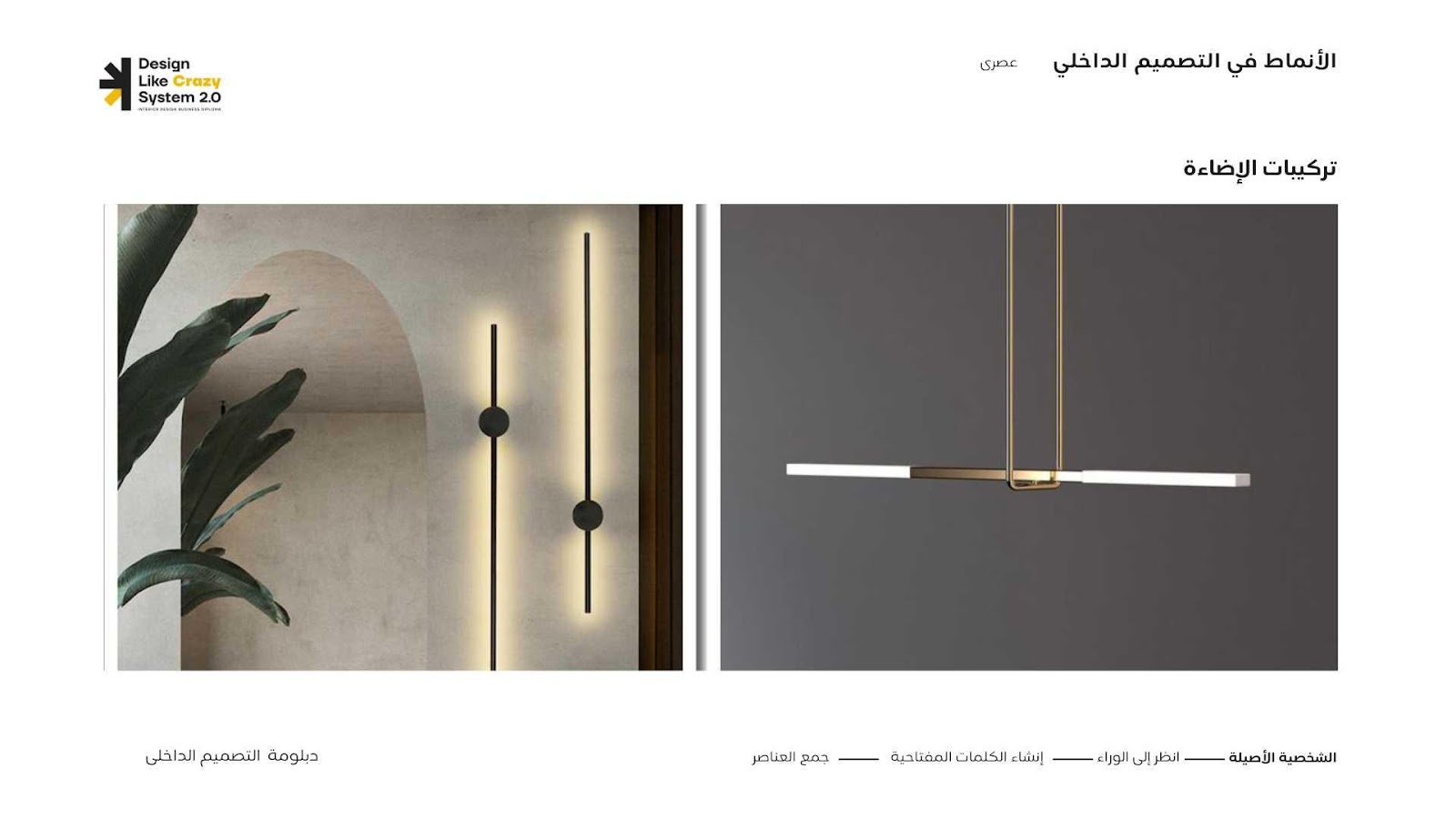
Lighting and selecting the appropriate lighting based on colors.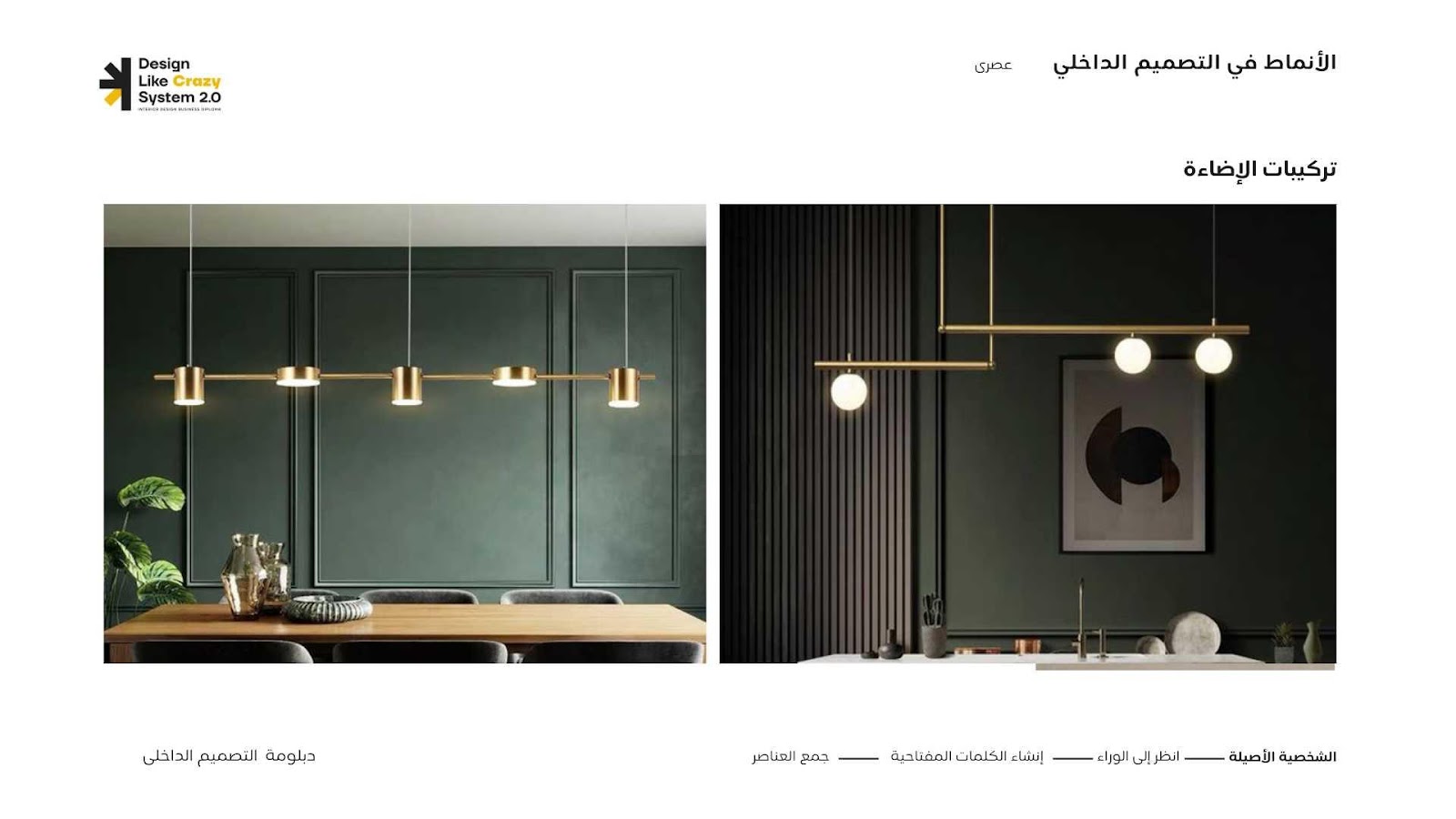
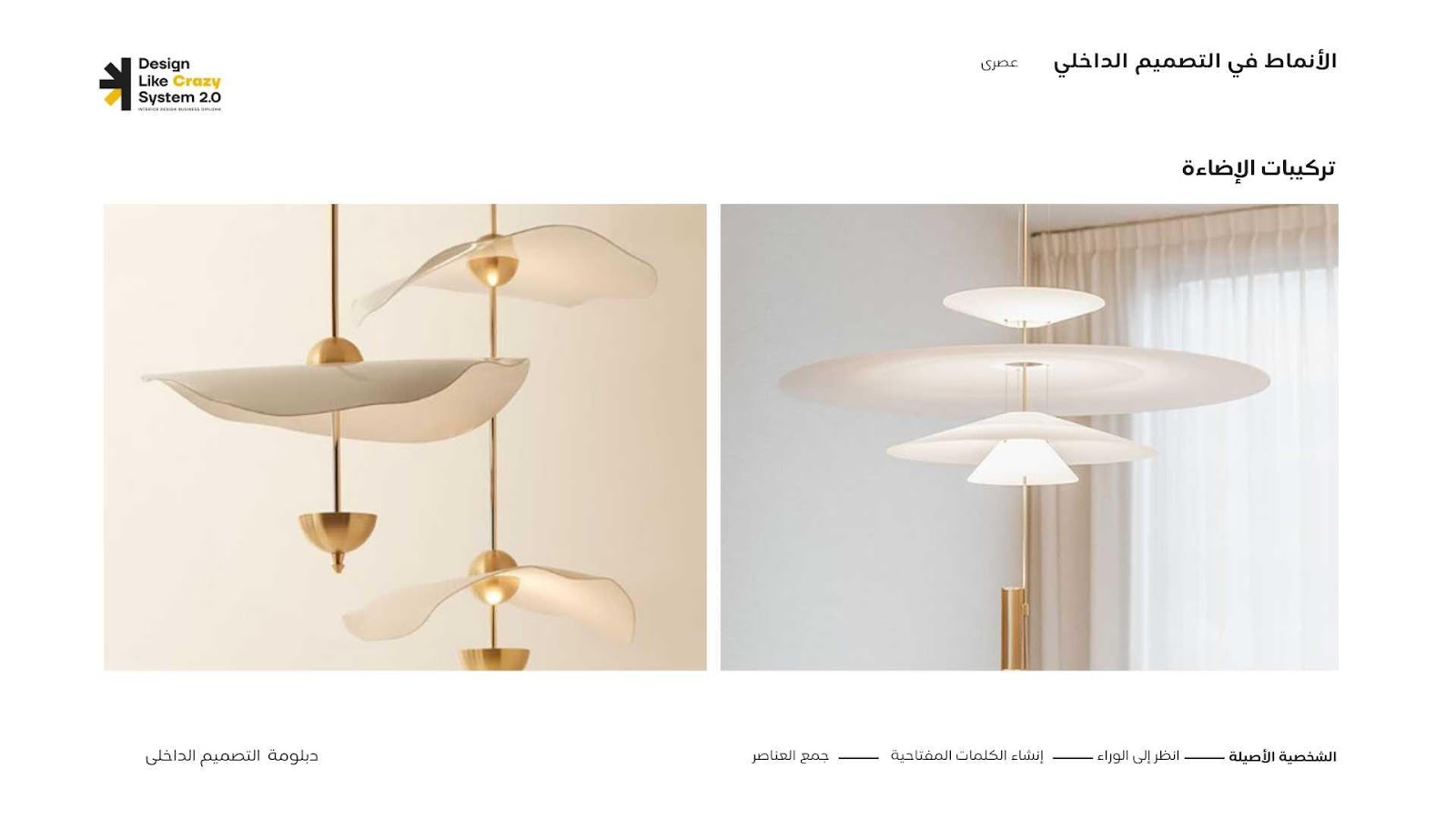
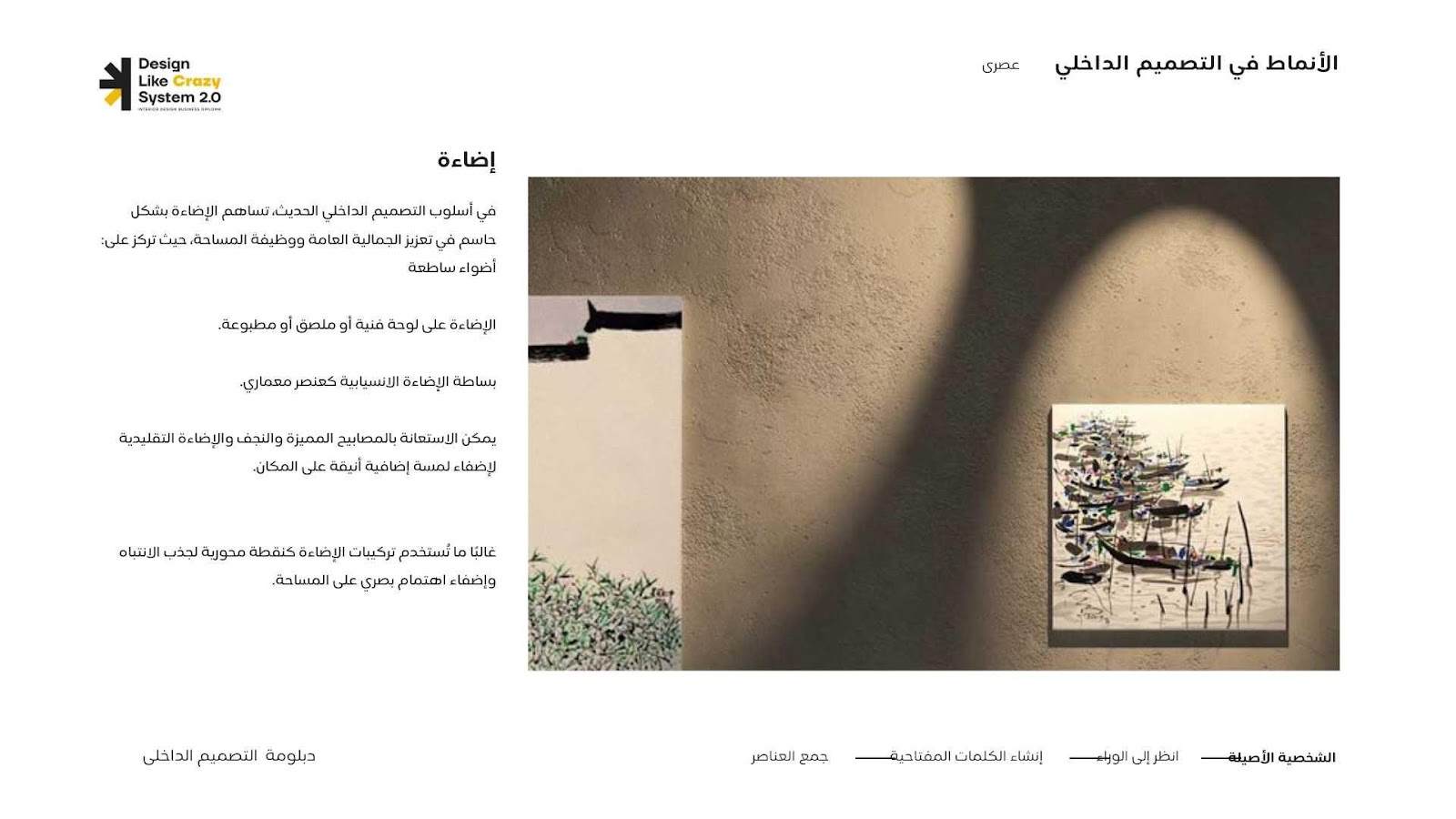
Illumination on an artwork or print -
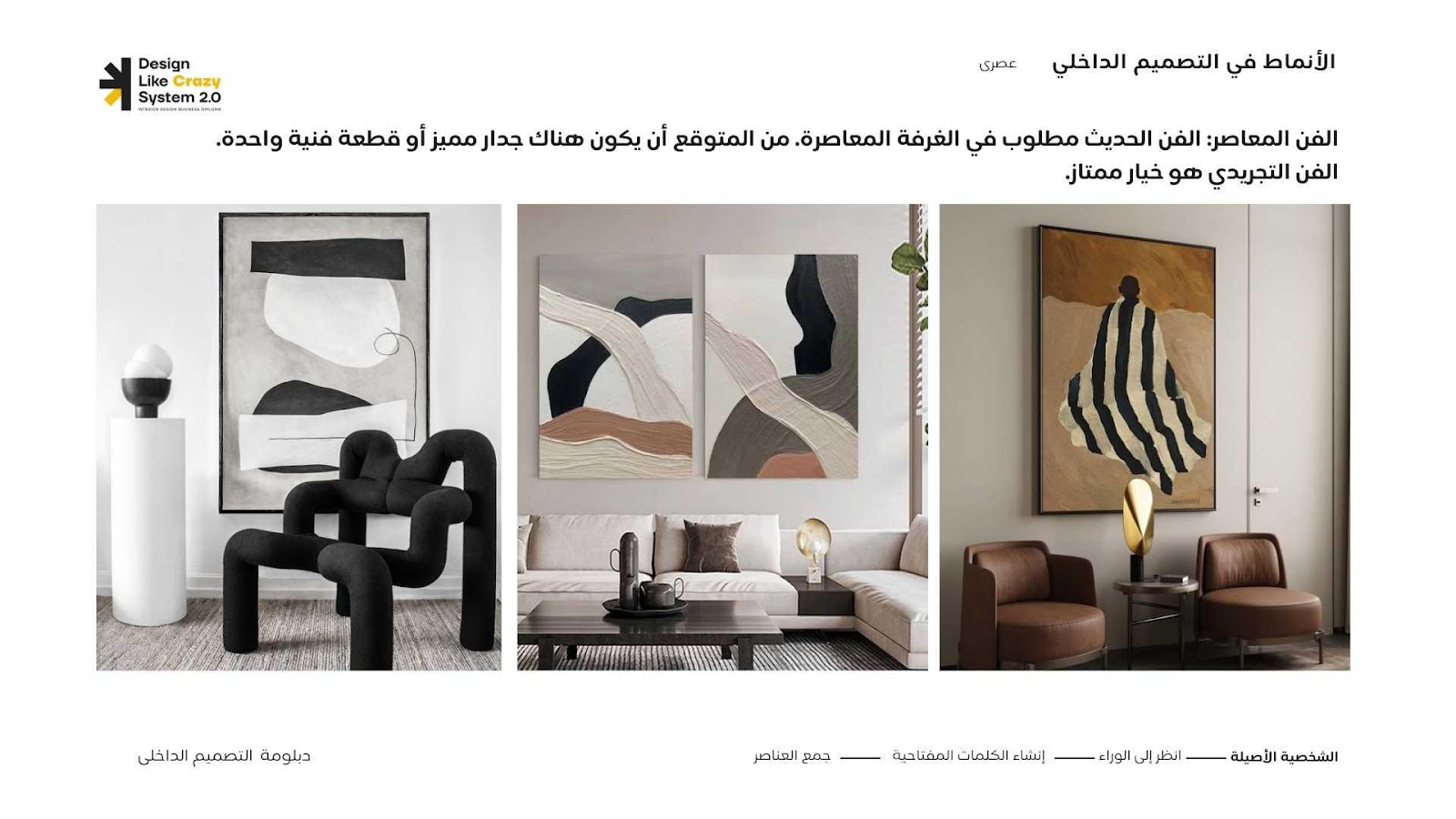
The Feature Wall: A feature wall or a single art piece is expected (abstract art is an excellent choice here).
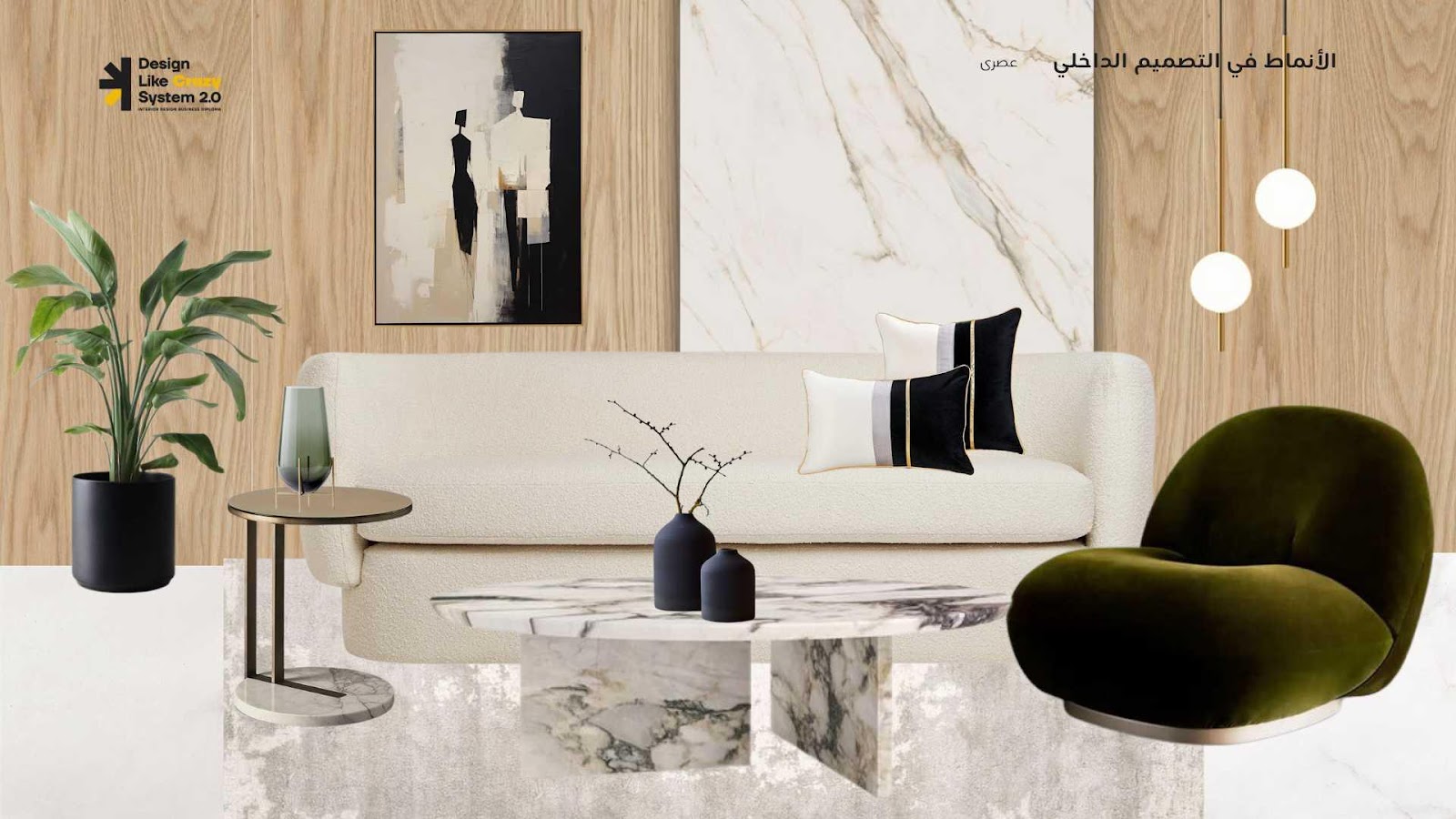
- .
4. Color Schemes, Flooring, and Decorative Accents
Colors, flooring, and meticulous details play a pivotal role in tying the elements of the architectural space together and highlighting the contemporary character with a warm and distinctive touch:
-
Color Schemes: Primarily rely on neutral and calm colors such as white, beige, and gray as a basic background that imparts a sense of spaciousness and visual cleanliness, while introducing bold, striking accent colors through furniture or accessories to create a high and attractive contrast.
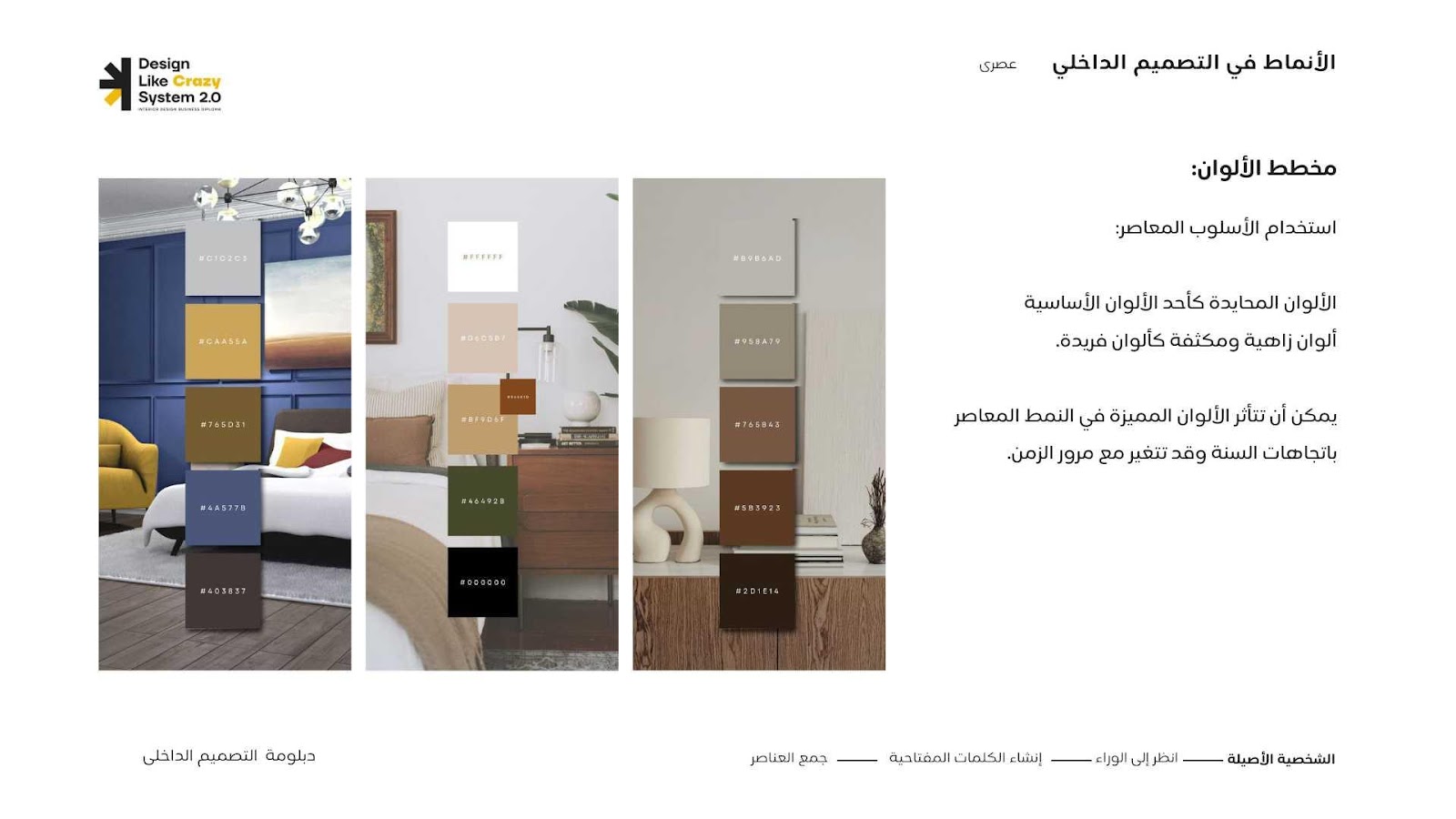
-
Contemporary Flooring:
Varies between light-colored natural wood that brings warmth to the space, polished concrete or epoxy for a raw look and clean lines, and large-format ceramic or porcelain tiles designed to mimic natural stone to enhance the luxury of the spaces.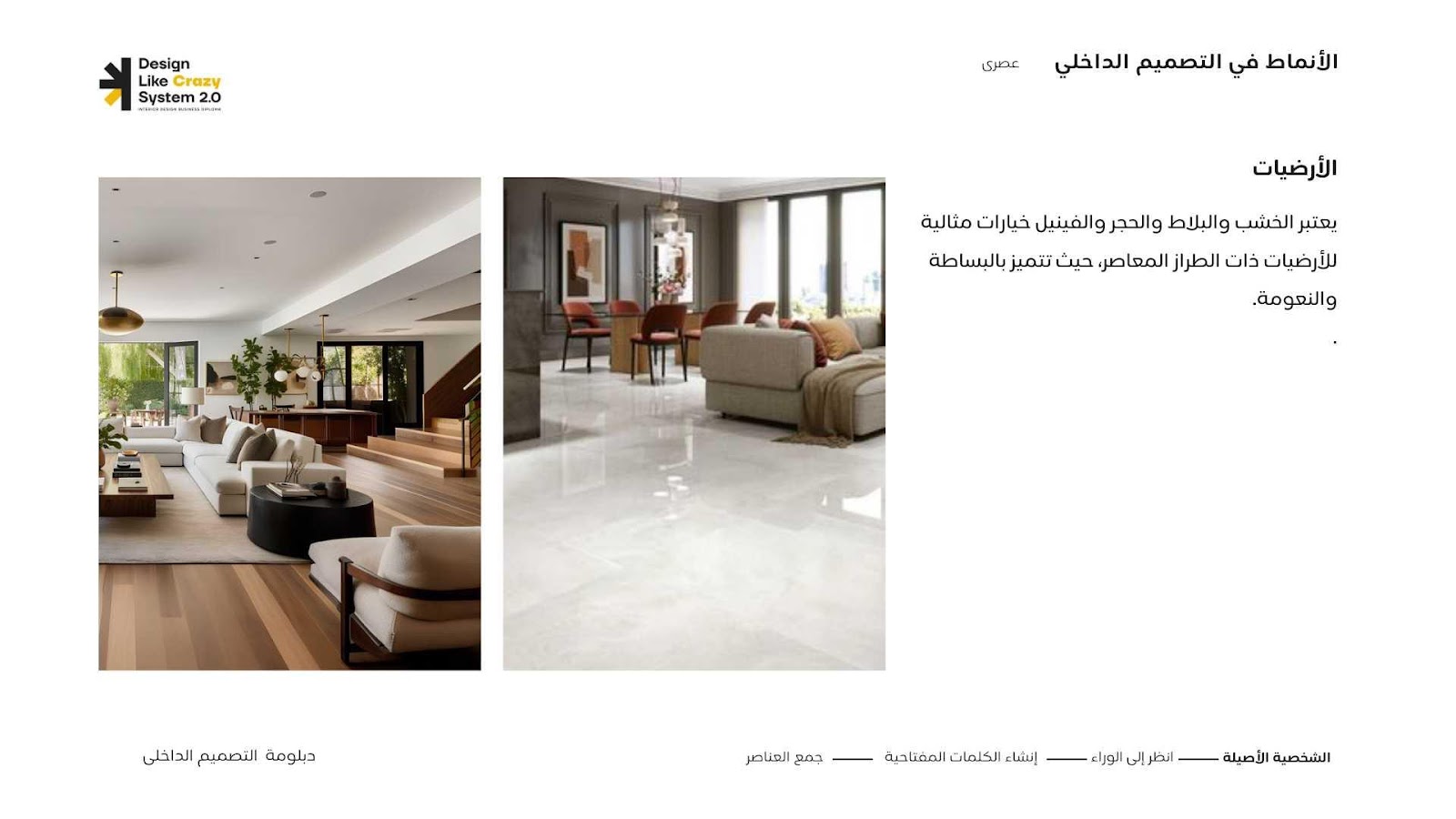
-
Decorative Accents and Accessories:
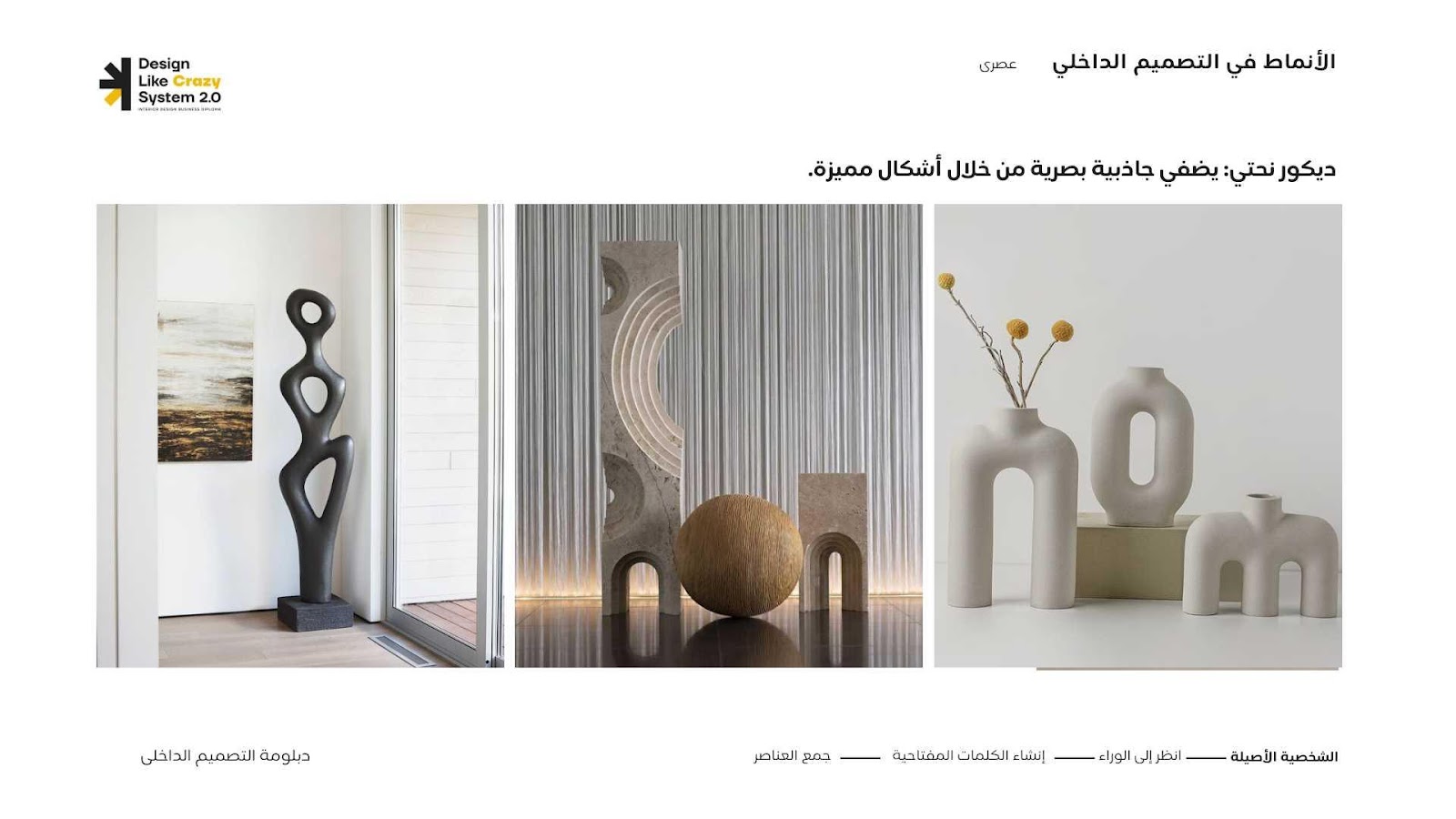
Carefully chosen in limited quantities to avoid visual clutter. This relies on prominent art pieces (such as abstract paintings), vases made of ceramic or clear glass, and rugs with simple geometric patterns that add warmth and vitality to the floors.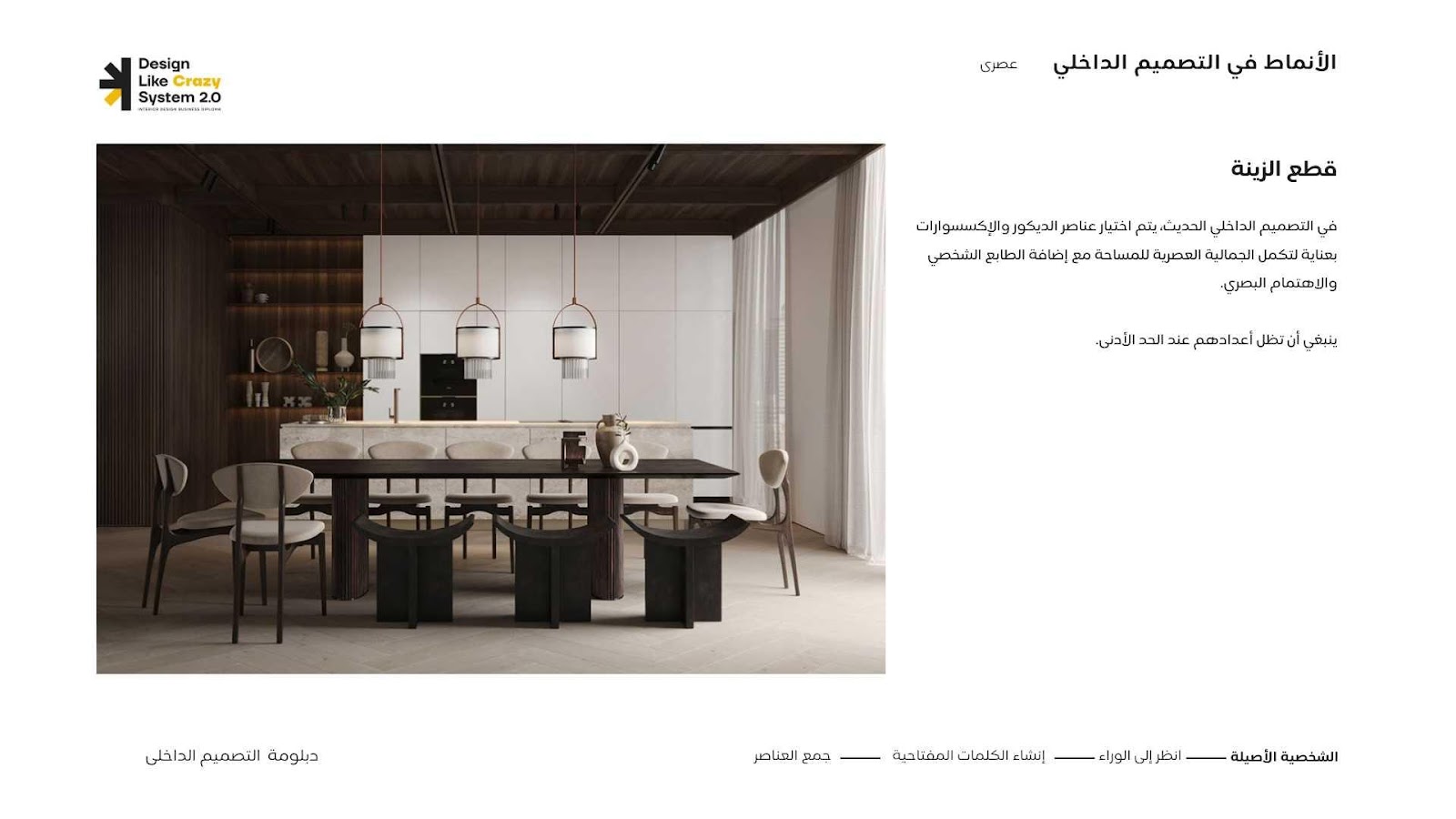
Alhelw Office Tips for the Success of Your Project
Building upon our accumulated experience of over 18 years in contracting and luxury design, we offer these core engineering guidelines:
-
Start by Studying the Site and Environment First: Do not begin drafting facades before studying the path of the sun, wind, and view orientations; this decision determines the comfort of the household for years to come.
-
Make Sustainability Part of the Design from Day One: We believe successful architecture saves energy and relies on sustainable local materials such as natural Egyptian stone.
-
Enlist Specialized Engineering Supervision: Incredible design on paper can turn into execution disasters without daily follow-up and precise engineering supervision ensuring adherence to technical specifications.
-
Balance Cultural Identity with Contemporary Function: There is no harm in using heritage symbols and details, provided they serve architectural functions (such as lighting, ventilation, and privacy) rather than purely decorative purposes.
Common Mistakes When Blending Egyptian Heritage with Modern Architecture and How to Avoid ThemFrom our numerous site inspections of previous projects executed by others—or those where we were asked to correct their execution paths (such as in our engineering projects like Saba Palace and Rouq Palace)—we have identified a recurring set of mistakes made by non-specialists:
-
Exaggerated Decorative Overload: Attempting to literally copy traditional Pharaonic or Islamic details and slap them onto modern facades in a way that strips the building of its contemporary soul, making it look like a movie studio set rather than a comfortable home. We prefer abstraction and drawing inspiration from the spirit rather than literal replication.
-
Neglecting Climate Treatments: Using full glass facades facing directly west without sunshades under the guise of a "contemporary look," leading to massive energy consumption. We ensure facades are engineered according to solar orientation.
-
Poor Selection of Local Materials: Using stones or woods that cannot withstand atmospheric humidity or extreme heat, requiring constant maintenance. We carefully select our materials based on comprehensive studies of lifespan and weather resistance.
-
Separating the Structural Frame from the Aesthetic Character: Executing the concrete skeleton in isolation from the final architectural touches, resulting in costly subsequent modifications and intersections. We plan the project completely from day one.
-
- .