
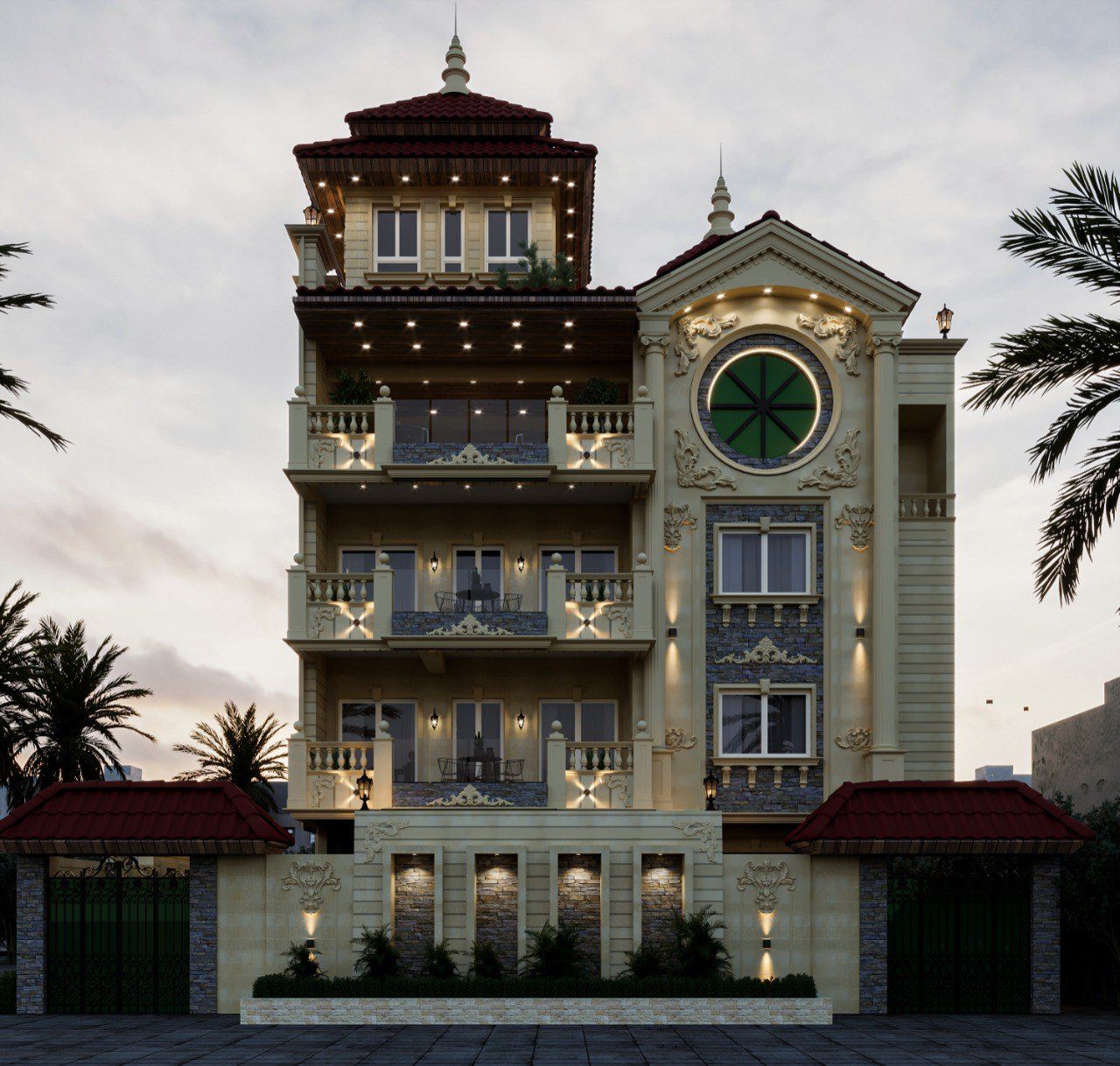
Luxury Apartment or Detached Villa: Which Is the Smarter Investment Decision?
Introduction
Luxury apartment or detached villa? The question may seem simple, but the real investment answer is much more complicated than simply comparing the size or purchase price.
From an architectural and investment perspective, it cannot be said that a luxury apartment is always better than a detached villa, or that a villa necessarily generates a higher return over the long term. The right decision depends on a connected set of factors, most importantly: the purpose of purchasing the property, location, entry price, the nature of demand in the area, rental potential, net return, operating and maintenance costs, resale potential, land value, and architectural design.
At Elhelw Architects Designs, we approach a property as a long-term investment asset rather than simply a residential space with a luxurious appearance. Therefore, our comparison does not begin with the number of bedrooms or the number of square meters. It begins with a more important question:
What do you want this property to achieve for you over the coming years?
Are you looking for regular rental income?
Is your objective capital preservation?
Do you want a property for family use while maintaining its long-term value?
Are you looking for a rare asset that can maintain its appeal when resold?
Or do you want to combine personal use with investment value?
A luxury apartment may be the more logical decision in a strong urban community with sustained demand and effective management, while a detached villa may become more attractive when land, location, privacy, scarcity, and architectural design are the primary components of value.
Therefore, the smartest investment property is not necessarily the property with the largest area. It is the asset that achieves the best balance between use, value, future cost, liquidity, and demand.
The smartest investment property is not necessarily the largest one, but the asset that achieves the best balance between use, value, and future ownership costs.
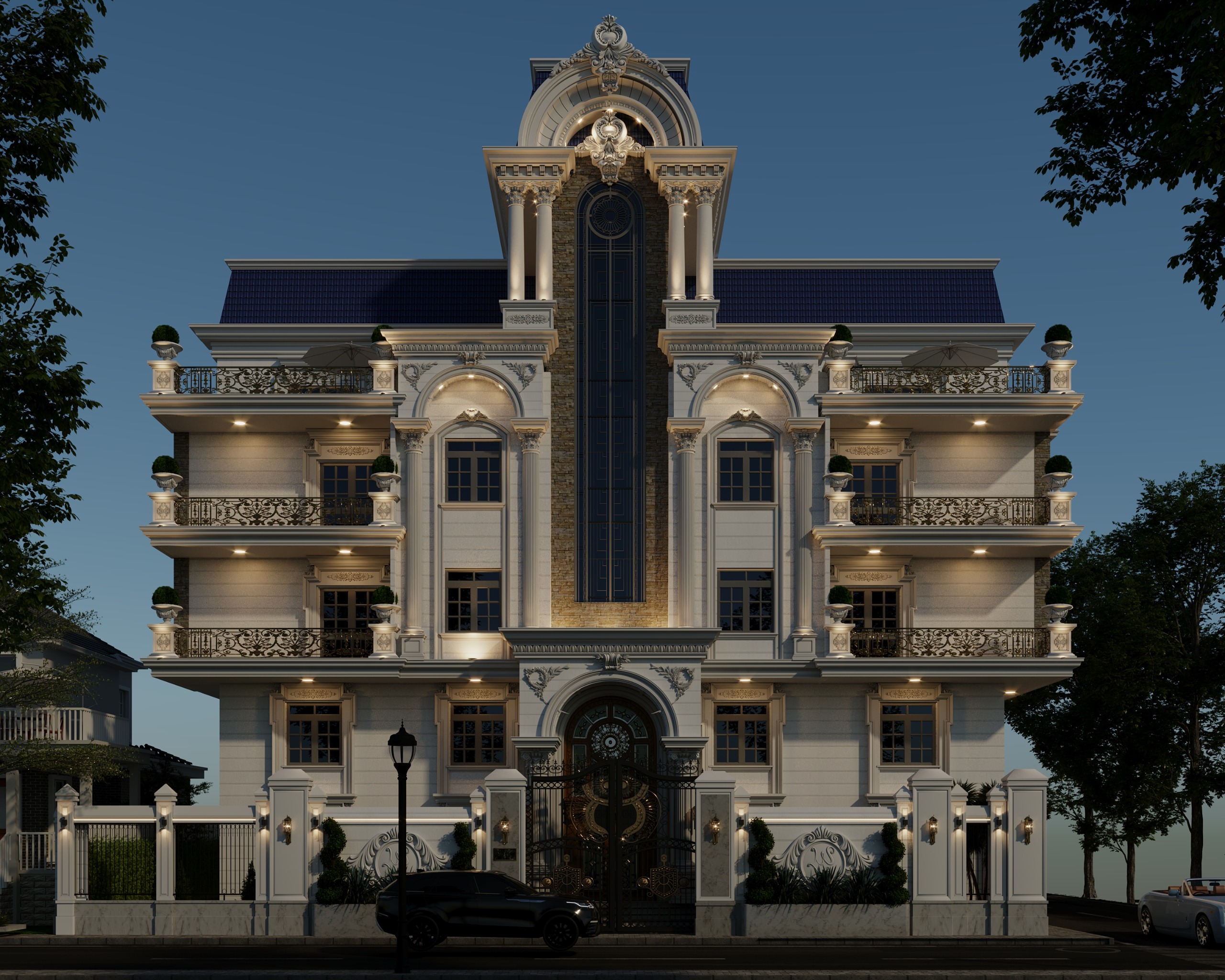
Architectural and investment comparison between a luxury apartment and a detached villa oriented toward natural light and a garden.
What Is the Real Difference Between Investing in a Luxury Apartment and a Detached Villa?
The fundamental difference between an apartment and a villa is not simply the size of the property. It is the nature of the real estate asset itself.
When investing in an apartment, you are purchasing a unit within a larger urban system. When purchasing a detached villa, you are investing in the land, the building, the outdoor spaces, and the architectural relationship between them.
This difference changes the way the property should be evaluated, as well as its operating costs and the degree of flexibility available to the owner.
A luxury apartment typically provides the owner with:
-
Shared services.
-
Security.
-
Landscaping.
-
Management of common areas.
-
Facilities and services within the development.
-
Shared maintenance and management responsibilities across multiple units.
This can make property management simpler, particularly for an investor who wants an asset that can operate without personally managing every aspect of the site.
A detached villa, on the other hand, provides the owner with a greater degree of control over:
-
Architectural design.
-
Facades.
-
Entrances.
-
Garden.
-
Outdoor spaces.
-
Privacy.
-
Movement throughout the site.
-
The relationship between interior and exterior spaces.
-
Certain future modifications or extensions, subject to applicable regulations.
However, this flexibility comes with greater responsibility for management, operation, and maintenance.
This leads to one of the most important investment principles:
Increasing the built-up area does not automatically mean increasing investment efficiency.
A luxury apartment in a strong location may be faster to rent and easier to resell than a larger villa located in an area with limited demand for villas.
At the same time, a detached villa on land in a rare location may provide a more scarce and value-retentive asset than a standardized apartment within a development containing many similar units.
Comparing the Features and Costs of an Apartment and a Villa
When comparing a luxury apartment with a detached villa, it is better not to rely on a single criterion. The comparison should instead be built around a combination of financial, architectural, and operational dimensions.
| Comparison Factor | Luxury Apartment | Detached Villa |
|---|---|---|
| Entry Price and Initial Cost | May be lower in some locations or developments | Usually higher because of land value and the broader construction scope |
| Land Value Within the Asset | Included within the shared ownership of the property | A direct and fundamental component of the asset |
| Rental and Occupancy Potential | May be more flexible in markets with strong apartment demand | More closely linked to demand for larger spaces and higher privacy |
| Total Cost of Ownership — TCO | May be relatively easier to predict | Includes additional elements such as gardens, facades, and external areas |
| Resale and Liquidity | May offer higher liquidity where demand is broad | Highly dependent on location, scarcity, design, and target market |
| Architectural Flexibility | Relatively limited by the unit and building | Greater because of the land and the relationship between building and site |
| Privacy | Depends on the location of the unit, building, and layout | Can be increased through site planning, orientation, and circulation |
| Property Management | May be simpler in well-managed developments | Usually requires broader management of the site and external elements |
| Outdoor Spaces | Limited according to the unit and development | A fundamental part of the property composition |
| Scarcity Value | Influenced by the uniqueness of the unit and development | May benefit from land, location, and architectural uniqueness |
This comparison does not mean that one option is always better than the other. It shows that the property type must be aligned with the investment objective and the local market.
When Is a Luxury Apartment the Smarter Investment?
A luxury apartment may be the more logical choice when strong location, genuine demand, quality development management, efficient architectural planning, and clear rental or resale potential come together.
The advantage of an apartment is not limited to the entry price. It can also provide access to a strategic location with an operating and management structure that may be simpler than managing an independent plot of land.
If the objective is to invest in an apartment for rental income, it is not enough to look only at the purchase price and expected rent.
You should evaluate:
-
The unit's location within the development.
-
Floor level.
-
Window and opening orientations.
-
Natural lighting.
-
Ventilation.
-
View.
-
Ratio between usable and gross area.
-
Quality of the layout.
-
Privacy.
-
Noise.
-
Maintenance and management fees.
-
Development amenities.
-
Parking.
-
Accessibility.
-
Market competition.
1. When Location Is the Main Strength
In real estate investment, a unit cannot be separated from its location.
An apartment may benefit from proximity to:
-
Services.
-
Employment centers.
-
Major roads and transportation corridors.
-
Schools and universities.
-
Shopping centers.
-
Medical services.
-
Restaurants and active destinations.
-
Transportation and mobility networks.
Therefore, a smaller apartment in a strong location may be more competitive than a larger unit in a lower-demand location.
However, location alone is not enough.
Even within the same development, unit values can differ because of views, orientation, floor level, privacy, layout, and noise.
2. When There Is Genuine Demand for Luxury Apartments
It is not enough for a development to carry a marketing description such as "luxury" or "Premium."
The real investment question is:
Is there an actual customer looking for this type of property?
You should study competing units, sizes, finishing levels, views, services, asking prices, and then compare the property you are considering with the available alternatives.
If an area contains a large number of similar apartments, simply purchasing an apartment with luxurious finishes may not create a clear competitive advantage.
However, if the unit has a superior location, better view, more efficient layout, higher privacy, or another meaningful advantage, it may become more competitive.
3. When Management and Maintenance Are Important
An apartment may be more suitable for an investor who does not want to manage a large outdoor area.
In many developments, operating responsibilities are connected to the unit, building, and shared areas rather than requiring the owner to independently manage a complete plot of land.
This does not mean that an apartment is necessarily inexpensive to operate.
The following should be included:
-
Maintenance fees.
-
Management fees.
-
Shared services.
-
Interior repairs.
-
Renovations.
-
Rental management costs.
These costs should form part of the complete financial calculation.
4. When the Unit Itself Stands Out From Competitors
Not all luxury apartments are equal.
One unit may outperform another because of:
-
Better views.
-
More efficient internal distribution.
-
Higher privacy.
-
Better orientation.
-
Higher-quality finishes.
-
Distinctive outdoor spaces.
-
Proximity to important development features.
-
Convenient parking.
-
Better access.
-
Better natural lighting and ventilation.
This is where architectural design can transform space into a more usable and competitive real estate product.
5. When the Objective Is Rental Income or Relative Liquidity
If an investor is targeting a market that depends heavily on apartments, studying a luxury apartment may be a logical first step before considering a villa.
However, this observation should not become a universal rule.
Local demand is what ultimately determines the decision.
An apartment in a weak-demand market may be less attractive than a villa with a rare location and clear demand.
6. When the Operating Budget Is Limited
If an investor does not want to carry a broad range of external maintenance costs, an apartment may be more suitable.
Nevertheless, you should not look at a single maintenance item. You should calculate the Total Cost of Ownership — TCO over the long term.
Elhelw Architects' Perspective
From our architectural perspective, a luxury apartment becomes more attractive as an investment when it is not simply a "luxury" unit, but a well-planned real estate product combining:
Location + Layout + Lighting + Ventilation + View + Privacy + Finishes + Demand.
Luxury alone is not an investment strategy; usability, demand, and asset quality are what make the difference.
When Is a Detached Villa the Smarter Investment?
A detached villa requires a somewhat different analysis because the value of land, outdoor spaces, and privacy becomes part of the asset evaluation alongside the building itself.
A villa may become the stronger option when:
-
The location can support demand for villas.
-
The supply of land or distinctive villas is limited.
-
Land value is a major component of the asset.
-
Privacy is important to the user.
-
Outdoor space is required.
-
Architectural design can make efficient use of the land.
-
Operating costs are proportionate to the property's value.
We do not view a villa simply as a building mass. We evaluate three fundamental layers of value:
Land + Building + Architectural Relationship Between Them.
A villa with good land and poor design may fail to realize its full potential. Likewise, a large plot does not automatically become a better investment if it is used inefficiently.
1. When Land Is an Important Part of the Asset's Value
With a villa, you are not purchasing a building alone.
You are dealing with:
Land + Building + Outdoor Spaces + Relationship Between Site and Architecture.
This makes villa analysis different from evaluating an apartment within a building.
The value of the land, its location, and its potential uses may be major elements in the asset's evaluation, particularly when suitable land or villas are limited in supply.
2. When the Location Has Limited Supply
If a property is located in an area with characteristics that are difficult to replicate, scarcity may become an important factor.
However, a distinction must be made between:
True scarcity
and
Artificial marketing scarcity.
Therefore, an investor should ask:
Is it genuinely difficult to find a similar property in the same location, or does comparable supply exist but appear under different marketing descriptions?
This is particularly important when evaluating luxury assets.
3. When There Is Genuine Demand for Villas
A villa does not become a good investment simply because it is larger.
If the target market prefers apartments, large space may become a burden rather than an advantage.
But when there is clear demand from families or target segments for detached villas, the combination of:
Privacy + Space + Land + Garden
can become a strong competitive advantage.
4. When Privacy Is a Priority
Privacy is one of the most important differences between a villa and an apartment.
However, privacy does not result simply from owning a large plot.
Architectural design can address:
-
Sightlines.
-
Entrances.
-
Vehicle circulation.
-
Bedroom locations.
-
The relationship between private and public spaces.
-
Outdoor seating.
-
Relationship with neighboring properties.
-
Views.
-
Garden.
-
Terrace.
-
Service areas.
Privacy therefore becomes the result of a sequence of design decisions, rather than an automatic consequence of owning a large plot.
5. When Greater Architectural Flexibility Is Required
One of the major advantages of a villa is the ability to think about the relationship between:
Building → Garden → Terrace → Pool → Landscape
with greater flexibility than in an apartment.
Design can influence the user experience and property value through:
-
Orientation.
-
Circulation.
-
Natural lighting.
-
Ventilation.
-
Views.
-
Privacy.
-
Outdoor spaces.
-
Entrances.
-
Relationship between interior and exterior spaces.
This is why a villa should not be designed as a "large apartment."
A villa has a different philosophy based on the relationship between building, land, movement, garden, privacy, and views.
6. When Operating Costs Are Proportionate to the Asset's Value
This is a critical point when comparing a villa with an apartment.
A villa may require management and maintenance of additional elements such as:
-
Garden.
-
External entrances.
-
Boundary walls.
-
Open spaces.
-
Facades.
-
Irrigation systems.
-
Water features.
-
Swimming pool, if applicable.
-
External electrical and mechanical systems.
-
Waterproofing.
-
Air-conditioning systems.
-
Periodic maintenance.
Therefore, it is not correct to say that a villa is better simply because it has land.
The correct question is:
Does the additional value provided by the land, space, and privacy justify the cost of owning and operating the property?
Elhelw Architects' Perspective
From a design and execution perspective, a villa becomes stronger when the land is used intelligently rather than when the building is simply made larger.
A larger villa ≠ a better investment.
The better villa is the one that achieves balance between:
Land + Design + Privacy + Use + Operations + Demand + Resale Value.
Does Land Value and Land Size Make a Villa a Better Investment?
Not necessarily.
Land area is a fundamental element in evaluating a villa, but it becomes a genuine financial advantage only when it is used efficiently through architectural design.
A large plot may have a shape, orientation, or relationship with neighboring properties that limits:
-
Air movement.
-
Privacy.
-
Views.
-
Garden quality.
-
Movement throughout the site.
-
Building distribution.
Conversely, a smaller plot may allow a more efficient villa design with a better relationship between interior and exterior spaces.
Therefore, we reject the principle:
"The larger the area, the better the property always is."
In investment-oriented design, the more important objective is Best Land Use — achieving the best possible use of the land instead of simply increasing built-up area at the expense of usability, ventilation, and landscaping.
The land should be evaluated according to factors such as:
-
Buildability.
-
Potential for future extensions.
-
Geographic orientation.
-
Sun exposure.
-
Wind.
-
Privacy from neighbors and the street.
-
Relationship between the building and garden.
-
Entrances.
-
Vehicle circulation.
-
Views.
Apartment or Villa for Rental? Analyzing Rental Yield and Cost
When asking:
Apartment or villa for rental?
neither option should be preferred automatically.
The decision should be connected to the nature of the target tenant segment.
A luxury apartment may have broader rental demand in some markets among employees, small families, professionals, and expatriate experts, while a detached villa may target segments looking for larger spaces and higher privacy.
However, evaluating the best real estate investment does not stop at gross rent.
The more important factors are:
Rental Yield + Net Rental Income + TCO + Vacancy + Demand + Exit Potential
How Do You Calculate Net Rental Income?
The formula can be simplified as follows:
Net Rental Income = Annual Gross Rental Income − Maintenance Costs − Management Costs − Vacancy − Taxes, Operating Costs, and Other Property-Related Expenses.
Based on this formula, an apartment may generate lower rent in absolute terms but be financially more efficient because of lower operating costs.
Conversely, a villa may generate higher rental income, but a larger portion of that income may be spent on:
-
Garden maintenance.
-
Swimming pool maintenance.
-
Facades.
-
Systems.
-
Repairs.
-
External operations.
Therefore, net income is more important than looking at gross rent alone.
Apartment or Villa for Resale? Analyzing Liquidity and Scarcity
When comparing an apartment and a villa for resale, the first question should be:
Who is the potential buyer of the property?
Then:
What will make that buyer prefer your property over competing properties?
Luxury apartments may benefit from broader buyer segments, which can give them higher liquidity in some markets.
However, the risk is that many similar units may exist within the same development.
A detached villa may require more time to exit the investment in some cases, but it may possess stronger differentiating elements such as:
-
Scarcity of land.
-
Location.
-
Privacy.
-
Design quality.
-
Garden.
-
Facades.
-
Outdoor space.
-
Customization potential.
These factors may provide the owner with stronger negotiating power when genuine demand exists.
However, a higher resale price should never be considered guaranteed for either property type.
What Is the Total Cost of Ownership — TCO for a Villa Versus an Apartment?
Purchasing the property is not the end of the cost.
There is what is known as:
Total Cost of Ownership — TCO
This means the total cost of owning and operating the property throughout its period of use.
Apartment Ownership Costs
These may include:
-
Monthly maintenance fees.
-
Shared service fees.
-
Management.
-
Equipment maintenance.
-
Finish maintenance.
-
Repairs.
-
Renovations.
-
Costs of preparing the unit for rental.
Villa Ownership Costs
In addition to the above, they may include:
-
Facade maintenance.
-
Waterproofing and thermal insulation.
-
Garden.
-
Irrigation systems.
-
Swimming pool.
-
Entrances.
-
Boundary walls.
-
Outdoor areas.
-
Air-conditioning systems.
-
Electricity.
-
Mechanical systems.
-
Site works.
Therefore, the correct comparison is not simply:
Apartment Price vs. Villa Price
It should instead be:
Acquisition Cost + Operation + Maintenance + Renovation + Management + Vacancy + Exit Cost.
How Do You Compare the Investment Return of an Apartment and a Villa?
The investment comparison between an apartment and a villa should not stop at the purchase price or expected property appreciation.
It is better to examine the entire investment cycle:
Entry Price → Acquisition Cost → Operations → Income → Change in Asset Value → Resale → Exit Costs.
First: What Is Rental Yield?
Rental Yield can be used to measure the relationship between the income generated by the property and the cost of owning it.
Rental Yield = Annual Net Rental Income ÷ Total Acquisition Cost × 100
The important point, however, is correctly defining:
Total Acquisition Cost
Total acquisition cost does not mean the property purchase price alone.
Depending on the nature of the project, it may include:
| Cost Item | Apartment | Villa |
|---|---|---|
| Purchase Price | ✓ | ✓ |
| Interior Design | Depending on the unit | Depending on the project |
| Finishes | Depending on condition | May involve a broader scope |
| Furniture | Depending on the rental strategy | Depending on the rental strategy |
| Purchase-Related Fees | ✓ | ✓ |
| Renovations | Depending on property condition | Depending on property condition |
| External Site Works | Usually limited | May include garden, entrances, and more |
| Operating Equipment | Depending on the unit | May be more diverse |
| Initial Maintenance | ✓ | ✓ |
Therefore, comparing a lower-priced apartment with a higher-priced villa is not enough to determine which is the better investment.
A Hypothetical Example of Rental Yield Calculation
Suppose an investor is comparing two hypothetical assets:
Property A: Luxury Apartment
-
Total acquisition cost: EGP 5,000,000
-
Annual net rental income: EGP 300,000
Therefore:
300,000 ÷ 5,000,000 × 100 = 6%
Property B: Detached Villa
-
Total acquisition cost: EGP 10,000,000
-
Annual net rental income: EGP 500,000
Therefore:
500,000 ÷ 10,000,000 × 100 = 5%
This example is purely educational and hypothetical. It does not represent an average for the Egyptian market or a forecast for the return of any particular property type.
However, it illustrates an important principle:
A property that generates higher rental income in absolute terms is not necessarily the property with the better relative yield.
Second: What About ROI?
Return on Investment — ROI is broader than Rental Yield because it can take more than rental income into consideration.
When evaluating an investment over a period of time, you can consider:
1. Rental Income
How much rental income does the property generate?
2. Capital Appreciation
How has the value of the asset changed during the holding period?
3. Total Return
What is the overall result after considering income, value changes, and costs?
An important point must be emphasized:
Property appreciation is not guaranteed.
An increase in value depends on several factors, including:
-
Location.
-
Demand.
-
Development quality.
-
Market conditions.
-
Asset quality.
-
Competition.
-
Design quality.
-
Property condition at resale.
-
Ability of the property to attract the target buyer.
Do Not Look at Gross Income Alone
If a property generates rental income, that does not mean the entire amount represents profit for the investor.
You should consider:
-
Maintenance.
-
Management.
-
Service fees.
-
Repairs.
-
Renovations.
-
Rental management.
-
Preparing the property between rental periods.
-
Outdoor-space costs in the case of a villa.
-
Operation of systems and equipment.
-
Any other ownership-related expenses.
Therefore:
Net Rental Income
is more useful when comparing two investments than simply looking at the gross rental value.
Real Estate Investment Does Not Have One Single Objective: What Do You Want the Property to Achieve?
Before asking:
Is an apartment better or a villa?
you should first determine:
Why are you buying the property?
The property that is appropriate for an investor seeking regular rental income may not be the same property that is best for someone who wants to retain a rare asset for their family or use it as a primary residence.
| Investment Objective | Luxury Apartment | Detached Villa |
|---|---|---|
| Rental Income | May be suitable when demand is strong | Depends heavily on villa demand |
| Capital Preservation | Linked to location, development quality, and demand | Land value and scarcity may form part of the evaluation |
| Resale | Depends on liquidity, demand, development, and unit condition | Depends on location, land, property condition, and demand |
| Luxury Personal Use | Very suitable for certain lifestyles | May be more suitable for those requiring greater space and privacy |
| Privacy | Related to building and unit | Usually offers greater flexibility |
| Design Control | Relatively limited | Greater because of land and the relationship between building and site |
| Ease of Management | May be simpler in some developments | Usually requires broader management |
| Future Flexibility | Linked to the unit and development | May be greater because of land and outdoor spaces |
1. If Your Objective Is Rental Income
Start with the target tenant, not the property type.
Ask:
-
Who is the tenant?
-
What area are they looking for?
-
Do they prefer an apartment or villa?
-
What level of finishing do they expect?
-
Do they require parking?
-
Is the view important?
-
Is the location close to services, work, and education?
-
Are they looking for long-term housing?
-
What is the level of competition?
-
How many similar units already exist?
A luxury apartment may be the logical choice if the property product matches the nature of demand.
However, a villa may be more appropriate in a market targeting families looking for:
Space + Privacy + Garden + Independence.
2. If Your Objective Is Capital Preservation
Here, factors such as:
Location + Asset Quality + Scarcity + Land + Execution Quality + Future Demand
become more important.
A villa may have an additional advantage when land value is a major component of the asset, while an apartment may have an advantage within a strong development with sustained demand and a strategic location.
Therefore:
There is no universal rule stating that one property type always preserves capital better than the other.
3. If Your Objective Is Resale
Here, we need to apply what can be called:
The Resale Test
Imagine that you will sell the property several years from now.
Ask:
Who is the buyer who will be looking for this property?
Then:
What will make that buyer choose your property specifically instead of dozens of alternatives?
For an Apartment, the Answer May Be:
-
Location.
-
View.
-
Floor.
-
Layout.
-
Finish quality.
-
Development management.
-
Services.
-
Unit condition.
-
Parking.
For a Villa, the Answer May Be:
-
Location.
-
Land area.
-
Design quality.
-
Privacy.
-
Space distribution.
-
Garden.
-
Facades.
-
Execution quality.
-
Efficient site utilization.
4. If the Objective Is Luxury Personal Use
Here, the definition of a "smart investment" changes.
The highest Rental Yield may not be the priority.
The priority may instead become:
Privacy + Comfort + Space + View + Quality of Life + Design Customization.
Therefore, a distinction must be made between:
Financial Return
and
The value the owner receives from using the property.
The best property for rental investment is not necessarily the best property for capital preservation, and the best property for family use is not necessarily the best property in terms of liquidity.
How Do You Choose Between an Apartment and a Villa? A Practical Decision Tree
If you are uncertain whether to purchase a luxury apartment or a detached villa, do not begin by asking which one is more luxurious.
Start by defining:
Objective + User + Expected Income + Operating Cost + Privacy + Resale Potential.
Step One: What Is Your Primary Objective?
Is Your Main Objective Rental?
If the answer is yes, ask:
Is there genuine and sustainable demand for this type of property in the location you have chosen?
If the answer is yes, compare the apartment and villa based on:
Net Rental Income + Acquisition Cost + Operating Cost + Ease of Management + Competition.
If the apartment provides a better balance, it may be the more appropriate option.
If the villa serves a clear rental segment and produces better figures after all costs are considered, there is no reason to exclude it simply because it is a villa.
Is Your Main Objective Personal Use?
If privacy, space, and architectural flexibility are essential factors, then:
A detached villa deserves to be studied first.
If, however, you prefer:
-
Easier management.
-
An urban location.
-
Development services.
-
Smaller space.
-
A lifestyle focused more on the unit than the land.
then a luxury apartment may be more suitable.
Is Your Main Objective Capital Preservation and Resale?
Do not immediately choose an apartment or villa.
Start with these questions:
Is the location strong?
↓
Is there genuine demand for this property type?
↓
Is the asset differentiated from competitors?
↓
Is the ownership cost proportionate to its value?
↓
Who is likely to buy it when you resell?
If the answers are strong, the property type becomes only one factor within the overall decision.
Step Two: Is Operating Cost Important to You?
If you want to minimize operational complexity as much as possible, an apartment may be more suitable, particularly within a development that provides appropriate management and shared services.
If you are able to manage and maintain:
-
Land.
-
Garden.
-
Entrances.
-
Outdoor spaces.
-
Additional systems.
then a villa may be a logical choice, provided these elements offer genuine value to you or the target market.
Step Three: Is Design a Fundamental Part of Your Decision?
If you want significant flexibility in building distribution and the relationship between interior and exterior spaces, a villa provides greater room to consider:
-
Land.
-
Privacy.
-
Circulation.
-
Garden.
-
Entrances.
-
Views.
-
Outdoor spaces.
For an apartment, the architectural challenge focuses more strongly on:
-
Space-planning efficiency.
-
Natural lighting.
-
Ventilation.
-
Views.
-
Privacy.
-
Relationship between spaces.
-
Interior finish quality.
Practical Summary of the Decision Tree
The decision can be simplified into three rules:
Rental + Easier Management + Strong Urban Location → Study the apartment first.
Privacy + Land + Family Use + Design Flexibility → Study the villa first.
Pure Investment → Do not decide before comparing net return, cost, liquidity, demand, and asset value.
Purchase Decision Matrix: How Do You Choose the Property That Fits Your Objective?
| Objective | What Should You Focus On? | First Direction to Study |
|---|---|---|
| Rental Income | Demand + Net Yield + Vacancy + Management | Apartment or villa depending on the market |
| Ease of Management | Services + Maintenance + Operational Complexity | Apartment often deserves initial consideration |
| Capital Preservation | Location + Asset Quality + Scarcity + Demand | Compare both types |
| Family Use | Privacy + Space + Movement + Garden | Villa may be more suitable |
| Resale | Potential Buyer + Competition + Differentiation | Compare according to location |
| Design Flexibility | Land + Interior/Exterior + Extensions | Villa |
| Luxury Use | Privacy + View + Quality of Life | Villa or exceptional apartment |
| Pure Investment | TCO + Net Yield + ROI + Liquidity | Financial study of both assets |
Do not choose a villa simply because its future value may appear higher, and do not choose an apartment simply because it is easier to manage. The decision requires comparing the actual numbers and characteristics of the asset.
How Do Architecture and Design Affect the Investment Value of a Property?
Architectural design is not merely an external decorative layer.
It is one of the factors that determine asset efficiency, usability, competitiveness, and ability to maintain its appeal.
In residential projects, architectural decisions can influence:
-
Quality of circulation.
-
Privacy.
-
Natural lighting.
-
Ventilation.
-
Energy consumption.
-
Comfort.
-
Relationship between spaces.
-
Space efficiency.
-
Usability.
-
Ease of maintenance.
Some of the details we focus on include:
-
Clear separation between guest circulation and family circulation.
-
Maximizing natural light.
-
Appropriate orientation of spaces.
-
Reducing wasted corridors.
-
Selecting materials with suitable service life.
-
Making materials and systems easier to maintain.
-
Connecting interior and exterior spaces.
In apartments, intelligent design works to maximize every square meter.
In a villa, however, the design must create an integrated relationship between:
Building + Land + Garden + Movement + Privacy + Views.
Common Mistakes When Choosing an Apartment or Villa for Investment
Based on more than 18 years of practical experience in the design, execution, and supervision of residential projects, there are mistakes that may have a greater impact than simply choosing between an apartment and a villa.
1. Focusing Only on Area Without Considering Layout
A large area cannot compensate for poor architectural distribution.
A smaller apartment or villa with an efficient layout may outperform a huge property containing:
-
Wasted corridors.
-
Poorly oriented rooms.
-
Unclear circulation.
-
Spaces that are difficult to use.
2. Being Impressed by Surface-Level Finishes
Marble, decorative elements, and luxurious lighting do not, by themselves, create a successful investment asset.
You should inspect:
-
Infrastructure.
-
Waterproofing.
-
Services and utilities.
-
Execution quality.
-
Systems.
-
Property condition.
Finishes can be changed, but certain structural or planning defects can be more difficult and expensive to correct.
3. Ignoring Orientation and Climate
Sun and wind orientation affect:
-
Heat.
-
Natural lighting.
-
Ventilation.
-
Comfort.
-
Air-conditioning consumption.
-
Space quality.
Therefore, orientation should be studied before making major design decisions.
4. Ignoring TCO
It is not enough to calculate:
Purchase Price + Expected Rent.
You should include:
-
Operation.
-
Maintenance.
-
Management.
-
Repairs.
-
Renovation.
-
Vacancy.
-
Additional systems.
5. Failing to Analyze Competition and Scarcity
If the property is located in an area filled with repetitive units offering the same specifications, differentiation through:
-
Location.
-
Layout.
-
View.
-
Privacy.
-
Execution quality.
may become the real competitive advantage.
6. Building or Choosing a Villa Larger Than the Actual Need
Every additional square meter without a clear function may increase:
-
Construction cost.
-
Finishing cost.
-
Air-conditioning cost.
-
Operating cost.
-
Maintenance cost.
Therefore:
Increasing area is not an architectural objective in itself.
7. Designing the Villa as a "Large Apartment"
A villa has a different philosophy.
It should address:
Building → Garden → Movement → Privacy → View → Outdoor Space
rather than simply distributing rooms across a larger area.
8. Ignoring the Exit Scenario
Even when the property is intended for personal use, its future should be considered.
Ask:
Will this property remain understandable and attractive to another buyer several years from now?
A highly personalized design that does not align with market needs may reduce the potential buyer pool.
Case Study From Our Work: Sheikh Ali Palace as an Integrated Architectural System
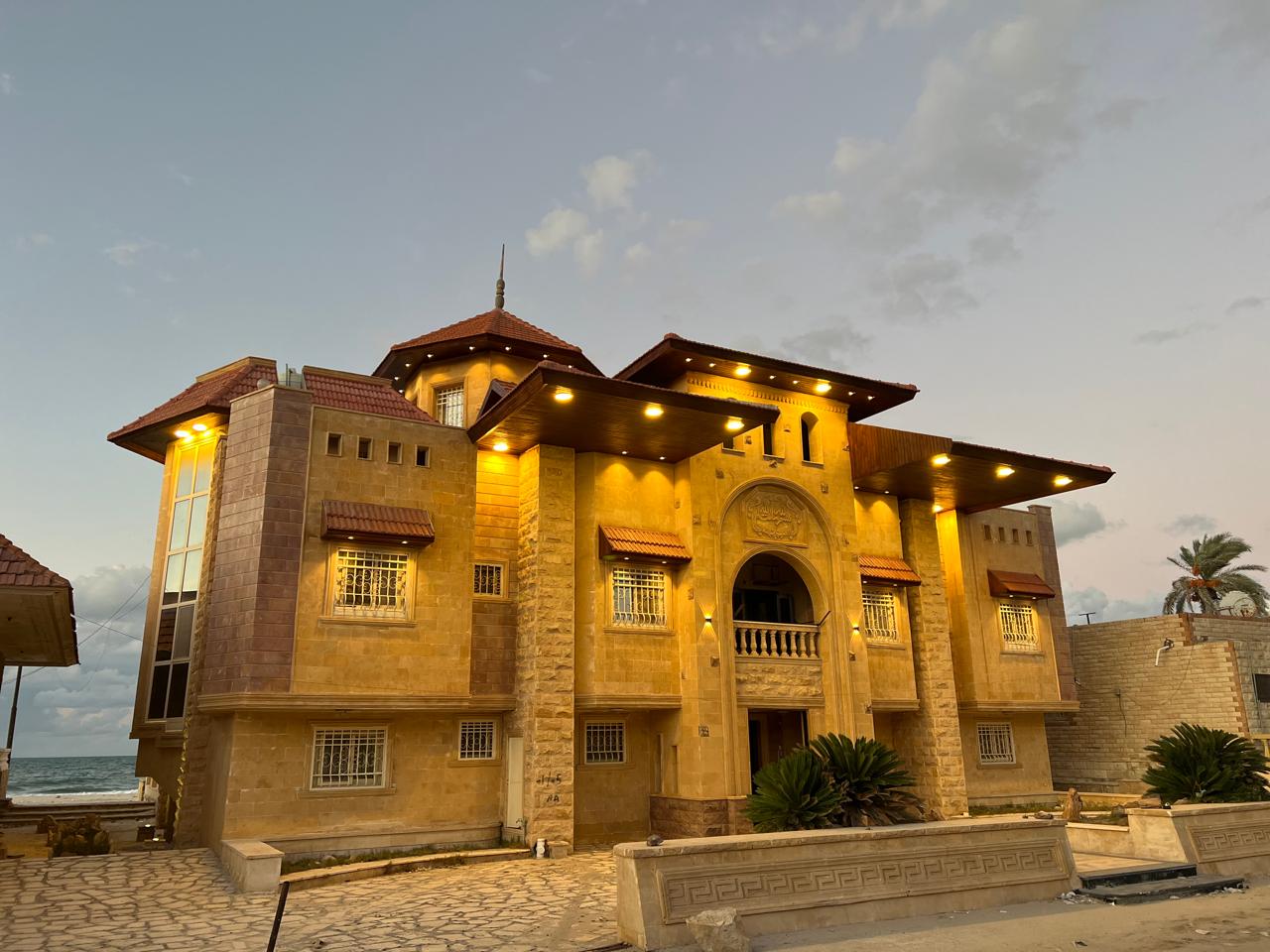
Within the material presented for this article, Sheikh Ali Palace is presented as an example of the importance of treating a luxury property as an integrated system rather than simply a built mass.
The challenge involved making effective use of land with a sea view while providing a high level of privacy and organizing the relationship between the units and outdoor spaces.
According to this concept, the project was approached as a composition of three interconnected villas within one architectural system, with consideration given to:
-
Sun path.
-
Wind movement.
-
Viewing angles.
-
Privacy.
-
Circulation.
-
Relationship between masses.
-
Views.
-
Outdoor spaces.
Rather than treating each building as an isolated element, the project was considered through:
Villa → Movement → Privacy → View → Outdoor Space
This demonstrates an important point when evaluating a villa as an investment:
Land value does not automatically become higher real estate value simply because a large area of land exists.
Value appears when design can exploit the land and transform it into a clear and coherent user experience.
Suggested image alt text: Architectural composition of three interconnected villas demonstrating site utilization, privacy, and views.
What Can We Learn From Sheikh Ali Palace? When Design Becomes Part of Property Value
In this example, the architectural concept was not simply about creating large spaces or a luxurious facade. It was about organizing the relationship between:
Architectural Masses + Movement + Privacy + Views + Outdoor Spaces.
When a project consists of more than one villa within a single system, several questions emerge:
-
How does the family move throughout the project?
-
How is the relationship between the units organized?
-
How is privacy maintained?
-
How can views be maximized without creating unwanted exposure?
-
How can outdoor spaces become part of the building experience?
-
How can the land be used instead of leaving large areas as leftover spaces?
These are not cosmetic questions.
They are decisions that influence how the owner uses and benefits from the property.
Therefore, the most important lesson is:
Good design does not merely add form to a property; it organizes how the property is used and defines the relationship between the building, site, privacy, and views.
When comparing a luxury apartment with a detached villa, the question should not be:
Which one is larger?
Instead:
Which asset has had its architectural potential used more effectively?
What Can We Learn From Real Projects When Comparing an Apartment and a Villa?
Architectural experience does not mean saying that villas are always better or apartments are always more profitable.
The real value of experience is the ability to break the property down into decisions that can be analyzed.
These decisions include:
-
Location.
-
Movement.
-
Privacy.
-
View.
-
Layout.
-
Outdoor spaces.
-
Operations.
-
Execution quality.
-
Intended use.
-
Resale potential.
Therefore, the decision does not begin with:
How many square meters?
It begins with a connected set of questions.
1. What Does the Location Do?
Location determines a significant part of the nature of the property and its potential user.
2. What Does Design Do?
Design transforms the available land or space into usable areas.
3. What Does Privacy Do?
In luxury real estate, privacy can be a fundamental part of the residential experience.
4. What Does the View Do?
A good view can be a competitive advantage, but its value depends on how effectively it is integrated into the layout.
5. What Do Outdoor Spaces Do?
In a villa in particular, the garden, terrace, pool, and landscape are not merely additions. They are parts of the property experience.
6. What Does Execution Do?
Even a strong design requires execution that preserves its concept and details.
From Problem to Result: How Does Architectural Experience Appear Inside a Project?
Architectural experience can be understood through the way decisions are made within a project.
The architect does not normally begin with the final appearance. Instead, the process starts with a set of constraints and requirements, which are then transformed into decisions regarding:
Planning + Orientation + Movement + Facade + Outdoor Spaces.
The Problem
Every project begins with a set of circumstances, such as:
-
Nature of the land.
-
Project location.
-
Views.
-
Required level of privacy.
-
Number of users.
-
Family relationships.
-
Movement throughout the site.
-
Interior and exterior space requirements.
The Decision
After understanding these conditions come the architectural questions:
Where should the building mass be positioned?
How should vehicles enter?
How should users move?
Where should public spaces be located?
Where should private spaces be located?
How should spaces be oriented toward the view?
How should privacy be protected?
These decisions transform the land into a usable project.
Why Was the Decision Made?
Because every architectural decision should have a reason.
The facade is not separate from the interior distribution.
Windows are not separate from views and privacy.
The terrace is not separate from user movement.
The garden is not simply leftover space around the building.
The Result
When these decisions work together, the architectural relationship becomes clearer:
Site → Planning → Movement → Privacy → View → Outdoor Spaces → Facade → User Experience.
This is the point investors should look for when comparing an apartment with a villa.
Real architectural value is not found in the number of elements, but in how interconnected they are and how effectively they serve the user and the project.
Why Does This Matter in an Investment Decision?
Because the investor is not simply buying an architectural drawing.
The investor is buying an asset that will be:
-
Used.
-
Rented.
-
Held.
-
Developed.
-
Or resold.
The more closely the asset aligns with its target user, the easier it becomes to understand the source of its competitive value.
A good project demonstrates experience through the decisions made within it, not through the number of times the word "experience" is written.
How Do You Reach the Right Decision: Apartment or Villa?
When a buyer is considering a luxury apartment or detached villa, they do not need only a theoretical definition of each property type.
They need a decision that can be applied to their own situation.
Therefore, the comparison should begin with the question, followed by the answer, the reason, the criteria, and the circumstances that could change the outcome.
Is an Apartment or Villa Better for Investment?
There is no absolute answer that applies to every investor.
A luxury apartment may be more appropriate when the objective is:
Rental Income + Easier Management + Strong Location + Suitable Liquidity.
A detached villa may be more appropriate when:
Land + Privacy + Scarcity + Space + Architectural Flexibility
are major factors in the value of the asset.
However, the final decision should depend on:
-
Net return.
-
Total acquisition cost.
-
Operating costs.
-
Demand.
-
Location.
-
Asset quality.
-
Resale potential.
-
Land value.
-
Competition.
-
End user.
Why May an Apartment Be Better in Some Cases?
An apartment may be more suitable when:
-
There is clear demand for apartments in the location.
-
The investor is targeting rental income.
-
Simple property management is important.
-
Shared services provide genuine value.
-
The unit is differentiated from competitors.
-
The entry price is proportionate to the return.
-
Resale benefits from a broader buyer base.
However, an apartment with a weak location or poor layout may be less attractive than a villa with a better location and stronger characteristics.
Why May a Villa Be Better in Other Cases?
A villa may be more suitable when:
-
The land has value and scarcity.
-
Privacy is a priority.
-
Outdoor spaces are important.
-
There is genuine demand for villas.
-
The design can take advantage of the site.
-
The property is differentiated from competitors.
-
Operating costs are proportionate to the asset's value.
However, owning more land does not automatically mean a higher return.
What Evidence Should an Investor Rely On?
The evidence should not be based on the property price alone.
You should examine:
-
Total acquisition cost.
-
Net rental income.
-
Operating and maintenance costs.
-
Nature of demand.
-
Design and planning quality.
-
Location.
-
View.
-
Privacy.
-
Land value in the case of a villa.
-
Current competition.
-
Resale potential.
-
Expected end user.
This is why studying the specific project is more important than relying solely on labels such as "luxury apartment" or "luxury villa."
When Can the Result Be Different?
If the objective is:
Property Rental → the apartment may outperform in a particular scenario.
If the objective is:
Family Living and Privacy → the villa may outperform.
If the objective is:
Capital Preservation → location, scarcity, and asset quality may become more important than property type.
If the objective is:
Resale → the potential buyer several years from now must be studied, not only today's buyer.
The right question is not: Is an apartment better or a villa? The right question is: Which one achieves my objective with the best balance between return, cost, risk, and asset value?
Final Conclusion: Luxury Apartment or Detached Villa?
If we want to summarize the comparison in one rule, the decision does not depend on property type alone.
A Luxury Apartment May Be the Better Choice When:
-
Rental income is the priority.
-
The location is strong.
-
There is clear demand for apartments.
-
Easy management is important.
-
Liquidity and resale are priorities.
-
The unit is differentiated from competitors.
-
Ownership costs are proportionate to the return.
A Detached Villa May Be the Better Choice When:
-
Privacy is a priority.
-
Land is an important component of the asset's value.
-
The location is rare or limited in supply.
-
There is genuine demand for villas.
-
Outdoor spaces are important.
-
Architectural flexibility is a fundamental part of the decision.
-
Operating costs are proportionate to the property's value.
But in both cases:
Do not choose a property simply because it is larger or more luxurious.
A good investment property is one whose characteristics align with:
Investor Objective + Local Market + Location + Demand + Asset Quality + Ownership Cost + Resale Potential.
Therefore, the best decision does not begin with:
Apartment or Villa?
It begins with:
Why am I buying? For whom? In what location? How much will I actually pay? How much will it cost me to operate? Who will buy it from me later? And what makes this property better than its alternatives?
Frequently Asked Questions — FAQ
Is a villa always better than an apartment for long-term investment?
Not necessarily.
A villa may outperform when land value, location, privacy, and design are major factors in asset value, while a luxury apartment may outperform in terms of liquidity or rental yield in a market with strong apartment demand.
Is an apartment better than a villa for rental purposes?
Not always.
It depends on the target tenant and local demand. An apartment may be better in a market that prefers smaller and easier-to-manage residential units, while a villa may be more appropriate for a market targeting families looking for space and privacy.
How Do I Calculate Net Rental Yield?
It can be calculated by deducting operating and ownership-related expenses from annual gross rental income and then comparing the result with total acquisition cost.
Rental Yield = Annual Net Rental Income ÷ Total Acquisition Cost × 100
Total Acquisition Cost should include purchase, preparation, finishing, renovation, and other relevant costs depending on the property.
Does an Increase in Property Price Guarantee a High ROI?
No.
Property appreciation depends on market conditions, location, demand, asset quality, competition, and the property's condition at resale.
Therefore, Capital Appreciation should not be treated as a guaranteed outcome.
Does a Large Plot Make a Villa a Better Investment?
Not necessarily.
Land value depends on location, shape, orientation, buildability, usability, privacy, and the relationship between the building and outdoor spaces.
A large plot that is poorly utilized may be less efficient than a smaller plot with better design.
What Is the Most Important Architectural Criterion to Check Before Buying an Apartment or Villa?
A combination of factors should be evaluated, particularly:
Orientation relative to sun and wind + Efficient space planning + Natural lighting and ventilation + Privacy + Views + Execution quality.
No single criterion is enough to evaluate the asset by itself.
Does Architectural Design Really Affect the Investment Value of a Property?
Yes. Design affects space efficiency, comfort, privacy, lighting, ventilation, the relationship between interior and exterior spaces, and the property's ability to compete in rental and resale markets.
Is an Apartment Always Easier to Manage Than a Villa?
It may be easier in some developments, particularly when the development management and shared services handle part of the operating responsibilities.
However, management, maintenance, and service fees should be reviewed as part of the TCO calculation.
Is a Villa Better for Luxury Personal Use?
It may be more suitable for people who prioritize privacy, space, garden areas, and architectural flexibility. However, a luxury apartment can also provide a very high level of comfort and luxury for certain lifestyles.
What Is the Most Important Question to Ask Before Buying an Apartment or Villa?
The most important question is:
What do I want this property to achieve for me?
Once the objective is defined, the comparison begins with:
Location + Demand + Cost + Return + Use + Liquidity + Asset Quality.
Elhelw Architects' Perspective: The Investment Decision Begins Before Design
Based on our experience in the design, execution, and supervision of residential projects, we believe that the real estate decision should not begin with the facade or the number of square meters.
It should begin with understanding:
Location → Requirements → User → Movement → Privacy → Orientation → Design → Cost → Execution → Operation → Future Value.
For apartments, the challenge is to make the most effective use of every square meter and improve the quality of the unit within its larger urban system.
For villas, the decision expands to include the land, garden, entrances, movement, facades, views, privacy, and the relationship between the building and its site.
Therefore, architectural experience does not give the investor a ready-made answer such as:
"Buy an apartment" or "Buy a villa."
Instead, it helps the investor reach the more precise question:
What asset fits my objective, location, budget, market, intended use, and total ownership cost?
Are You Considering Buying or Designing an Apartment or Villa?
If you are deciding whether to purchase a luxury apartment or a plot of land for building a villa, do not let the decision depend only on area, price, or the appearance of the finishes.
At Elhelw Architects Designs, we help you evaluate the property from a practical and architectural perspective, beginning with location, planning, orientation, privacy, use, and cost, and continuing through design, execution, and engineering supervision according to the nature and requirements of the project.
If you own a plot of land, an apartment, or a residential project and want to determine which design solutions are most appropriate for your use and the property's long-term value, you can contact us to discuss the project and evaluate its requirements before making the major decisions.
Before asking: Apartment or Villa? Ask first: Which asset will give me the best value for what I will pay and what I will have to carry in the future?
Elhelw Architects Designs
Architectural Design | Interior Design | Facades | Execution & Finishing | Engineering Supervision