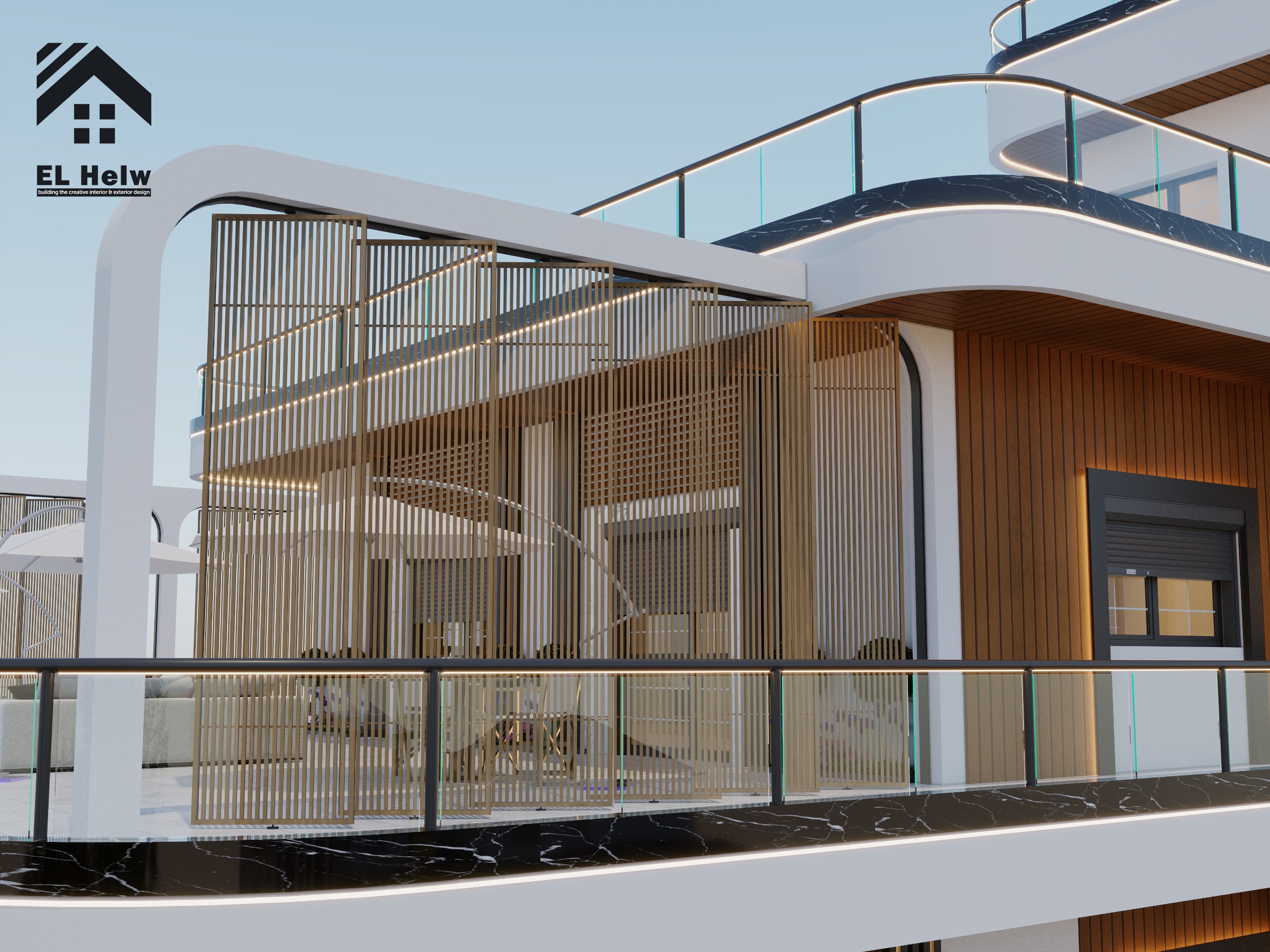
The Fundamental Difference Between an Engineering Design Firm and a Traditional Contractor: Which Should You Choose?
How does this choice impact your property's budget, quality, and value? At Elhelw Architectural Designs, drawing on over 18 years of expertise, we break down the definitive formula between meticulous engineering planning and committed field execution.
The Crossroads Between Design and Execution
When an owner embarks on the journey of building a luxury villa or a dream mansion, they often face a critical crossroads: To whom should they hand over the reins? Should they head straight to a construction contractor, or begin by contracting with a fully integrated architectural design office? From our experience in executing luxury villas and mansions for over 18 years, we frequently see investors and owners confusing the role of the design firm with that of the contractor, leading to severe errors in cost, timeline, and final quality.
At Elhelw Architectural Designs, we believe that understanding this difference is not merely an intellectual luxury, but the first line of defense for your real estate investment. In this comprehensive article, we will thoroughly detail the responsibilities of each party, their pros and cons, a live technical comparison, and the common mistakes that our long field expertise helps you avoid.
What is an Engineering Design Firm and What Are Its Core Tasks?
An engineering design firm is the architectural and technical mind of the project. We do not just put lines on paper; we translate your ambitions and your family's needs into an integrated living environment that balances beauty, functionality, and sustainability. Our role begins by studying the nature of the plot, its neighbors, and its geographical orientation before placing any floor plan, because every plot of land imposes unique engineering solutions that never repeat.
Visual Placeholder: An architect reviewing 3D engineering plans for a luxury villa project.
We account for the sun's path from sunrise to sunset when distributing rooms—placing bedrooms away from direct sunset heat, while living spaces benefit from refreshing morning light. We also typically position bathrooms and kitchens on the ground floor in a specific corner of the villa plan, isolating odors and ventilation from reception and living spaces, while keeping prevailing wind directions in mind so they do not blow air toward the rest of the house.
The tasks of the design firm include:
-
Preparing preliminary studies, site analysis, soil testing, and environmental orientation.
-
Comprehensive architectural design (floor plans, exterior facades, and sections).
-
Precise structural design and calculation of concrete loads and steel reinforcement to ensure absolute safety.
-
Electromechanical (MEP) designs for distributing electrical loads, sanitation, central air conditioning, and smart home/AI systems.
-
Interior design, decoration, material selection, finishes, and lighting details.
-
Preparing precise Bills of Quantities (BOQ) and technical specifications that protect the owner from any cost manipulation during execution.
What is a Contractor and What Are the Limits of Executive Responsibility?
A contractor or construction company is the project's executive and field arm. The contractor's primary role is to translate the engineering plans and documents prepared by the design firm into a tangible reality on the ground. An expert contractor possesses the equipment, skilled technical labor, ability to manage the site daily, and the capacity to supply building materials on schedule.
Visual Placeholder: An implementation team and contractors working on pouring roof concrete at a villa construction site.
We always clarify to our clients that a contractor does not invent the architectural design or alter the structural philosophy, but strictly adheres to what is stated in the approved engineering drawings and documents. An effective contractor's responsibility begins with site handover, passing through excavation, foundations, the structural concrete skeleton, masonry, and up to turnkey delivery according to agreed-upon specifications.
The contractor's main tasks include:
-
Managing the site in the field, securing labor, construction equipment, and occupational safety.
-
Executing the structural skeleton and finishes according to engineering plans with extreme precision.
-
Supplying building materials (steel, concrete, blocks, insulation materials) matching the specifications approved by the consultant.
-
Coordinating between different teams (carpenters, steel fixers, plumbers, electricians).
-
Managing the executive timeline and handing over phases according to signed contracts.
Comprehensive Comparison Table: Design Firm vs. Contractor
| Comparison Point | Engineering Design Firm | Contracting Company (Contractor) |
| Main Objective | Architectural innovation, functional comfort, structural safety, and cost efficiency. | Field execution, labor management, and practical application of plans. |
| Final Product | Integrated engineering plans, building permits, and Bills of Quantities (BOQ). | Physical building on the ground, concrete structures, and completed finishes. |
| Relationship with Owner | Engineering consultant and faithful representative protecting the owner's interests and monitoring execution. | Contractual executor committed to delivering works according to engineering specifications. |
| Required Expertise | Engineering creativity, deep understanding of codes, building physics, and space orientation. | Site management, technical knowledge of execution, and ability to manage human and material resources. |
| Moment of Intervention | The very first stage (from concept and land planning). | The second stage (after design completion and obtaining permits). |
Common Mistakes People Make When Confusing the Designer and the Contractor
From our long experience in the Egyptian and Gulf markets, we witness many projects every year that stall or exceed their budgets due to common mistakes in managing the relationship between design and execution. Among the most prominent of these mistakes:
-
Starting Construction Without a Complete Design: Some owners rely on a general contractor to build the villa directly without shop drawings or pre-designed electromechanical layouts. This inevitably leads to breaking through walls later to route AC pipes and plumbing, resulting in massive wastes of money and time.
-
Assigning Design to an Unqualified Execution Contractor: When you merge the executing entity with the designing entity into a random contracting company that lacks a respectable architectural engineering staff, you lose the "independent watchdog." We believe that having an independent design firm supervise the contractor is the true guarantee of execution quality and prevents any party from tampering with specifications.
-
Ignoring Site Orientation and Environmental Study: Believing that any design can be copy-pasted onto any plot of land is a fatal mistake. We believe every site tells a different story; wind and sun orientation differ radically from one place to another, and ignoring this leads to an uncomfortable living environment that consumes excessive energy.
Elhelw Office Advice: Why Should You Start With Us?
At Elhelw Architectural Designs and Finishes, we do not just sell drawings; we craft an architectural legacy that lives with you for years. From our experience spanning over 18 years in designing and executing luxury villas and mansions, we always advise you not to skimp on the design phase and not to leave execution to chance.
Suggested Reading: Stages of Design, Execution, and Delivery of Luxury Villas from Concept to Handover.
When you collaborate with us, we don't just design a beautiful villa for you; we study every structural, thermal, and sanitary detail, and provide precise bills of quantities that protect you from any exploitation during contractor negotiations. We stand by your side as a consultant and guide until you receive the key to your mansion with absolute peace of mind.
Frequently Asked Questions
-
Q: Can a single contractor handle both design and execution together?
-
A: Yes, some major companies offer integrated services (such as the Design-Build system) provided they have a professional and independent architectural and structural engineering team separate from the execution workers—something we apply with absolute professionalism in our projects.
-
-
Q: When should I contact the architectural design firm?
-
A: You should contact us immediately after purchasing the land plot and before laying any foundation stone, because we help you study the soil and orient the building to achieve maximum benefit from lighting and ventilation, and reduce future operating costs.
-
-
Q: How do the Bills of Quantities (BOQ) prepared by the design firm protect us from greedy contractors?
-
A: We determine material types, quantities, and technical specifications for each item with extreme precision, preventing any price manipulation or use of poor materials during execution, and making contractor bids transparent and open to fair comparison.
-
"We believe that the design firm is the mind of the project while the contractor is its field arm, and neither can succeed without the other."